
A vertiport built for a single purpose is hard to pay for. An emergency services landing pad might see only occasional flights. A drone delivery hub may run on thin margins. In major cities, frequent passenger flights can carry the cost of infrastructure on their own. In rural areas, the numbers start to work only when one site serves many users at once.
Lisa Wright, founder and CEO of Landings, sees that difference as central to how advanced air mobility will reach communities outside major metros. Her company plans sites around a bundle of uses rather than a single aircraft type.
“Vertiport sites that have multiple uses are going to be built out first, especially in rural communities,” she said.
The Single-Use Problem
Many communities can picture one clear use: an ambulance base, a fire department, or a hospital. Wright says that is often where conversations begin. The trouble is that a site built for occasional emergency flights sits idle much of the time while still carrying the full cost of construction, power, and maintenance.
Cities face a different equation. “In the cities, you can build a vertiport, you could just carry passengers all day long, and that’s fine,” Wright said. “That should support that vertiport.” Rural markets rarely have that volume of passenger demand, at least in the early years.
How Bundling Works
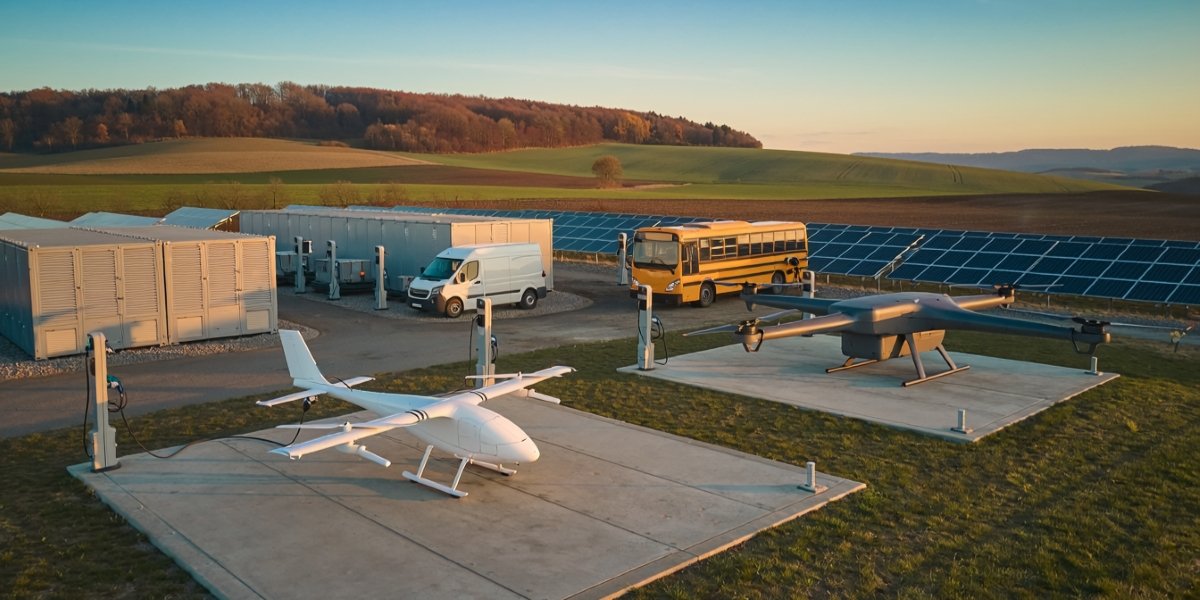
The alternative is to design each site for several kinds of traffic from the start. “You can charge your ground infrastructure. You can transfer your packaging. You can launch your drones. You can do a VTOL,” Wright said.
The early users might be a combination of logistics companies, medical providers, agricultural inspection services, and first responders.
Each additional user spreads fixed costs, particularly energy infrastructure, across more activity. Ground fleet charging can provide steady daily use, while aircraft and drone operations add value without the need for separate facilities.
The groundwork is local. Wright’s approach starts by identifying the businesses that could run on a regional network. “Are they farmers? Is it auto parts distribution? Is it our emergency services?” she said. The next step is understanding how those users could share the same infrastructure.
A Signal From the Port Authority
A recent meeting of the Port Authority of New York and New Jersey offered a view of where regional demand may emerge. The authority is a bi-state agency, and Wright noticed the two sides approached the topic differently. New York participants focused on JFK, LaGuardia, and the downtown heliport. New Jersey participants noted that only part of their state is dense and urban, and described rural testing areas, drone programs, and coordination with Pennsylvania on more rural locations.
Wright left with a sense of “an eagerness to test things rural in New Jersey.” She sees the same core need across rural regions of the Northeast, from the Poconos to the Adirondacks: reliable emergency services.
What It Means for Rural Landowners
For owners of rural land, the question is shifting. It is no longer only whether an air taxi operator will someday arrive. It is whether a site can serve several local users at once. Wright believes the wait may be shorter than many assume, because others in the industry are reaching the same conclusion. “There are people realizing the use cases are better and probably easier in these rural locations,” she said. “If they were thinking they’ve got to wait 10 years, they probably don’t have to wait 10 years.”
Landowners evaluating whether a parcel could host shared-use aviation infrastructure are looking at factors beyond size and zoning: nearby fleets, local businesses, and emergency service needs.
Shared use does not remove the uncertainty facing the sector. Aircraft certification timelines continue to shift, and demand from individual users still has to be proven site by site. What bundling changes is the core question, from whether one market will materialize to whether several can share the cost.
About Landings
Landings is building vertiport landing and charging infrastructure for electric aircraft, with a planned network of 2,000+ rural locations. Founded by architect and energy management expert Lisa Wright, the company takes an infrastructure-first, asset-light approach through revenue-sharing partnerships with commercial property owners.
Disclaimer: This article is intended for informational purposes only and does not constitute legal, financial, or investment advice. The views and opinions expressed herein reflect those of the individuals quoted and do not represent an endorsement of any company, product, or service mentioned. Readers should conduct their own due diligence and consult qualified professionals before making any investment decisions.