By Claire Whitmore, Senior Culture Editor
In an era where streaming services compete through volume, algorithms and billion-dollar franchises, one independent network is quietly moving in the opposite direction.
Instead of building another endless library of disposable entertainment, The ART Channel is developing what executives describe as a “living cultural ecosystem,” a FAST streaming platform designed around art, storytelling, atmosphere and emotional connection.
The approach stands apart from an increasingly crowded streaming industry, where viewers often spend more time scrolling than actually watching.
According to leadership, audiences are beginning to crave something different: curation over chaos.
“We think people are exhausted,” said Kurt A. Swauger, Founder, Head of Programming and Strategic Development for the network. “There’s so much noise in streaming now that discovery has almost become work. We want viewers to feel like they’ve entered a world, not a warehouse.”
That philosophy is shaping nearly every aspect of the company’s evolution.
Unlike traditional subscription-driven platforms built primarily around binge behavior, The ART Channel is leaning heavily into FAST (Free Ad-Supported Streaming Television), combining scheduled programming, original productions, live cultural coverage and immersive thematic content blocks.
Executives say the goal is to recreate a feeling that once defined television itself: unexpected discovery.
“There was a time when you’d turn on the television and stumble into something incredible you never planned to watch,” Swauger said. “That feeling disappeared somewhere along the way. We’re trying to bring some of it back.”
The company’s strategy extends beyond conventional entertainment programming.
Rather than focusing exclusively on scripted series or feature-length productions, the network increasingly centers its originals around real-world cultural movements, exhibitions, artists and global creative communities.
One of the platform’s most ambitious projects is That Boy on Stage: The John Shiner Story, a documentary chronicling photographer John Shiner’s extraordinary journey capturing legendary artists like Freddie Mercury, David Bowie and Tina Turner before disappearing from the spotlight for decades.
Instead of releasing the film as isolated content, executives are building a broader ecosystem around it, including exhibition tie-ins, archival storytelling, companion interviews and cultural partnerships.
“We’re less interested in one-night premieres,” Swauger explained. “We’re interested in creating momentum around stories that deserve to live longer.”
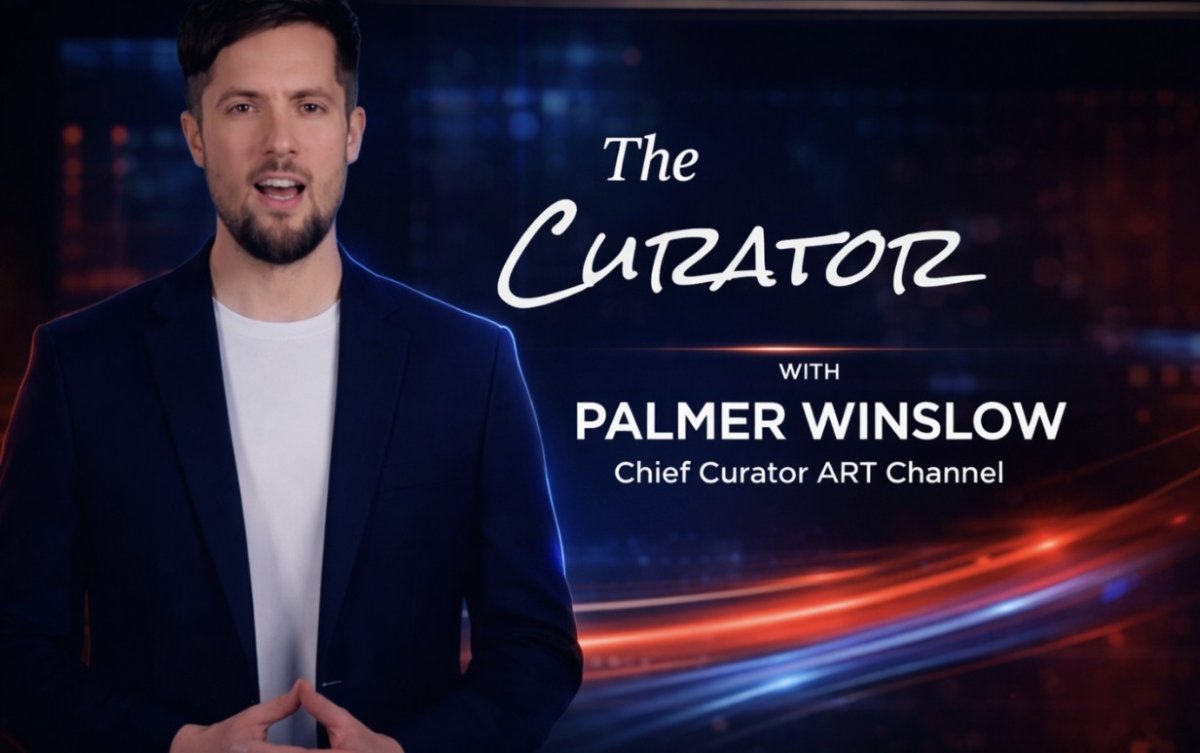
That same philosophy fuels The Curator, the network’s AI-hosted art and culture series fronted by Palmer Winslow and co-chief Annie Jane Cho.
The series explores exhibitions, artistic movements and contemporary creators while blending documentary storytelling with commentary, history and immersive visual design. Episodes often launch alongside real-world gallery openings and museum events across Los Angeles, Hong Kong, Miami and New York.
Leadership believes this intersection between physical cultural experiences and digital media will become increasingly important in the years ahead.
“The line between media and experience is disappearing,” said Kurt A. Swauger. “Audiences don’t just want content anymore. They want connection. They want context. They want something they can emotionally step inside.”
That hybrid approach extends throughout the network’s broader programming slate.
Series like Cooktop Art: Dish’in’ merge culinary creativity with visual art, while other productions examine digital culture, AI-generated creativity, metaverse storytelling and experimental artistic expression.

Even The Andy & Jean Show, the platform’s animated series inspired by Andy Warhol and Jean-Michel Basquiat, functions as both entertainment and commentary, exploring celebrity culture, technology and artistic identity through surreal humor and stylized storytelling.
Still, executives acknowledge that originals alone do not sustain a modern streaming business.
Like many FAST services, The ART Channel relies heavily on licensed programming to create rhythm, retention and daily engagement across its ecosystem. Leadership sees that balance between originals and acquired content as essential for long-term growth.
“Original programming gives you identity,” Swauger said. “Licensed programming gives audiences consistency. You need both to create habit.”
The timing may also work in the company’s favor.
As subscription fatigue continues intensifying across the entertainment industry, viewers are increasingly turning toward free ad-supported platforms that remove the friction of recurring monthly costs.
Analysts expect FAST television to remain one of streaming’s fastest-growing sectors over the next several years as audiences continue moving away from expensive subscription stacking.
The ART Channel believes its niche positioning may ultimately become a competitive advantage.
Its audience includes artists, collectors, designers, architects, students, travelers and culturally curious viewers seeking alternatives to formulaic entertainment cycles.
Executives argue that arts audiences have long been underserved by mainstream streaming platforms despite representing a massive global demographic.
“Creativity is universal,” Swauger said. “Art touches every country, every generation and every culture. The audience is much broader than people realize.”
That global outlook is already influencing the company’s next phase of expansion.
Leadership has accelerated subtitled and dubbed programming efforts while building partnerships throughout Europe, Asia and Latin America. International growth, executives say, will become increasingly central to the network’s long-term vision.
Meanwhile, live experiences are becoming a defining part of the platform itself.
Gallery openings, artist interviews, museum walkthroughs, studio visits and international art fair coverage are now being integrated into curated streaming hubs that combine live broadcasts with historical context and companion on-demand content.
The structure mirrors how sports streaming platforms organize live events, but adapted specifically for culture.
“When something important happens in the art world, we want viewers to experience it as it unfolds,” Swauger explained. “Not through social media clips two days later. In the moment.”
That model is also opening new opportunities for sponsors and institutional partnerships.
Rather than relying solely on disruptive commercial advertising, the network increasingly integrates galleries, museums, luxury brands and cultural organizations organically into programming itself.
According to executives, that creates stronger alignment between audiences, advertisers and the storytelling environment.
“Our partners are usually already participating in culture,” Swauger said. “So the integration feels natural rather than intrusive.”
As traditional television continues fading and streaming platforms battle aggressively for attention, The ART Channel is betting that audiences may eventually prioritize quality of experience over quantity of content.
Not louder programming.
Not more franchises.
Just something more thoughtful.
And in today’s entertainment industry, that may be one of the boldest strategies of all.