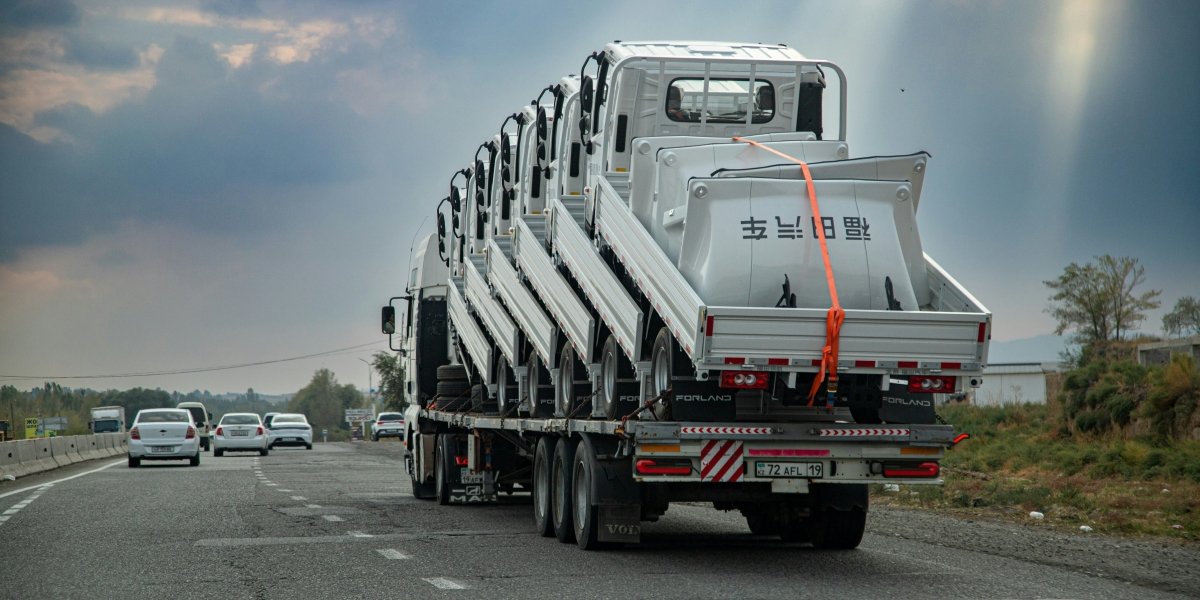

The company had twelve vehicles to relocate between regional offices. The operations spreadsheet made the assignment look simple: list the vehicles, record the pickup location, enter the destination, and book enough transport capacity to move the fleet together.
But the spreadsheet overlooked something important. The twelve vehicles were not twelve identical cars. The group included compact sedans, pickup trucks, cargo vans, and larger commercial units. Several had equipment attached, and not all could be loaded onto the same type of transport trailer.
In this hypothetical business scenario, the company’s mistake was not choosing the wrong shipping date. It was treating its fleet as a count of vehicles rather than a collection of different transportation requirements.
The distinction matters for businesses opening new locations, transferring company-owned vehicles or consolidating regional operations. A fleet shipment may involve multiple destinations, different vehicle dimensions, specialized loading arrangements, and receiving facilities with limited access.
Coordinating that movement begins with understanding what actually needs to travel, not merely how many vehicles appear in the inventory system.
Why Vehicle Count Is a Poor Starting Point for Fleet Relocation
Businesses often manage vehicles through inventory systems designed for accounting, maintenance, or employee assignments. These records may be excellent at identifying who uses a vehicle or when it needs service.
However, the same records may not contain the information required to assess transportation equipment.
A vehicle’s shipping requirements depend on characteristics that a basic fleet spreadsheet may omit. These include its actual dimensions, weight, ground clearance, operational condition, and any modifications or permanently installed accessories.
Two vehicles in the same company fleet can create very different loading requirements.
A standard passenger sedan may fit comfortably on equipment commonly used for automobile transport. A tall service van or a pickup equipped with a raised utility body may require different planning because of height, deck clearance, or available trailer space.
The result is that total fleet size alone cannot reliably establish how many transport loads will be needed.
Before purchasing transportation services, businesses should identify the details that influence equipment selection and make sure the transport provider receives accurate information about every unit.
The Dimensions That Can Change a Shipping Plan
Vehicle length, width, and height influence how a unit can be positioned and secured during transportation.
Those measurements also affect how vehicles can be combined on a trailer without exceeding applicable operating limitations.
A shipment containing several ordinary passenger cars may be easier to consolidate than one containing taller vans, modified pickups and unusually long vehicles.
Even when every vehicle can technically be transported, they may not fit safely together in the arrangement originally expected.
Height is particularly important for commercial vehicles with roof-mounted equipment, racks or other accessories. A business may classify two units as the same model even though one has been modified after purchase.
Likewise, the listed dimensions of a factory-standard vehicle may not describe a particular unit accurately after commercial modifications.
For that reason, operators should verify the actual shipping configuration instead of relying exclusively on a manufacturer specification or accounting record.
Equipment planners can then determine whether the proposed carrier configuration accommodates the load while meeting applicable operating requirements.
Why Vehicle Weight Is More Than a Number in a Database
Fleet managers may be familiar with purchase prices, registration classifications and maintenance costs without routinely reviewing transportation weights.
But vehicle weight affects both the suitability of the equipment and the legal requirements that apply to transportation.
In the United States, federal cargo-securement rules distinguish automobiles, light trucks and vans weighing 10,000 pounds or less individually from heavier vehicles and equipment.
Under 49 CFR § 393.128, qualifying automobiles, light trucks and vans must be restrained at both the front and rear, using at least two tie-downs and methods meeting the rule’s requirements.
Section 393.130 addresses certain heavy vehicles, equipment and machinery weighing 10,000 pounds or more, including requirements concerning equipment preparation and securement.
These regulations concern how qualifying cargo must be secured. They do not mean that any transport trailer is suitable for every vehicle below or above a particular weight.
Businesses must still consider overall equipment capacity, permitted operating weights and the specific characteristics of the vehicles involved.
The practical lesson is that a shipment plan needs accurate unit-level information rather than an assumption that all company vehicles fall into one category.
When a Business Fleet Becomes Multiple Types of Freight
A regional company might describe its transportation requirement as moving ten vehicles. That description can conceal several different operational assignments.
Some units may be ordinary passenger cars that can travel on standard automobile carriers. Others may be commercial vans with greater height or loaded dimensions. A specialized truck may require different equipment altogether.
Consequently, one administrative order may need to be divided into separate transportation movements.
This is not necessarily an operational failure. It can be the correct response to differences in vehicle design and securement requirements.
Problems emerge when a business assumes that every unit will travel together before the transport provider has reviewed the fleet specifications.
If the originally assigned equipment is unsuitable for one of the vehicles, the company may need to change its loading plan or obtain alternative capacity.
A better approach is to group vehicles according to relevant transport characteristics before promising internal stakeholders a single delivery schedule.
The Business Case for Planning the Full Vehicle Mix
Transportation is often included in a relocation budget as a single line item. That can make it difficult to understand which operational decisions affect the final arrangement.
For companies considering planning transport for multiple business vehicles, the starting point should be the complete vehicle mix, including whether each unit can operate normally, its dimensions, its pickup location, and the intended destination.
These details help determine whether consolidation is practical and where specialized equipment or separate scheduling may be necessary.
A1 Auto Transport’s multi-car shipping resource discusses different vehicle categories and the ways businesses, dealerships, and other organizations may coordinate several vehicle shipments.
Its service descriptions should be treated as provider information rather than proof that every combination of vehicles can travel together.
The broader lesson for fleet operators is to obtain a shipping plan based on actual vehicles, not an idealized estimate derived from the total number of units.
The Receiving Location Can Be as Important as the Pickup Point
A new branch office may have sufficient parking for company vehicles but still be unsuitable for a large automobile transporter.
Access roads, turning space, overhead clearance, loading restrictions, and local traffic conditions can influence where vehicles can be delivered safely and legally.
A business park designed primarily for passenger cars may not provide a practical unloading area for a long transport combination.
Even when the destination address is correct, the final unloading point may need separate coordination.
Fleet managers should review whether the receiving facility can accommodate the expected equipment and whether an authorized alternative delivery point may be necessary.
The person responsible for receiving the vehicles should understand the proposed arrangement before the carrier arrives.
A completed transportation order is not the same as a completed operational handoff if the receiving team cannot safely accept the load.
Vehicle Modifications Create Hidden Transportation Variables
Commercial fleets are frequently adapted for specialized tasks. Businesses install racks, tool storage, protective equipment, lighting systems, or other accessories to support their operations.
Those modifications may change the dimensions or handling characteristics relevant to transportation.
A modified pickup may be taller or heavier than a comparable stock vehicle. A service van may have equipment that affects clearance. Certain accessories may require inspection or preparation before shipment.
A fleet database that lists only the base model can therefore create an incomplete picture.
Companies should make transport providers aware of material modifications and avoid assuming that an accessory can be ignored simply because it is permanently installed.
Any decision to remove, secure, or otherwise prepare equipment should follow appropriate manufacturer instructions, carrier requirements, and applicable safety rules.
Detailed preparation helps reduce the risk that an unexpected modification disrupts the loading plan.
Non-Running Vehicles Need Separate Attention
Not every fleet vehicle is ready to drive onto a trailer.
A unit may be awaiting maintenance, have mechanical damage or be temporarily inoperable after extended storage.
This condition can affect the equipment and procedures required for loading and unloading.
A transport provider may need to assess whether the vehicle can roll, steer and brake as expected, as well as whether suitable recovery or loading equipment is available.
The appropriate method will depend on the circumstances and the equipment used.
Fleet operators should not describe a vehicle as operational simply because it is registered or appears in active inventory.
Clear disclosure of mechanical condition helps the provider plan the movement and prevents the receiving team from expecting a vehicle that can immediately enter service.
Businesses should also distinguish transportation readiness from operational readiness after delivery.
How Compliance Influences Transport Equipment Selection
Transport equipment decisions involve more than physical fit.
Commercial motor carriers operating within applicable federal rules must meet cargo-securement requirements intended to prevent loads from shifting or falling during transportation.
The Federal Motor Carrier Safety Administration provides general cargo-securement guidance and separate provisions for certain vehicle and equipment categories.
These requirements address matters such as tiedown performance and securement arrangements.
State-level operating restrictions and permit requirements may also be relevant when vehicle or load dimensions exceed normal legal limits.
Fleet managers do not need to make independent engineering decisions about cargo securement. They do need to supply accurate information and use qualified providers capable of evaluating the load.
Transporting a fleet safely requires cooperation between the business describing its vehicles and the professionals responsible for selecting and operating appropriate equipment.
What a Better Fleet Shipping Spreadsheet Should Capture
Spreadsheets can be effective planning tools when they contain the information that matters for transportation.
In addition to identifying each vehicle, a useful fleet schedule can include the actual pickup and destination locations, transport-relevant dimensions, weight information, operating condition, and known modifications.
It can also identify the department responsible for the unit and the person authorized to coordinate its release or receipt.
The fleet manager may then group units according to their transportation requirements and operational priorities.
The final equipment selection remains a task for the transport provider, based on the complete load and applicable rules.
What matters is that the company’s information supports a realistic assessment rather than forcing the provider to discover critical details during collection.
A spreadsheet should make the shipping problem easier to understand, not conceal important differences between vehicles.
Better Fleet Relocation Starts Before the Truck Arrives
Moving several company vehicles can look like a routine logistical assignment until the differences between those units begin to affect equipment selection, loading, and delivery.
Vehicle count is only one part of the planning process. Dimensions, weights, modifications, operating condition, pickup access and receiving arrangements can all change how a fleet is transported.
The most effective business planning process brings these details together before a transport commitment is made.
That approach allows companies to recognize when separate loads or specialized equipment may be appropriate, set delivery expectations the equipment can actually meet, and reduce uncertainty at the handoff stage.
The spreadsheet is still useful. It simply needs to describe the actual fleet instead of an oversimplified version of it.
For businesses coordinating vehicle movement across locations, the objective is not to place every unit on the same truck at any cost. It is to develop a safe, realistic transport plan that supports the company’s operations.