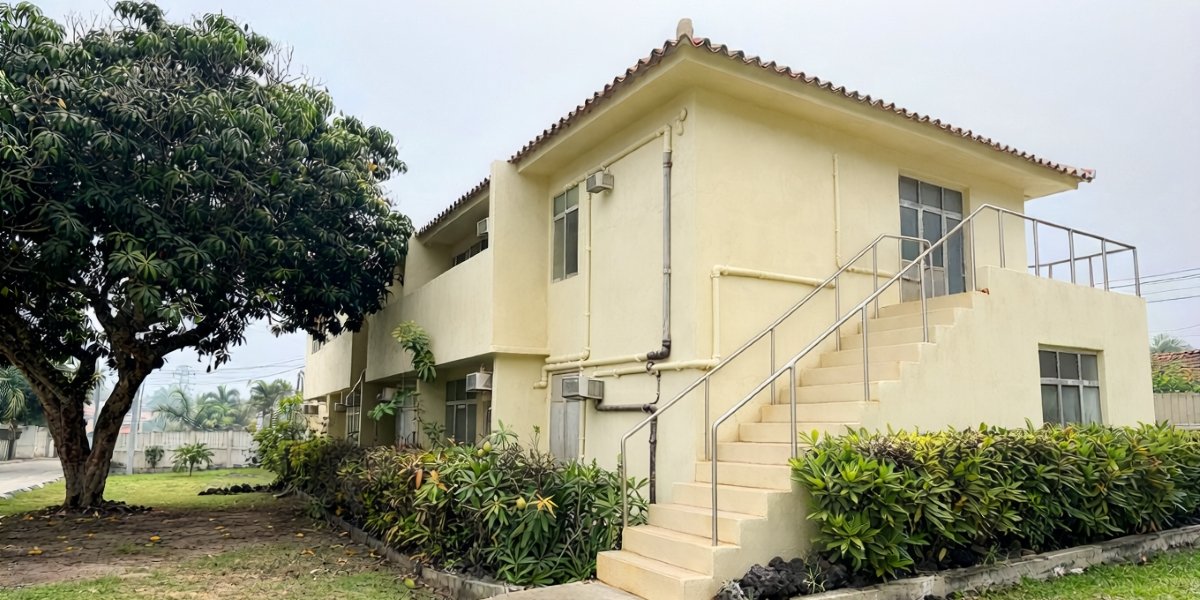

A significant share of Hawaii’s apartment inventory has been held by the same families since the 1960s and 1970s. Those holdings are now moving, not because the market has forced anything, but because the people who assembled them are passing them on.
The pattern is consistent. A patriarch or matriarch who acquired the building is no longer involved; the property has passed to one or more of their children, and the grandchildren have often built lives off-island. What follows is a decision about whether to hold an asset that requires active management from a distance.
For buyers, the result is that well-located product that is rarely traded is becoming available. What it requires is a specific kind of diligence.
What sits behind the walls
These buildings have generally been maintained at the surface. Units have been freshened, finishes updated, and the property presents well.
The work that tends to have been deferred is the infrastructure nobody sees. “You’re seeing a lot of behind-the-wall infrastructure needs that haven’t been addressed for years,” says Mike Perkins of The Bratton Team at Colliers International Hawaii. Plumbing, electrical, roofing and drainage age on their own schedule, largely independent of how a building looks. That is not a Hawaii problem so much as a characteristic of any building of that vintage anywhere, and after two decades of transacting this stock, Perkins treats it as a known quantity rather than a surprise.
Perkins offers a case from his own portfolio. During the closing period on an asset his team had owned and subdivided, an old cast-iron sewer line was found to have collapsed and required replacement. The property had been owned, managed and prepared for sale by experienced operators, which is precisely the point about how these items surface.
Getting ahead of it as a seller
The recommendation Perkins now makes to owners preparing to sell is to commission a property condition report before going to market.
The reasoning is about control of the negotiation. An owner who knows the building’s condition can price accordingly and plan for it. An owner who does not is relying on a buyer failing to find the same thing during diligence, and buyers are thorough.
“You’re best off not to allow a buyer to find something you didn’t know about,” Perkins says. Discoveries during diligence either extend a closing or end it, and neither outcome serves a seller who has already taken the property to market.
The team’s own phrase for the exercise is knowing all the spiders in the woodpile before going to market. The associated discipline is realism about what the work will cost, because a buyer will back into their required yield and arrive at a residual price net of everything the building needs.
What a buyer scopes
On the acquisition side, the diligence priorities are specific and the list is short.
Infrastructure comes first. Plumbing and electrical need to be examined properly rather than inspected visually, and Perkins’s emphasis is on scope extending all the way to the street and the mains, not stopping at the property line.
Roofs and spalling are the significant big-ticket items beyond that. In wood-frame buildings, termite activity needs confirming rather than assuming. Sewer laterals should be camera-scoped.
The general principle is that visible condition can be priced from a walkthrough. What cannot be seen has to be investigated, and the cost of investigating is trivial against the cost of discovering it later. Plumbing is, by a clear margin, the item buyers most often under-budget.
Timelines that hold
Rehabilitation schedules in Hawaii divide cleanly along one line: whether permits are required.
Cosmetic work generally completes in three to six months. Permitted work runs to a twelve-month approval process, which puts the overall project at twelve to fifteen months. Building that distinction into the model at acquisition is what keeps a business plan intact.
Contractor availability is the other scheduling variable, with skilled trades in demand across the state. Buyers who have established relationships before they need them hold a real advantage over those assembling a team after closing.
Which renovations matter most
The renovations buyers notice first are the visible ones, including flooring, cabinets, appliances and paint. Perkins describes paint as a cheap thrill, and the phrase captures how inexpensive that kind of work can be.
That is not an argument for cosmetics alone. An owner investing in an asset needs to address the structural items too, in order to protect the investment being made on top of them. The infrastructure preserves the asset, and the cosmetics shape how the units present to renters.
On rents, Hawaii is more straightforward than many markets. A buyer acquiring a fully occupied building at below-market rents is bound by the leases in place, but can move rents to market as those leases expire, which gives a below-market rent roll a defined and time-bound horizon.
Who these buildings suit
The natural buyer for a property needing real work is a local contractor-buyer, and the reasons are structural.
That cohort holds trade relationships across the disciplines, has an accurate sense of what work costs, and can execute efficiently. Typical hold periods run to around five years, whether the plan is to improve and sell or to improve and hold.
The underwriting is disciplined and starts with the rent roll. Current rents, achievable market rents, and the gap between them determine both what can be paid for the building and what can be invested in it.
For anyone assessing this segment, the draw is clear. Buildings in established locations are coming from owners who are transitioning for reasons unrelated to the market, and the improvement paths are definable rather than speculative. The team’s recent Hawaii transactions give a sense of how the segment has been trading. The buyers who approach it carefully are the ones who scoped the building before they priced it.
About the Expert: Mike Perkins (S) is Associate Vice President with The Bratton Team at Colliers International Hawaii in Honolulu, specializing in development and income-producing commercial assets.
The Bratton Team is a Hawaii commercial real estate and investment sales group, exclusively contracted to Colliers International HI, LLC. Led by Mark D. Bratton (R) CCIM and Mike Perkins (S), the team has advised buyers and sellers across all Hawaii asset classes for 40 years.
Disclaimer: This article is based on information provided by the expert source cited above. It is intended for general informational purposes only and does not constitute legal, financial, or real estate advice. Readers should conduct their own research and consult qualified professionals before making any real estate or financial decisions.