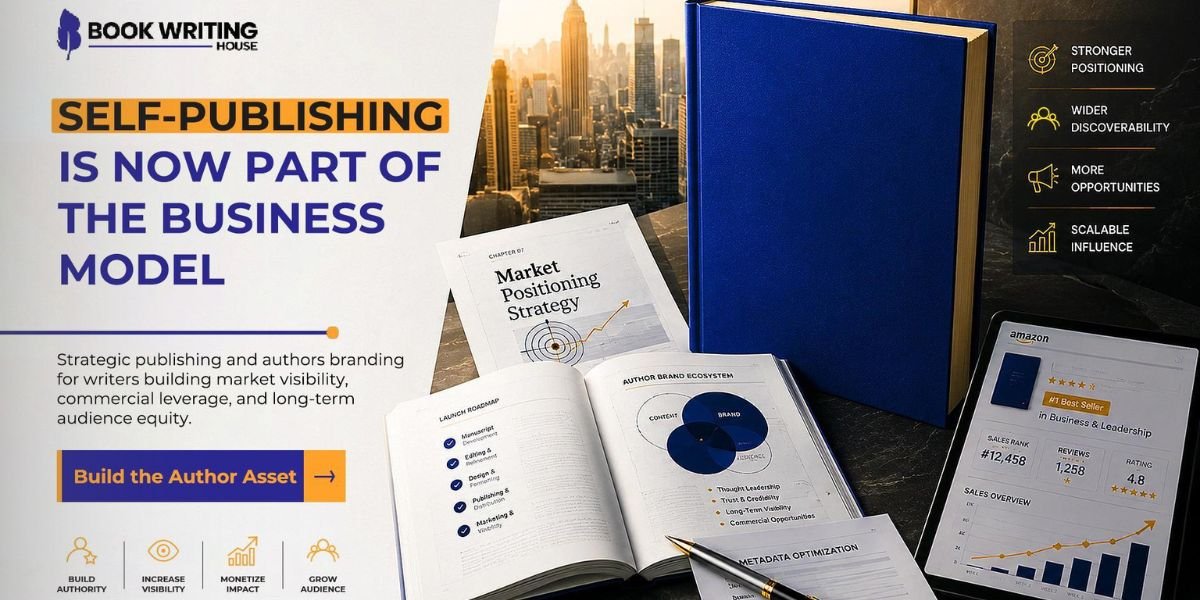

For independent authors, publishing is no longer only a creative milestone. It is becoming a business decision shaped by positioning, distribution, marketing, and long-term reader engagement.
Self-publishing has changed the economics of authorship. A book is no longer treated only as a personal accomplishment or a one-time release. For many writers, entrepreneurs, coaches, consultants, and subject-matter experts, it has become a product, a credibility asset, and a long-term marketing tool that can support a wider professional ecosystem.
This shift has made the author more business-minded. Writers consider audience demand, category positioning, production quality, launch strategy, and post-publication visibility before the manuscript reaches the final stage. The authors who treat publishing as a complete business process tend to approach their books differently from those who focus only on uploading a file and waiting for sales to happen.
Self-Publishing Has Become a Market Entry Strategy
The rise of self-publishing has opened the door for more authors to enter the market without waiting for traditional gatekeepers. That access, however, has also increased competition. Readers now compare independently published books with traditionally published titles in the same digital storefronts, search results, and recommendation feeds. The gap between a book that looks professional and one that feels unfinished can directly affect reader trust.
This is why many authors are investing in book publishing services that help them move beyond basic publication. Formatting, cover design, ISBN guidance, distribution setup, platform readiness, and metadata all contribute to how a book appears in the marketplace. A strong publishing process gives the book a foundation to compete, while weak execution can limit its potential before marketing even begins.
Book Writing House works in this space by supporting authors through key stages of the publishing journey, from manuscript preparation and editing to design, publishing, and visibility planning. For authors who view their work as a business asset, that structured support can be valuable because it connects the creative side of authorship with the commercial realities of release.
Monetization Starts Before the Book Is Published
Many authors think monetization begins after the book is live. In reality, revenue potential is shaped much earlier. The topic, audience, title, cover direction, category selection, pricing model, and launch positioning all influence whether a book can attract attention and convert interest into sales.
For entrepreneurs and professionals, a book may create value beyond royalties. It can help support speaking opportunities, consulting inquiries, course enrollments, podcast invitations, media visibility, and lead generation. For fiction and genre authors, it may become the beginning of a series, a reader community, or a catalog strategy. In both cases, the book can work more effectively when it is connected to a larger author brand rather than treated as a standalone product.
This is where the business of self-publishing becomes more strategic. Authors need to identify what the book is meant to do. Is it designed to sell directly to readers, build authority, support a business offer, create long-term brand recognition, or open new professional doors? The answer affects how the book should be produced, positioned, and promoted.

Marketing Is No Longer Optional for Independent Authors
Publishing makes a book available. Marketing helps make it discoverable. That difference matters because availability alone does not create demand. A book may be live on major platforms, but without awareness, reviews, audience targeting, and consistent visibility, it can easily get lost among thousands of competing titles.
Professional book marketing services can help authors think through the channels that matter most for their goals. These may include social media campaigns, Amazon visibility, reader outreach, review building, author branding, website traffic, press opportunities, and content-driven promotion. The strongest campaigns are not only about creating noise. They are about placing the book in front of the right audience with the right message.
Independent authors are increasingly learning that marketing should not be treated as a last-minute add-on. It should be planned alongside publication. A business book, for example, may need visibility on LinkedIn and in professional media. A memoir may rely on emotional storytelling and community engagement. A self-help book may need content that builds trust and reader testimonials. A children’s book may depend on parent-focused channels, educators, and visual presentation.
Each category has its own market behavior. Understanding that behavior can help authors avoid generic promotion and focus on strategies that fit their audience.
The Author Brand Is Part of the Revenue Model
In the current publishing environment, readers often buy into more than a title. They buy into the author’s voice, story, expertise, and credibility. This is especially true for business authors, coaches, consultants, health professionals, educators, and public figures whose books are tied to their professional identity.
An author brand can make future books easier to launch, improve reader retention, strengthen media opportunities, and support additional income streams. It gives the book a context. Without that context, even a well-written title may struggle to build momentum beyond its initial release.
For this reason, many authors are now thinking like founders. They are building websites, email lists, social proof, media profiles, speaking platforms, and content ecosystems around their books. The book becomes the central product, while the author’s brand serves as the structure that keeps the audience engaged.
A Professional Publishing Partner Can Help Authors Build for Longevity
The self-publishing market rewards independence, but independence does not mean authors must handle every technical and strategic decision alone. Many writers have strong ideas, personal stories, or professional knowledge, but they may not understand how to prepare a book for a competitive marketplace. That is where experienced publishing and marketing support can reduce friction.
Book Writing House positions itself as a full-service support system for authors seeking guidance throughout the publishing lifecycle. Its services include writing, editing, formatting, cover design, publishing, and marketing support. For authors focused on monetization, the value is not only in completing the book but in building a release that looks professional, reaches readers, and supports a broader author identity.
As the publishing market continues to evolve, the authors who benefit most will likely be those who think beyond the manuscript. They will treat their books as assets that require planning, packaging, distribution, and promotion. They will understand that sales are influenced by trust, visibility, presentation, and consistency. Most importantly, they will see publishing as the beginning of a business journey rather than the end of a writing project.
The Bottom Line
Self-publishing has given authors more control than ever, but it has also made the author more responsible for business outcomes. A well-written book that is poorly positioned may not reach its audience. A book that is available but not marketed may not generate momentum. A book that is launched without a brand behind it may struggle to create lasting value.
For modern authors, the opportunity is clear: publish with intention, market with strategy, and build an author brand that can keep working long after launch. In that model, the book is more than a product on a digital shelf. It can become a revenue asset, a credibility tool, and a long-term growth platform.