
In the global watch manufacturing sector, product diversification has often been driven less by branding ambition and more by shifting client requirements. As international buyers seek differentiation in materials, movements, and finishes, manufacturers are frequently required to expand capabilities to remain relevant. Industry data from the mid-2000s onward has suggested that manufacturers offering a wider range of materials and movement types tended to be more likely to secure repeat OEM contracts, particularly as competition intensified across Asia and Europe.
This broader industry pattern provides context for the development of Billow Time Watch Co., Ltd., founded in 2004 in Shenzhen, China, by Chen Fu Jun and Wang Jian. The company began with a narrowly defined product scope. Its first commercial output consisted of a stainless steel quartz watch produced for a Middle East client. At the time, this limited offering reflected both the company’s early-stage capabilities and the prevailing demand for cost-effective quartz watches in overseas markets.
Between 2004 and 2007, client inquiries began to shape the company’s production direction. Rather than expanding product lines through internal brand positioning, Billow Time Watch Co., Ltd. responded to requests from international partners seeking alternative materials and mechanical options. During this period, the company reportedly researched and developed additional categories, including titanium watches and mechanical movements. This expansion aligned with growing global interest in non-standard materials and traditional mechanical functions within the mid-range market.
By the late 2000s, diversification accelerated further. Watches made from Damascus steel, bronze, and forged carbon fiber entered the production catalog. These materials required different handling and inspection processes, which in turn influenced internal workflows. The decision to support such materials appeared to reflect client-driven demand for visual distinction and durability rather than a shift toward luxury positioning. Industry surveys during this period indicated that mid-tier buyers increasingly favored material variety over brand recognition.
The introduction of ceramic watches followed a similar pattern. Ceramic components, while more challenging to process, became popular among clients seeking scratch-resistant cases with a modern appearance. Billow Time Watch Co., Ltd. incorporated ceramic production capabilities after receiving repeated client requests, adapting its polishing and quality control procedures accordingly. This step further broadened the company’s material portfolio without materially shifting its OEM-focused business model.
Mechanical watches also became a more prominent part of the company’s output over time. Global market data from the 2010s has indicated that mechanical watches accounted for a notable share of mid-range sales, particularly in Europe and parts of Asia. In response, the company expanded its experience with mechanical assembly and inspection. Quartz watches continued to be produced alongside mechanical models, reflecting ongoing demand for accuracy and lower maintenance options.
Modified and customized watches represented another area of diversification. Many OEM clients required adjustments to existing designs, including changes to case materials, dials, or movements. Billow Time Watch Co., Ltd. developed internal processes to support these modifications, coordinating between engineering, assembly, and quality assurance departments. This capability allowed the company to manage small batch variations while aiming to avoid disrupting core production schedules.
Throughout this period, diversification remained closely tied to client specifications rather than internal branding strategies. Even with the establishment of the PRYZM brand in 2019, the company’s primary focus appears to have continued to be third-party manufacturing. The expanded product catalog supported a wider range of OEM clients, enabling the company to adapt to varying market preferences across regions without promoting a unified consumer identity.
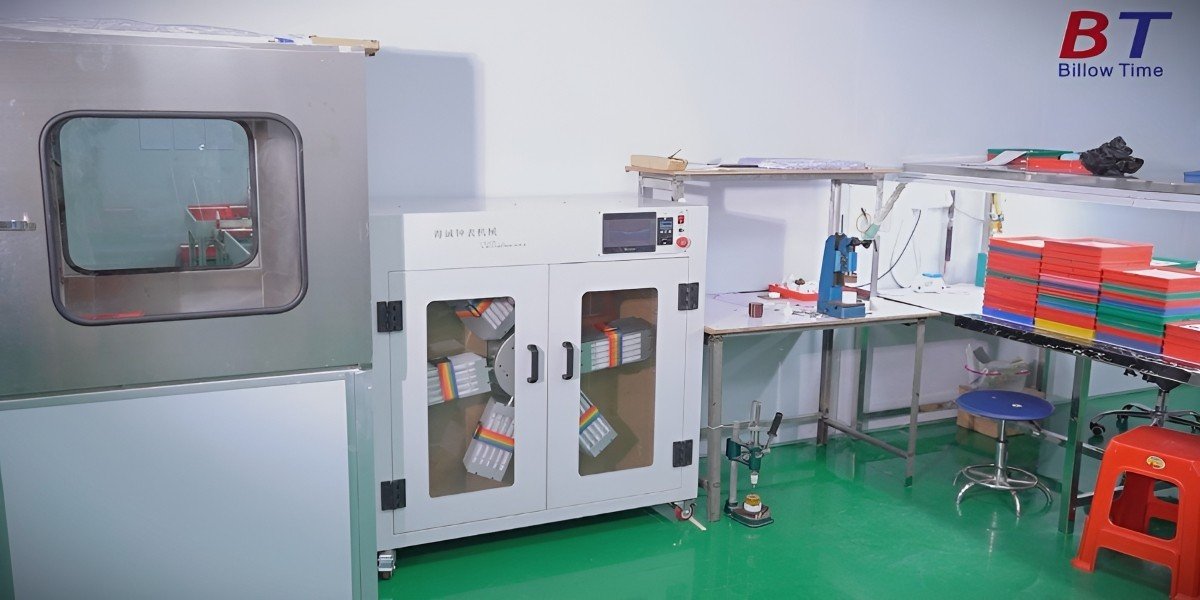
By 2019, Billow Time Watch Co., Ltd. employed more than 300 staff and operated dedicated departments for R&D, CNC machining, assembly, and customer service. This organizational structure supported the management of diverse materials and watch types. Industry analysis suggests that manufacturers with broader material capabilities may be better positioned to absorb fluctuations in demand, as they can reallocate resources across product categories more effectively.
The company’s diversification strategy mirrors a broader trend among mid-sized manufacturers, where flexibility and responsiveness are prioritized over specialization in a single product type. Rather than pursuing rapid expansion into luxury segments, Billow Time Watch Co., Ltd. maintained a measured approach, adding materials and watch types as client demand emerged. This approach may have helped reduce risk while allowing incremental capability development.
The evolution of Billow Time Watch Co., Ltd.’s product lines reflects a client-driven response to changing market conditions. From a single stainless steel quartz watch in 2004 to a diverse catalog that includes titanium, Damascus steel, bronze, forged carbon fiber, ceramic, mechanical, and modified watches, the company’s diversification followed practical demand rather than internal branding objectives. Under the leadership of Chen Fu Jun and Wang Jian, this measured expansion offers an example of how OEM manufacturers adapt product offerings to support long-term international partnerships within a competitive global watch industry.