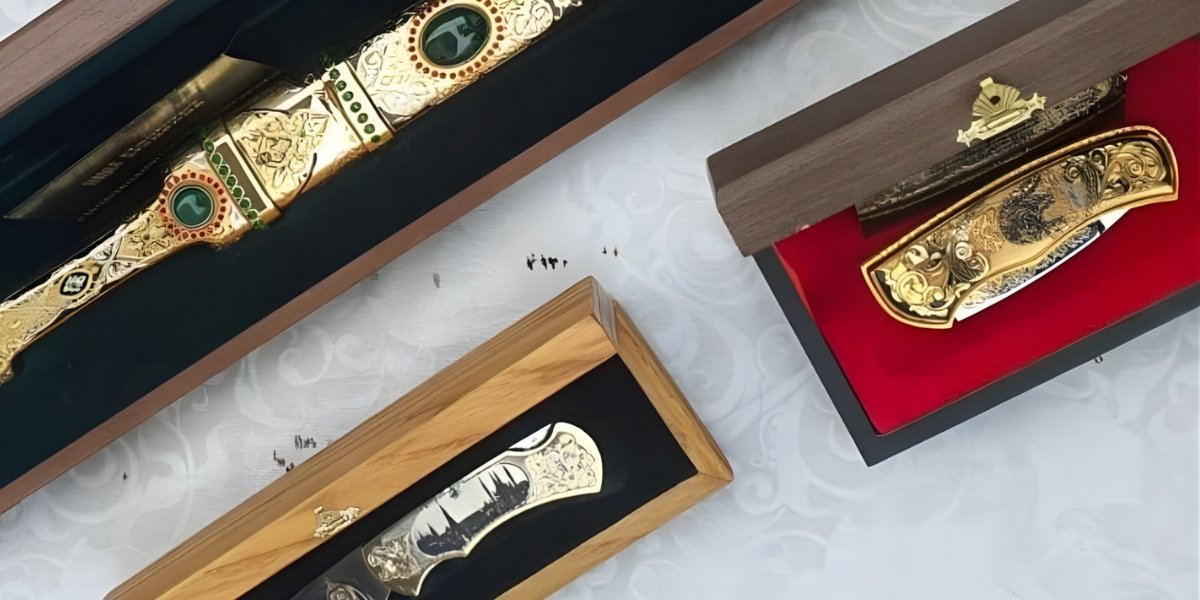


Bladesmithing is an ancient art form that has evolved over centuries. For Abdullokh Mukumjonov, a ninth-generation bladesmith, this timeless craft is more than just a trade—it is a cultural legacy. With a deep connection to his Central Asian roots and a forward-thinking approach, Abdullokh combines traditional techniques with modern tools, creating works of art that reflect both heritage and contemporary craftsmanship. His approach to bladesmithing demonstrates how cultural practices can remain meaningful and relevant in the modern world.
A Legacy of Craftsmanship

Photo Courtesy: Abdullaziz Mirzo Photo
Abdullokh Mukumjonov’s journey in the world of bladesmithing begins with a rich family tradition. As a ninth-generation craftsman, Abdullokh’s family has been dedicated to the art of knife-making for over nine generations. This deep-rooted legacy shapes his understanding of the craft and informs every piece he creates. From an early age, he was immersed in the intricacies of bladesmithing, learning from his forefathers who honed their skills over centuries in the heart of Central Asia.
For Abdullokh, bladesmithing is not merely about creating functional tools; it is about preserving a cultural heritage that has endured across generations. His work embodies the values of craftsmanship, skill, and cultural continuity that have been central to his family’s practice. However, Abdullokh is not content to simply replicate the past—he is committed to evolving his craft while respecting its foundational principles.
Combining Ancient Techniques with Modern Tools

Photo Courtesy: Abdullaziz Mirzo Photo
While many bladesmiths remain dedicated to traditional methods, Abdullokh Mukumjonov recognizes the value of integrating modern tools into his craft. One of his notable qualities is his ability to blend time-honored techniques with contemporary technology, such as digital design tools and modern manufacturing processes. This combination of the traditional and the contemporary allows Abdullokh to create blades that maintain the quality and artistry of classical craftsmanship while meeting the precise specifications of his clients.
Abdullokh’s willingness to learn new methods has enabled him to work with modern design tools effectively. By incorporating digital technologies into the design and planning phases, he has improved his ability to create customized pieces while still adhering to the core principles of traditional bladesmithing. His work demonstrates that ancient craftsmanship and modern tools are not incompatible—rather, they can complement each other when applied with care and understanding.
Bringing Central Asian Tradition to a Global Audience
Abdullokh strives to present the beauty of his work in the United States and around the world, so that these traditions can be recognized and appreciated. Through his presence in the U.S., Abdullokh works to introduce Central Asian bladesmithing traditions to audiences beyond his homeland. His customized blades reflect the distinctive qualities of his heritage—each knife tells the story of a centuries-old craft that continues to develop and adapt.
By sharing his work and craft traditions in new contexts, Abdullokh contributes to broader efforts to preserve and recognize diverse cultural practices. His commitment to maintaining traditional methods while engaging with contemporary audiences demonstrates that cultural heritage can thrive when it is practiced with dedication and shared with a genuine purpose.
A Vision for the Future of Bladesmithing
What distinguishes Abdullokh Mukumjonov is his understanding that the future of bladesmithing depends on its ability to adapt while maintaining its essential values. By thoughtfully integrating modern tools with traditional knowledge, Abdullokh demonstrates a model for how ancient crafts can remain vital and relevant in a changing world.
As a ninth-generation bladesmith, Abdullokh recognizes the importance of passing on his knowledge and skills to those who follow. He is committed to continuing the practice of his craft and contributing to efforts that preserve specialized traditional knowledge. Through his work and his dedication to the craft, he ensures that the art of bladesmithing remains a respected and meaningful practice for future generations.
A New Era for Bladesmithing
Abdullokh Mukumjonov’s approach to bladesmithing exemplifies how cultural traditions can be honored while remaining contemporary. By combining the techniques he inherited with thoughtful use of modern tools, he creates work that is both rooted in history and relevant to the present day. His commitment to preserving Central Asian craftsmanship while sharing it with the world represents an investment in cultural continuity and mutual understanding across communities.
As the bladesmithing industry continues to evolve, Abdullokh’s journey serves as an inspiration to future generations of craftsmen. His success in blending ancient techniques with modern technology proves that the art of bladesmithing can thrive in a rapidly changing world, offering new opportunities for creativity, business growth, and cultural exchange.