

In a 2005 experiment, researchers gave people an energy drink marketed as a boost to mental sharpness, then asked them to solve a set of word puzzles. Some had paid the regular price for the drink. Others had paid a discounted price. The group that paid less solved fewer puzzles.
The drink was identical. Only the price changed, and with it, what buyers expected the product to do. For premium service businesses tempted to cut prices when competition heats up, the finding points to a less obvious risk, and to a different way to compete without discounting.

Why Discounts Can Cost More Than the Margin
The experiment comes from a study published in the Journal of Marketing Research by researchers then at Stanford, INSEAD, and MIT. It concluded that marketing actions such as pricing can change how well a product works for buyers because price shapes what they expect. It is a well-known study rather than a law of consumer behavior, but it fits a pattern: premium pricing depends on buyers reading price as a signal of quality. Cut the price, and perceived value can fall with it.
Discounts carry a second cost. In a 2015 Harvard Business Review analysis drawing on a Vantage Partners survey of senior sales leaders at large companies, respondents reported that discounts can quickly erode the average price paid by all customers, because each exception becomes a precedent. Those were large business-to-business sellers, but service owners recognize the pattern: once a client pays less, the full price starts to look like a markup. Discounts also tend to attract the buyers most likely to leave when someone cheaper appears.
Competing on Proof Instead of Price
Premium service buyers rarely choose on price alone, partly because they cannot inspect the work before paying. A patient choosing a cosmetic dentist or a homeowner hiring a designer is buying a result that does not exist yet. Instead, they look for proof: visible expertise, reviews from people like them, credentials, and third-party mentions such as press coverage or professional recognition.
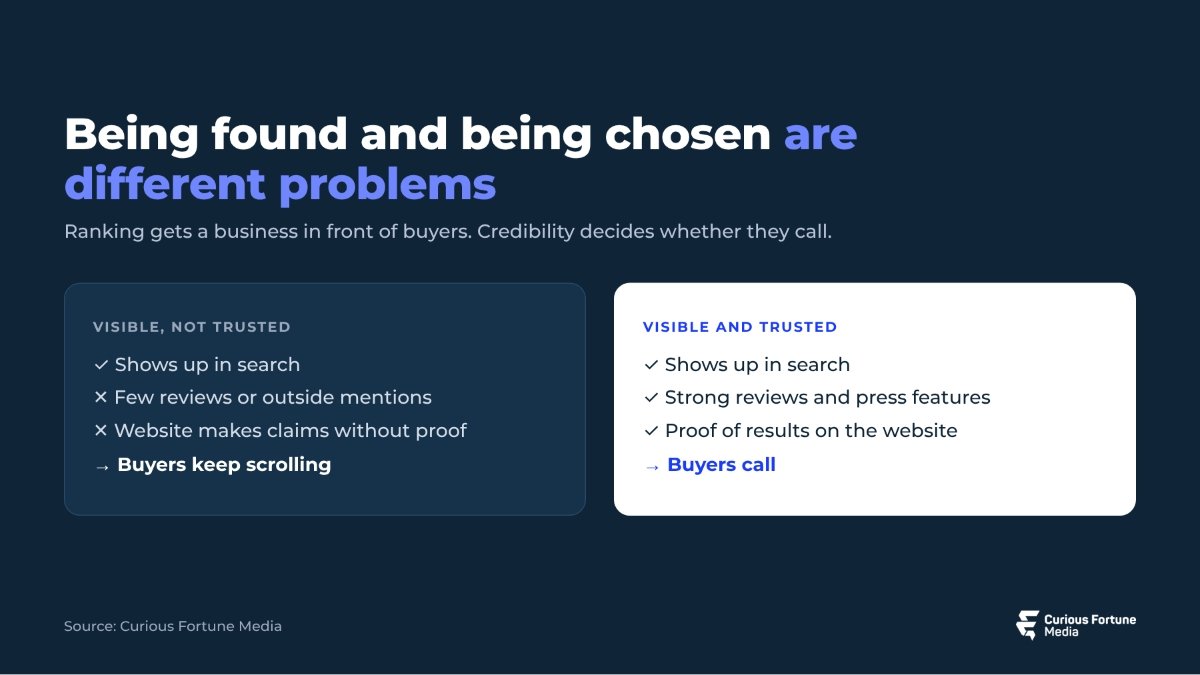
Competing on proof means making those signals easy to find and trust, rather than lowering the price to cover their absence. Edmond Abramyan, founder of Curious Fortune Media, says discounting often answers the wrong question.
“People paying for a premium service aren’t hunting for the cheapest option. They’re looking for reasons to believe you’re worth it,” Abramyan says. “A discount answers a question they never asked, and it can raise a new one about quality.”
What a Market Like Beverly Hills Shows
Markets crowded with premium providers make the point clearly. In Beverly Hills, many high-end medical, legal, design, and wellness practices compete within a few square miles; a lower price can read as a warning sign rather than a bargain, and competition tends to run on reputation, referrals, and the experience a business delivers. Abramyan’s agency works with service businesses in the Los Angeles area, where the same dynamic appears wherever buyers have more good options than they can easily compare. In markets like these, the business that wins is often not the cheapest but the one whose value is easiest to verify.
Visibility That Filters Instead of Floods
Being found matters as much as being believed, but for a premium brand, the goal isn’t the biggest possible audience. Searches built around price, like the cheapest option or the best deal, bring in buyers the business does not want. Specific searches that pair a service with a problem or a specialty bring in people who are already weighing quality. Content that answers expensive questions in detail, such as what a procedure involves or how a project is scoped, speaks directly to those buyers.
The post-click experience has to match the price, too. A slow website, a generic contact form, or a reply that arrives two days later undercuts a premium price faster than any competitor’s discount.
“The goal isn’t always more inquiries. It’s the right ones,” Abramyan says. “Clear positioning should turn away the price shopper before they ever pick up the phone.”
Abramyan developed the Authority Engine™ for Curious Fortune Media with that kind of filtering in mind: visibility aimed at buyers already weighing quality, authority that makes the price easy to believe, and conversion that lets the right client choose without being offered a discount.
Holding Price Without Holding Still
None of this makes every price reduction a mistake. A structured offer to introduce a new service, fill off-peak capacity, or thank long-standing clients differs from a blanket discount used to respond to a competitor. The first is a business decision. The second is often a reaction to someone else’s.
Markets differ, and no positioning strategy promises results. But the 2005 study shows why premium services are especially exposed. If a lower price can change how people experience a drink they can taste, it can shape how they judge a service they cannot see until after they have paid. Premium brands don’t win by being cheaper. They win by being easier to believe, which protects their perceived value.
Before cutting a price, an owner can look at what a prospective client sees first: the search result, the reviews, the website. The more useful question is whether that first impression already justifies the price.