Market Daily

A New School Year Brings New Hope for Meeting the Needs of Black Boys


Christopher M. Spence’s To Be Seen and Heard asks educators to begin with the voices, strengths and lived experiences of African American young men, and to build schools where belonging and achievement grow together.

Every new school year begins with hope. Students walk through the doors carrying new goals, new anxieties, and possibilities that may not yet be visible to the adults around them. Teachers prepare to reach learners whose experiences differ widely. Families place their trust in schools once again. For educators committed to the success of Black boys, this moment offers more than a fresh calendar. It offers another opportunity to listen more carefully, remove barriers, and create the conditions in which young men can thrive.

That is the central invitation of Christopher M. Spence’s 2025 book, To Be Seen and Heard: Uplifting Our African American Males from Boys to Men. The title expresses both a need and a challenge. Black boys are frequently discussed through graduation rates, disciplinary data, and public narratives about risk. Spence asks educators to look beyond those categories and listen to the intelligence, humor, resilience, leadership, aspirations, and humanity of the young people represented by the numbers.

The book grew from Spence’s 2024 qualitative phenomenological study, To Be Seen and Heard: Strategies That Support the Academic Success of African American Males in Northern Chicago High Schools. He interviewed 12 recent African American male graduates about the experiences and relationships that contributed to their success. A qualitative study of this size does not claim to speak for every Black boy or every school. Its value lies in what the participants’ accounts reveal about the conditions that mattered in their own educational journeys.

Those young men did not describe success as an individual accomplishment achieved in isolation. They spoke about mothers and family members who held expectations for them, peers who provided brotherhood, coaches and mentors who offered guidance, educators who believed in their ability, and schools that gave them reasons to feel connected. They also spoke about racial identity, stereotypes, unequal treatment, personal responsibility, and the importance of having a meaningful future to work toward.

The message for a new school year is both hopeful and demanding. Black boys do not need schools to rescue them from who they are. They need schools to recognize who they are, cultivate what they bring, and respond honestly to the barriers that can limit opportunity. The most productive question is not, “What is wrong with these students?” It is, “What do these young people need from us, and what are we prepared to change?”

Belonging is a powerful place to begin. One of the recurring ideas in Spence’s work is that achievement and belonging cannot be separated. A student may be enrolled in a school without feeling that the school was built with him in mind. He notices whose history appears in the curriculum, who is trusted with leadership, whose behavior is interpreted generously, and who is watched with suspicion. He also notices which adults know his name, ask about his interests, attend his events and refuse to lower expectations for him.

A welcoming school does not mean an environment without standards. Spence argues for high expectations matched by high support. Black boys should encounter rigorous instruction, honest feedback and meaningful accountability, but discipline must remain proportionate, educational and connected to a path back into learning. Exclusion should never become the default response to behavior that could be addressed through relationships, guidance, restoration and appropriate support. The objective is not merely compliance. It is growth.

Representation also matters. Participants in Spence’s research raised concerns about the limited presence of African American male educators and the power of seeing successful adults who reflected aspects of their own identity and experience. Hiring more Black male teachers is not a complete solution, and Black boys can form life-changing relationships with educators of every background. Yet representation widens the range of adults students can imagine becoming and challenges the idea that Black male excellence is exceptional rather than expected.

Mentoring can extend that circle of possibility. Spence recommends relationships with both role models and “soul models,” adults who do more than display achievement and who are willing to listen, remain present, share experience, and help a young person develop character, confidence, and purpose. The strongest mentoring is not an occasional speech or ceremonial program. It is a dependable relationship built over time, especially when a student makes a mistake, faces disappointment, or begins to doubt his own potential.

Schools can also create networks that connect current students with African American male graduates. Success becomes more believable when young people can see and speak with those who have navigated similar classrooms and moved into college, training, employment, service, entrepreneurship, or other meaningful adult pathways. Alumni can make possibility visible while also providing practical knowledge about the transitions that await students beyond graduation.

Family partnership must be equally intentional. The young men in Spence’s study repeatedly described the influence of mothers and other relatives who supported, pushed, and advocated for them. Schools honor that commitment when families are welcomed before a problem occurs, treated as knowledgeable partners, and connected with resources that strengthen both academic progress and emotional well-being. Communication should not begin with discipline and end with a report card. It should become part of the relationship surrounding the student.

Listening to Black boys themselves remains essential. Student voice is sometimes reduced to a survey or an invitation to speak after decisions have already been made. To be seen and heard requires something deeper. It means asking young men what helps them learn, where they feel connected, which barriers they experience, and what futures they imagine. It also means allowing their answers to influence instruction, mentoring, school culture and opportunity.

Spence’s perspective is informed by more than research. Across decades as a teacher, principal, system leader, author and mentor, he has seen young people respond when adults combine belief with structure and care with accountability. He has also seen how quickly talent can be overlooked when a student is reduced to a stereotype, a disciplinary incident, a test score, or someone else’s lowered expectation. To Be Seen and Heard continues a lifelong argument: talent is everywhere, but opportunity is not.

The beginning of a school year gives leaders and educators a rare chance to establish new patterns before old ones harden. Learn every student’s name. Examine who has access to advanced courses, leadership opportunities, the arts, athletics, and mentoring. Review discipline for disproportionality. Build relationships with families early. Recruit and retain diverse educators. Create spaces in which Black boys can speak honestly, develop brotherhood and see successful futures reflected around them.

None of these actions promises a simple or immediate solution. The experiences of African American young men are not uniform, and meaningful improvement requires sustained attention rather than a seasonal initiative. But the graduates whose voices shaped Spence’s work provide reason for hope. Their stories show what can happen when ability is recognized, expectations remain high, relationships are genuine, and a young person knows that his presence matters.

As classrooms fill again, the challenge is not simply to help Black boys survive another school year. It is to build schools in which they can discover their strengths, exercise leadership, experience joy, recover from mistakes and pursue ambitious futures. Before educators can fully teach them, schools must be prepared to see them. Before leaders can decide what they need, they must be willing to hear them. That is where hope becomes practice, and where a new school year can become the beginning of something different.

Online Business Loans for Arkansas Companies Through Fundivi

Small businesses throughout Arkansas encounter financial demands that do not always align with their incoming revenue. A company in Little Rock may need additional funds to meet payroll obligations, while a retailer in Fayetteville might require financing to purchase inventory before a busy sales period. Equipment purchases, operational expenses, and business expansion can also create situations where access to outside funding becomes necessary.

Fundivi offers business loans online for Arkansas businesses through a digital application process. Its financing approach considers current business revenue and cash flow, providing an alternative to lending models that place significant emphasis on collateral and lengthy operating histories.

Understanding Business Financing in Arkansas

Arkansas has a diverse commercial environment that includes logistics, distribution, agriculture, and manufacturing. Although these industries operate differently, many businesses within them experience gaps between the timing of their expenses and the collection of revenue.

Distribution companies may need to cover transportation and staffing expenses before customers settle their invoices. Agricultural businesses often make substantial purchases ahead of seasonal revenue, while manufacturers may require additional funding for equipment or materials needed to complete upcoming orders.

Conventional lending institutions commonly assess factors such as credit history, financial documentation, collateral, and years in operation. These requirements can present challenges for businesses seeking financing within a limited timeframe. Alternative financing providers offer another approach by incorporating recent financial activity into their evaluation of applicants.

How fundivi Approaches Business Financing

Fundivi uses an online financing platform intended to simplify the application and evaluation process for business owners. Applicants provide relevant business details and financial information, allowing the lender to assess their funding requests without requiring an in-person appointment.

According to the company’s stated lending process, applications can generally be completed within minutes, and certain financing decisions may be issued within hours. Actual review periods can vary depending on the applicant’s financial circumstances and the completeness of the information submitted.

The company also states that its funding products do not require collateral or personal guarantees. Instead, its evaluation focuses on factors such as business revenue and cash flow consistency.

Arkansas business owners interested in learning about the application requirements and available financing resources can review Fundivi’s business loan tools for additional information.

Financing Needs in Arkansas Logistics and Agriculture

The financing requirements of Arkansas businesses frequently depend on their respective industries and operating cycles.

Logistics and distribution companies must often pay for fuel, labor, transportation, and inventory before receiving payment from customers. When payment schedules extend beyond the dates these expenses become due, businesses may seek financing to maintain their normal operations.

Agricultural enterprises face different financial considerations. Seasonal planting and harvesting schedules can create periods of significant expenditure followed by delayed revenue. Machinery maintenance, equipment purchases, and preparation for upcoming production periods may also require capital.

Manufacturing operations can face similar circumstances when fulfilling large orders or expanding production capacity.

Businesses evaluating different financing arrangements can consult fundivi’s guide on how to qualify for business loans online. Reviewing eligibility requirements and financing structures may help owners determine which options are appropriate for their circumstances.

Applying for Online Business Financing in Arkansas

The Fundivi application process begins with the submission of basic information about the business and its financing needs. Applicants are then asked to provide access to relevant financial information, which may include a secure connection to their business banking data.

This information supports an assessment of the company’s recent revenue activity and cash flow. Depending on the funding product and application details, a financing decision may be available within hours.

If an application is approved, the business owner can review the proposed financing amount, repayment obligations, and associated costs before accepting an offer.

Because the process is conducted online, eligible businesses throughout Arkansas can apply without traveling to a physical lending office.

Owners seeking financing for routine operating expenses may also examine available working capital loan options to better understand how different products address short-term financial requirements.

Selecting Financing Based on Business Requirements

Different financial situations call for different types of financing. Before applying, business owners should consider how the funds will be used, the expected repayment period, and the company’s ability to meet future payment obligations.

A business planning a major equipment purchase or facility improvement may consider a term loan. This type of financing generally provides a specified amount that is repaid according to an established schedule.

For companies experiencing irregular revenue or recurring operational expenses, working capital financing may offer another option. A revolving business line of credit can also provide access to funds as needed, subject to its terms and available credit limit.

The appropriate financing arrangement depends on several factors, including the nature of the expense, anticipated cash flow, repayment costs, and the company’s financial position.

Evaluating these considerations before submitting an application can help business owners avoid selecting financing arrangements that do not correspond with their operational needs.

Planning for Seasonal Business Expenses in Arkansas

Seasonal changes influence the financial requirements of many Arkansas companies. Businesses connected to agriculture, tourism, retail, and transportation may experience fluctuations in customer demand and operating expenses throughout the year.

These variations can affect inventory purchasing, employee scheduling, and the timing of major expenditures. For some companies, revenue generated during busier months must also support operations during periods of reduced activity.

Financial planning can help owners anticipate potential cash flow shortages and determine whether outside financing may be necessary.

For example, a retailer expecting higher holiday demand might evaluate inventory costs several months before the season begins. Similarly, an agricultural business may assess its equipment and operating expenses ahead of its primary production period.

Comparing financing options in advance provides an opportunity to examine repayment structures, borrowing costs, and eligibility requirements without making a decision solely in response to an immediate expense.

Business Financing Considerations Across Arkansas

From Little Rock and Fayetteville to smaller communities throughout the state, Arkansas businesses operate within different local markets and economic conditions.

A manufacturing company expanding production may have financing requirements that differ substantially from those of a distribution business managing customer payment schedules. Agricultural enterprises and service providers likewise have their own operating cycles and financial priorities.

Digital financing platforms such as Fundivi provide an application channel for eligible businesses seeking alternatives to conventional bank lending. The company’s process emphasizes current financial performance and electronic submission of business information.

Nevertheless, financing decisions should account for the total cost of borrowing, repayment frequency, potential fees, and the effect of debt obligations on future cash flow.

Business owners may also benefit from comparing multiple financing sources before selecting a product.

Exploring Business Loan Options in Arkansas

Access to financing can play a role in maintaining business operations, addressing temporary cash flow gaps, and supporting planned investments. However, the suitability of any financing product depends on the applicant’s financial situation and intended use of funds.

Fundivi provides an online application process for Arkansas businesses interested in exploring available funding arrangements. Applicants can submit their information digitally and review any financing offers for which they qualify.

Before accepting financing, business owners should carefully examine the proposed terms and determine whether the repayment obligations align with their expected revenue and operating expenses.

Frequently Asked Questions

How Quickly Can an Arkansas Business Receive Funding Through Fundivi?

Decisions are often delivered within hours of a complete application, with funding frequently available the same day an offer is accepted, depending on the specific product and bank processing times.

Does Fundivi Require Collateral For Arkansas Business Loans?

No. Fundivi’s funding products do not require collateral or a personal guarantee, with qualification based primarily on business revenue and cash flow performance.

What Documentation Is Needed To Apply?

Applicants generally need basic business information along with access to bank account or revenue data, which allows fundivi’s underwriting engine to evaluate real, current performance directly.

Can A Newer Arkansas Business Qualify For Funding?

Qualification depends primarily on the strength and consistency of current revenue rather than years in operation, so newer businesses with strong revenue can still qualify.

Is Funding Available Across All Industries In Arkansas?

Fundivi works with qualifying businesses across a wide range of industries throughout Arkansas, including logistics and distribution, agriculture, and manufacturing, among many others.

Disclaimer: This article is for informational purposes only and does not constitute financial, legal, or professional advice. Business financing options, eligibility requirements, approval timelines, funding availability, interest rates, fees, and repayment terms may vary depending on the applicant’s financial circumstances and the financing product selected. Approval and funding are not guaranteed. Business owners are encouraged to review all financing terms carefully and consult a qualified financial advisor before making borrowing decisions.

Fed Minutes Show All 19 Officials Backed September Rate Hike, With Most Expecting Another Increase Before Year End

Minutes from the Federal Reserve’s September 15–16 meeting, released October 7, show all 19 policymakers supported raising the federal funds rate a quarter point to 3.75%–4%. Most participants said another increase would likely be appropriate by year end, but officials did not describe the hike as the start of a rapid tightening cycle.

Key Takeaways

  • All 19 FOMC participants, including the seven non-voting officials, supported the September hike to 3.75%–4%, the Fed’s first increase since 2023.
  • September projections showed 12 participants favoring one more quarter-point hike in 2026, four favoring two more and two favoring no further increase.
  • Fed staff estimated August PCE inflation at 3.8% year over year, with core PCE at 3.4%.
  • September payrolls rose by just 29,000 jobs after the meeting, and unemployment edged up to 4.2% from 4.1%.
  • The remaining 2026 rate decisions are scheduled for October 28 and December 9.

Federal Reserve Minutes Confirm a Unanimous Committee

The Federal Reserve’s September minutes add a detail the policy statement could not show: the decision to tighten had full support. The Federal Open Market Committee voted 12-0 on September 16, and the minutes show every participant, voters and non-voters alike, backed the increase.

That unity is a sharp change from two months earlier. At the July meeting, the committee held rates at 3.5%–3.75% in a divided 9-3 vote in which three regional bank presidents dissented in favor of a hike. By September, the debate had moved from whether to tighten to how far to go.

The minutes describe a committee that saw inflation as elevated, the labor market near full employment and economic activity growing at a solid pace. Almost all participants judged that inflation risks were tilted to the upside, while risks to the labor market had eased and were now broadly balanced.

Officials Split on Why They Raised Rates

The Federal Reserve minutes show agreement on the decision but different reasons for it. One group argued for a higher rate path on risk-management grounds, as insurance against inflation staying above target because of stronger-than-expected demand or further supply shocks. Another group pointed to its economic outlook and concern that elevated inflation could become entrenched.

A couple of participants flagged two specific pressures: price increases tied to energy market disruptions and AI-related demand. Their concern was that price gains in those sectors could spread into broader, more persistent inflation. For business owners, that matters because energy and technology costs feed into nearly every operating budget.

The Rate Path Points to One More Hike, Not a Series

The minutes say another increase “would likely be appropriate by year end,” with decisions depending on incoming data. September projections from the 18 participants who submitted forecasts fill in the picture: 12 favored one more quarter-point hike this year, four favored two and two favored none.

No participant projected a rate cut for 2026. The committee’s disagreement now comes down to one more hike or none, with a smaller group open to going further. That distinction matters for financial planning. Businesses budgeting for 2027 should expect borrowing costs to stay at or slightly above today’s levels rather than return to the lower rates of recent years.

Inflation Data Explains the Federal Reserve’s Stance

Fed staff estimated that PCE inflation, the Federal Reserve’s preferred measure, rose to 3.8% year over year in August, with core PCE at 3.4%. Both readings are well above the 2% target, and staff raised their inflation forecast for 2026 through 2028. The September Summary of Economic Projections put median 2026 PCE inflation at 3.7%, up from 3.6% in June.

Household expectations are moving the same direction. The New York Fed’s September Survey of Consumer Expectations, released the same day as the minutes, showed one-year inflation expectations at 3.9%, the highest since May 2023. Rising expectations are a key risk the minutes describe, because they can make inflation harder to reverse.

Weak September Jobs Data Complicates the Next Decision

The economy has changed since policymakers met. September payrolls grew by only 29,000 jobs, well short of economists’ expectations, and the unemployment rate rose to 4.2% from 4.1%. The minutes reflect the committee’s view at the time that labor market risks were balanced. A softer jobs picture now pulls against the case for a quick follow-up hike.

That tension makes the October 28 decision less predictable than the minutes alone suggest. With December 9 as the only other meeting this year, the Federal Reserve has limited time to fit in the increase most officials expect. Recent comments from Fed officials have pointed to December as the more likely timing.

What the Tightening Path Means for Business Borrowing

For entrepreneurs and finance teams, the minutes point to borrowing costs staying high. The prime rate, which banks typically set three percentage points above the top of the federal funds range, now sits around 7%. That rate is the base for many small business lines of credit, SBA variable-rate loans and commercial credit cards.

Long-term borrowing is also expensive. Freddie Mac’s survey put the average 30-year fixed mortgage rate at 7.40% on October 8, the highest since November 2023, as Treasury yields have climbed. Businesses planning equipment purchases, real estate or expansion financing in 2027 face a choice: lock in fixed rates now or wait to see whether one more hike, or none, pushes rates higher.

Practical steps include reviewing variable-rate debt exposure, stress-testing cash flow against a quarter-point increase, and checking when credit lines come up for renewal before the December meeting.

Disclaimer: This article is for informational purposes only and does not constitute financial, investment, or lending advice. Readers should consult a qualified financial professional before making borrowing or investment decisions.

FAQs

What did the September 2026 Fed minutes say?

The minutes show all 19 participants supported raising the federal funds rate to 3.75%–4%, and most judged that another increase would likely be appropriate by year end, depending on incoming data.

What is the current federal funds rate?

The federal funds target range is 3.75% to 4%, set at the September 16, 2026 meeting.

When is the next Fed rate decision?

The next decisions are scheduled for October 28 and December 9, 2026.

Why did the Federal Reserve raise rates in September 2026?

Officials cited inflation running well above the 2% target, with August PCE inflation estimated at 3.8%, a labor market near full employment and upside risks to inflation.

How does a Fed rate hike affect small business loans?

Many small business credit lines and variable-rate loans are tied to the prime rate, which moves with the federal funds rate, so a hike raises borrowing costs on that debt.

How to Choose Between New Braunfels, San Marcos, and Seguin, TX When Relocating

Buyers moving to the area between Austin and San Antonio often narrow their search to a few cities along I-35, such as New Braunfels, San Marcos, and Seguin, Texas. On paper, these towns can look similar. In practice, they offer very different day-to-day lives.

Yitzchak Pierson, a Broker Associate with eXp Realty who helps relocating buyers across the I-35 Corridor, went through this choice himself. When he moved to the area, he was deciding between San Marcos, Kyle, and New Braunfels. Today he guides clients through the same decision by starting with lifestyle rather than listings.

Start With How You Want to Live

Pierson says the most useful questions are not about square footage. They are about daily routines.

“I try to ask my clients questions to learn more about their lifestyle, what’s important to them,” he says. That includes commute times, school districts, how much driving each person is comfortable with, and what the household wants to do on weekends.

He also pays attention to what clients say informally while touring homes. “Listening, reading between the lines,” he says, often reveals priorities buyers do not state directly.

How the Towns Differ

Pierson points to a few key differences buyers should understand.

Price tends to rise the closer a town is to Austin. “Kyle, the closer you get to Austin, cost of living goes up and the price of homes go up,” he says. “For some people, they’re priced out of those areas.”

San Marcos has a distinct character because of its university. “San Marcos is more of a college town, so there’s restaurants and bars and dining, but there’s a big student population, so 45,000 students,” Pierson says. That can be a good fit for some buyers, but he notes it “may not be where someone wants to raise their family or retire necessarily.”

New Braunfels appeals to buyers looking for outdoor access, established neighborhoods, and a small-town feel, along with a range of new construction options.

A Couple From Arizona Who Found the Right Fit

Pierson describes a couple who relocated from Arizona. The husband was retired military and drove concrete trucks, so he spent his days on the road and could find work anywhere in the area. His wife was transferring to a new Costco opening nearby.

Pierson showed them homes in San Marcos, Seguin, and New Braunfels. The couple said they were fine with a 20 to 45 minute drive. But as he spent time with them, Pierson noticed the wife did not like driving much and wanted to be close to home.

“We ended up finding them new construction, got them a great deal, and she’s only five minutes from work,” he says. Her husband found a job at a local concrete company and still drives throughout the region.

Two Families Who Wanted a Slower Pace

Pierson also helped two related families move from Round Rock, north of Austin. They felt the pace of life there had become too fast and wanted a place where their children could play outside and make friends in the neighborhood.

Both families wanted resale homes in established neighborhoods with large trees. One also wanted river access. Pierson helped each family buy in New Braunfels, and today their children, who are cousins, spend time together at Landa Park and on the river.

The takeaway for buyers is that the right town depends on how each person in the household spends their day. A careful conversation up front can save months of second-guessing later. Buyers can learn more about Pierson’s background and approach on his About Me page.

Yitzchak Pierson is a Broker Associate with eXp Realty in New Braunfels, Texas, serving buyers, sellers, and investors across the I-35 Corridor, including Canyon Lake, San Marcos, and Seguin. He has been named Best Real Estate Agent in New Braunfels three years in a row and hosts the YouTube channel Living in New Braunfels.

This article is based on information provided by the expert source cited above. It is intended for general informational purposes only and does not constitute legal, financial, or real estate advice. Readers should conduct their own research and consult qualified professionals before making any real estate or financial decisions.

Tired, Foggy, or Low Drive? How Maverick Men’s Health Serves Men in Northwest Arkansas

Many men don’t book a doctor’s appointment because they feel a little off. They wait. The afternoons get foggier, the energy doesn’t bounce back after a long week, and their interest in sex fades so gradually it’s easy to blame it on stress or age. By the time they do something about it, many have felt this way for years.

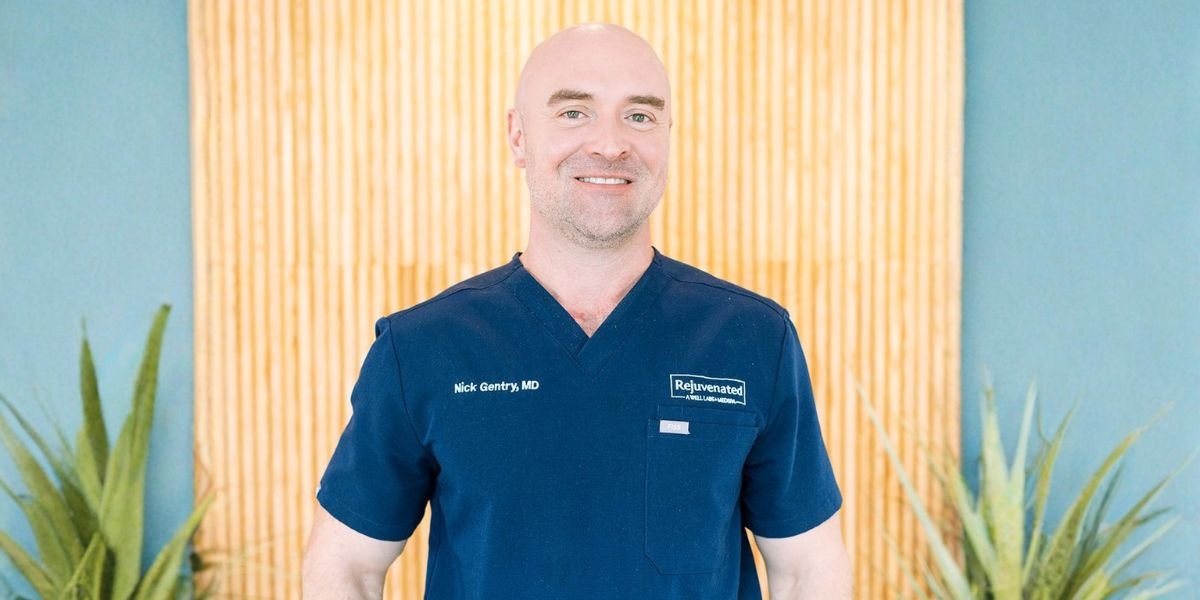
That’s usually where the conversation starts at Maverick Men’s Health in Fayetteville, Arkansas. Led by medical director Dr. Nicholas Gentry, MD, the clinic specializes in testosterone replacement therapy (TRT), erectile dysfunction treatment, medical weight loss, peptide therapy, and male aesthetics. It has built enough of a reputation that men regularly drive 100 miles or more to get there, some from as far as Tulsa, Oklahoma.

A Men’s Health Clinic Built For Men

Maverick was designed with one patient in mind. Its focus is hormone health, sexual health, weight loss, and overall wellness, and every treatment plan is built around the individual rather than a single symptom. The team likes to compare the atmosphere to a “man cave,” a relaxed, private space where men feel comfortable raising the concerns they’ve been putting off.

Maverick considers itself one of the few clinics in the region to bring male aesthetics and comprehensive wellness together under one roof.

The Symptoms Men Stop Ignoring

The complaints that bring men through the door tend to build slowly: fatigue, brain fog, low libido, weight gain, and sexual health concerns such as erectile dysfunction. Hormones are often part of the story, but not always the whole of it. Thyroid function, adrenal health, and gut health can all play a role, and a standard checkup doesn’t always look at them.

Looking Past A Single Lab Result

Many clinics check testosterone levels and stop there. Maverick keeps going, pairing hormone testing with thyroid, adrenal, and gut assessments to see the full picture. The thinking is simple: when a man feels run down, there’s rarely just one cause, and one normal lab result doesn’t always mean everything is working as it should.

“A lot of the men I see have been living with fatigue, brain fog, or low libido for years and just assumed it was part of getting older,” says Dr. Nicholas Gentry, MD, medical director of Maverick Men’s Health. “Usually there’s more going on than one number on a lab report. When we look at hormones, thyroid, adrenal function, and gut health together, we can build a plan around the whole person instead of chasing one symptom.”

What Maverick Men’s Health Treats

Testosterone replacement therapy is at the heart of the practice, but it’s one piece of a broader menu. Maverick offers medical weight loss and functional medicine programs, including GLP-1 treatment, for men whose weight has stopped responding to diet and exercise. Its peptide therapy program uses what the clinic describes as only the most rigorously tested peptides available. Thyroid, adrenal, gut, and full wellness assessments help shape each plan. And for men who want to look as good as they feel, the clinic offers male aesthetic medicine, including injectables and regenerative treatments.

ED Treatment In Fayetteville, Discussed Openly

Sexual health is one of the main reasons men seek out Maverick, and the clinic doesn’t dance around it. Beyond conventional options, it offers GAINSWave, a shockwave-based therapy; the P-Shot, a platelet-rich plasma (PRP) treatment; and Phallofill. Each option is talked through in a private consultation, so patients understand what’s involved before making a decision.

Why Men Make The Drive From Tulsa And Beyond

A two-hour drive is a real commitment for a medical appointment, but for many of Maverick’s patients it’s worth it. In-depth hormone and wellness testing, specialized sexual health treatments, and a private, men-focused setting are hard to find in one place. At Maverick, they come together under one roof.

The Team At Maverick Men’s Health Fayetteville

Dr. Nicholas Gentry, MD, leads the Fayetteville clinic as medical director and also serves as national wellness director for Maverick Men’s Health, which has a location in Austin, Texas. He works alongside physician assistant Alexis Clark, PA.

Visiting Maverick Men’s Health

Maverick Men’s Health is located at 1420 E Augustine Ln #7, Fayetteville, AR 72703. Learn more at maverick-menshealth.com, follow @maverickmenshealth on Instagram, or listen to the Maverick podcast on Spotify.

Frequently Asked Questions

Is Maverick Men’s Health Only For Men?

Yes. Maverick’s services are designed specifically for men’s health, hormones, sexual health, and wellness.

Does Maverick Treat Low Testosterone?

Yes. Testosterone replacement therapy is one of the clinic’s core services, offered as part of a broader hormone and wellness assessment.

Does Maverick Offer Weight Loss Treatment?

Yes. The clinic offers medical weight loss and functional medicine programs, including GLP-1 treatment.

What Areas Does Maverick Men’s Health Serve?

The clinic serves Fayetteville and Northwest Arkansas, with patients regularly traveling from Tulsa and other cities 100 or more miles away.

Disclaimer: This article is for informational purposes only and is not intended as medical advice, diagnosis, or treatment. Individual health needs and treatment results may vary. Readers should consult a qualified healthcare professional before making decisions about any medical condition, treatment, medication, or procedure.