
Market Daily

How a Lifetime in Music Shaped an Uncommonly Human Detective

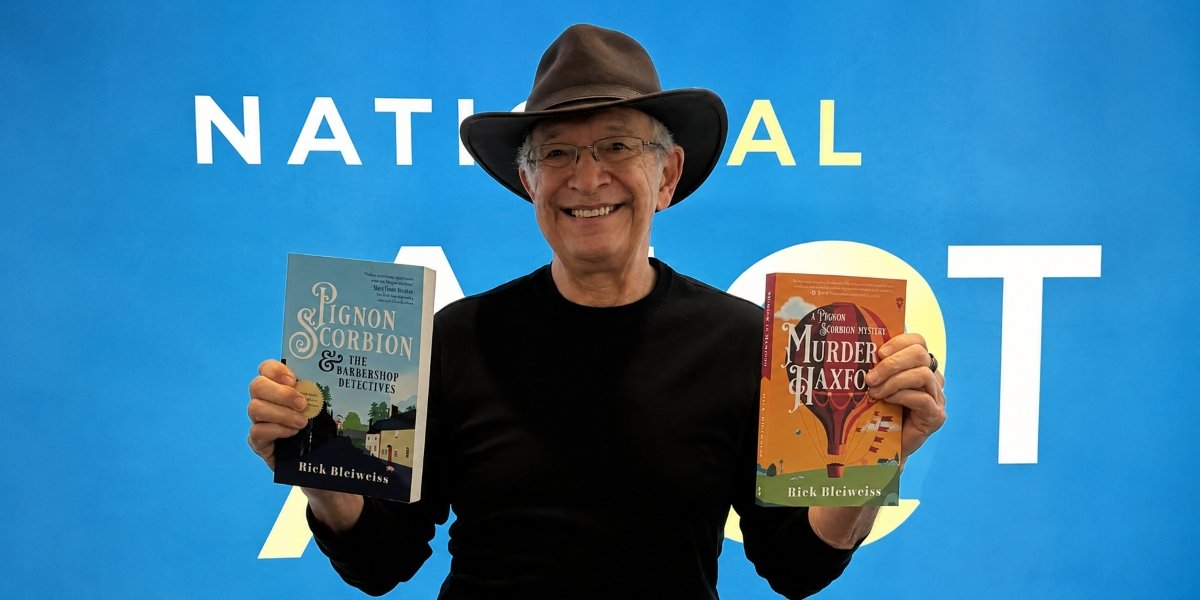
Every memorable detective possesses an unmistakable method. Sherlock Holmes trusts observation. Hercule Poirot relies upon order and psychology. Philip Marlowe follows instinct into places polite society prefers to ignore. Their investigations reveal as much about human nature as they do about crime itself. Rick Bleiweiss approached detective fiction from an altogether different direction.

Before creating Chief Inspector Pignon Scorbion, Rick had spent decades studying another cast of fascinating personalities, musicians, executives, performers, promoters, publishers, journalists, and artists whose ambitions, rivalries, loyalties, and contradictions filled the recording studios, boardrooms, concert halls, and publishing houses of America. Long before he began constructing fictional mysteries, he had observed real ones happen in everyday professional life.

Perhaps that explains why the crimes in his novels never feel like elaborate puzzles assembled merely to surprise readers. They begin with people.

Observation Rather Than Convention

There is an old misconception that mystery writing depends primarily upon clever plotting. The finest mysteries suggest otherwise. They succeed because readers become fascinated by motive before method. Murder matters less than understanding why seemingly ordinary individuals arrive at extraordinary decisions. Rick appears to understand this distinction instinctively.

His Pignon Scorbion novels introduce readers to a chief inspector working in the English market town of Haxford in 1910, accompanied by an unconventional circle of collaborators who gather in a local barbershop to untangle crimes. The premise recalls the classic pleasures of Golden Age detective fiction while allowing personality, not spectacle, to occupy the foreground.

Scorbion himself is neither flamboyant nor emotionally detached. He is observant, composed, quietly eccentric, and deeply attentive to the subtleties of human behavior. These qualities feel earned rather than manufactured.

Influence of a Life Spent Reading People

For much of his professional life, he occupied positions requiring a remarkable ability to assess character. Successful producers recognize talent before audiences do. Publishing executives evaluate manuscripts that may become literary successes years later. Marketing executives anticipate public taste before trends fully emerge. Lecturers learn how different audiences absorb ideas. Columnists spend their careers noticing details others overlook. Across each profession, the central skill remains remarkably similar: understanding people.

Over more than seven decades, he worked alongside artists ranging from Whitney Houston and Melissa Etheridge to U2, Barry Manilow, The Bee Gees, Britney Spears, David Bowie, Alicia Keys, and countless others. Every collaboration demanded careful listening, not only to music but to personalities, ambitions, insecurities, and creative instincts. Such experiences do not automatically produce a novelist. They do, however, cultivate an unusual sensitivity to human complexity.

Why the Setting Matters

The decision to place Pignon Scorbion in rural England in 1910 is itself revealing. Contemporary crime fiction often favors escalating violence, forensic technology, and relentless pacing. Rick instead looks backward to an era when deduction depended less upon scientific equipment than conversation, memory, observation, and patience. The village of Haxford becomes more than scenery.

It functions as a living social organism where everyone knows everyone, or believes they do. Beneath everyday routines lie rivalries, concealed histories, financial pressures, romantic disappointments, and private grievances waiting to emerge. The community itself becomes part of every investigation. This emphasis on relationships reflects an understanding frequently overlooked in contemporary thrillers: crimes rarely occur in isolation. They arise within communities.

Writing After a Lifetime of Listening

There is something quietly significant about the chronology of Bleiweiss’s writing career. He did not publish fiction while attempting to establish himself professionally elsewhere. Instead, he began writing novels after decades spent absorbing stories from nearly every corner of the entertainment world.

By the time Pignon Scorbion & the Barbershop Detectives appeared in 2022, he had already spent years writing columns, essays, magazine articles, anthology contributions, and an award-winning political satire published under a pseudonym. His experience with language had accumulated gradually across journalism, publishing, commentary, and nonfiction before finding its fullest fictional expression.

The result was a debut that attracted considerable attention. The novel earned praise from Kirkus Reviews, appeared among Publishers Weekly‘s notable mystery debuts, became a Barnes & Noble selection, received Amazon Editors’ Pick recognition, won the Pacific Northwest Booksellers Association Buzz Book distinction, and reached the top of Amazon bestseller lists in several mystery categories. Television adaptation rights were later optioned, while the fictional world expanded into an interactive video game. These accomplishments suggest readers recognized something distinctive. Not novelty for its own sake. Experience.

Enduring Appeal of Gentle Intelligence

One of the most striking aspects of Rick’s fiction is its confidence in intelligence over spectacle. The novels trust readers to appreciate conversation, deduction, historical atmosphere, humor, and carefully constructed relationships. They belong to a literary tradition that values curiosity more than chaos and observation more than sensationalism. That approach feels increasingly refreshing.

Modern life often rewards speed, quicker headlines, shorter attention spans, faster entertainment. He offers something different. Mysteries that encourage readers to linger over conversations, examine motives carefully, and appreciate the intricate social fabric surrounding every investigation. Perhaps that philosophy could only emerge from someone whose own career has resisted haste.

Takeaway

After all, Rick Bleiweiss did not spend decades collecting accomplishments simply to arrive at detective fiction. He spent those years collecting people, their voices, contradictions, ambitions, generosity, disappointments, and unexpected acts of kindness. His novels reflect that remarkable archive of human experience.

In the end, Chief Inspector Pignon Scorbion does more than solve murders. He reminds readers that every mystery begins long before the crime itself, with ordinary lives, hidden histories, and the endlessly fascinating complexity of being human.

FOMC Minutes Reveal Broad Hawkish Sentiment Behind the Fed’s Most Fractured Vote in a Decade

The Federal Reserve released minutes from its July 28-29 meeting on Wednesday afternoon, revealing that the case for an immediate interest rate increase circulated more broadly within the Federal Open Market Committee than the 9-3 vote suggested. The committee held the federal funds rate at 3.50% to 3.75%, but three regional bank presidents dissented in favor of a quarter-point hike, marking the most fractured FOMC vote since September 2016. The minutes showed that even among those who voted to hold, many assessed that “policy tightening would likely be necessary if inflation did not decline,” and some believed current financial conditions might not be restrictive enough to return inflation to the 2% target.

Key Takeaways

  • The FOMC voted 9-3 on July 29 to hold the federal funds rate at 3.50%-3.75%, with Cleveland Fed President Beth Hammack, Minneapolis Fed President Neel Kashkari, and Dallas Fed President Lorie Logan dissenting in favor of a 25-basis-point hike
  • Minutes released August 19 showed hawkish sentiment extended beyond the three dissenters, with many participants stating that tightening would “likely be necessary if inflation did not decline”
  • The dissenters argued that acting sooner would “help forestall the need for a steeper and potentially more costly sequence of tightening later”
  • Fed Chairman Kevin Warsh proposed reducing annual FOMC meetings from eight to six, spacing them roughly every two months; no decision was reached and the 2026 schedule remains unchanged
  • Since the July meeting, July nonfarm payrolls unexpectedly fell by 23,000 and inflation data came in subdued, pulling market pricing for a September hike from above 50% down to roughly 27%-34%

Three Dissenters Made the Case for Preemptive Tightening

The three dissenting votes came from Beth M. Hammack of the Cleveland Fed, Neel Kashkari of the Minneapolis Fed, and Lorie K. Logan of the Dallas Fed. No members of the Board of Governors joined the dissent. All three had publicly signaled hawkish positions in the weeks leading up to the meeting. Logan had argued that “modestly” higher rates would be needed. Hammack had cited persistent pressure on households from elevated prices. Kashkari had questioned whether the current rate level was sufficient to bring inflation back to target within a reasonable timeline.

The minutes indicated the dissenters argued that acting sooner would “help forestall the need for a steeper and potentially more costly sequence of tightening later.” The logic is straightforward in monetary policy terms: a small preventive hike now could reduce the risk of a larger, more disruptive tightening cycle if inflation proves stickier than the majority expects. The argument carries particular weight given the inflationary pressures introduced by elevated oil prices tied to the U.S. conflict with Iran.

The hawkish camp extended beyond the three voting dissenters. Kansas City Fed President Jeffrey R. Schmid and St. Louis Fed President Alberto G. Musalem, neither of whom held a vote at the July meeting, subsequently indicated they would have backed a rate increase had they been voting members. The total number of FOMC participants sympathetic to immediate tightening appears to have been at least five, a meaningful share of a committee that typically seeks consensus.

The Majority Held on Data Dependency, Not Dovish Conviction

The nine members who voted to hold did not do so because they were confident inflation was under control. The minutes described a committee that viewed the current policy stance as appropriate for the moment but contingent on incoming data confirming that inflation was moving in the right direction. The language was conditional, not reassuring. Participants broadly agreed that the inflation picture had not materially improved since the June meeting, with headline CPI still running at 3.5% year over year, energy prices up 15.7%, and gasoline up 26.7%. Core inflation at 2.6% was closer to target but not yet at a level that would justify declaring victory.

Ian Lyngen, head of U.S. rates at BMO Capital Markets, framed the outcome as a committee with vocal hawks where the majority sided with Chairman Kevin Warsh to hold “until at least September when policymakers will have the benefit of the July and August CPI reports.” The hold was a decision to gather more data, not an endorsement of the current rate level as sufficient. Lyngen noted that the committee’s hawkish sentiment had likely been intensified by the escalation in Middle East hostilities, which introduced upside risk to energy prices and, by extension, to headline inflation.

Chairman Warsh reinforced his approach of providing less forward guidance than his predecessors. At the post-meeting press conference on July 29, Warsh emphasized that the Fed would not hesitate to act if inflation continued to run above target, stating there was “no soft inflation target.” He stopped short of signaling a September move, consistent with his broader effort to reduce the market’s reliance on central bank telegraphing. That approach has introduced a higher level of uncertainty into rate expectations than investors experienced under previous Fed chairs.

Warsh Proposes Cutting FOMC Meetings From Eight to Six Per Year

The minutes revealed a procedural discussion that could reshape how markets interact with the Fed going forward. Chairman Warsh proposed reducing the number of annual FOMC meetings from eight to six, spaced approximately every two months. Warsh told the committee that a less frequent schedule “would allow more information to accumulate between meetings than under current practice and provide policymakers and the staff more time to consider strategic monetary policy issues.”

The committee offered input but reached no formal decision. Warsh indicated that the remaining 2026 meetings would proceed on the existing calendar regardless of any future changes. The proposal aligns with Warsh’s broader effort to reduce the frequency of central bank communication events that markets treat as binary catalysts. Fewer meetings would mean fewer rate decisions, fewer press conferences, and fewer Summary of Economic Projections releases, potentially shifting the rhythm of how fixed-income and equity markets price monetary policy expectations.

For investors, the proposal introduces a longer-term structural question. Eight meetings per year has been the FOMC standard since 1981. A shift to six would concentrate rate decisions into fewer windows, potentially increasing the magnitude of market moves around each remaining meeting while reducing the steady drip of Fed-driven volatility in the interim periods. The Bank of England operates on an eight-meeting schedule, while the European Central Bank meets six times per year for monetary policy decisions, suggesting a six-meeting model has international precedent.

Post-Meeting Data Has Weakened the Case for September

The economic landscape has shifted meaningfully since the July meeting. Nonfarm payrolls for July unexpectedly declined by 23,000, a result that undercut the narrative of a labor market strong enough to absorb tighter policy. Neither the July CPI nor PPI reports showed a further distinct acceleration in inflation, removing one of the conditions the majority cited as a trigger for action. The combination of softer employment data and stable (though still elevated) inflation has pulled market pricing for a September rate hike from above 50% immediately after the July meeting to roughly 27% to 34% ahead of the minutes release.

The CME FedWatch tool shows a full 25-basis-point hike is not priced in until early 2027 at the earliest, a significant shift from three weeks ago when September was considered a coin flip. The repricing reflects both the data and the market’s interpretation of Warsh’s communication style: without explicit forward guidance, traders are relying more heavily on incoming economic indicators than on Fed signaling to set rate expectations.

The Jackson Hole Economic Symposium, scheduled for August 27-29, is the next major opportunity for Fed officials to provide clarity. Warsh’s speech at the annual gathering in Wyoming will be parsed for any shift in tone following the July minutes and the intervening data. If Warsh signals that the committee remains closer to hiking than markets currently price, the repricing in rate expectations could be sharp. If the speech reinforces the data-dependent hold, September expectations are likely to remain subdued, and attention will shift to the November and December meetings.

What the Minutes Mean for Positioning Ahead of Jackson Hole

The minutes confirmed what the July vote implied: the FOMC is closer to hiking than at any point since the rate-cutting cycle ended in late 2025. The majority held, but the hold was conditional on data improvement that has not yet materialized in a convincing way. Three members dissented, and at least two additional non-voting members aligned with the hawks. The breadth of hawkish sentiment means that a single strong inflation print or a rebound in employment data could shift the balance toward action at the September 16-17 meeting.

For bond markets, the minutes reinforce the upward pressure on yields that has driven 30-year Treasuries to 19-year highs. The Treasury Department’s announcement earlier Wednesday to double long-bond buyback operations partially offset that pressure on the session, but the underlying dynamic remains: the Fed is not done considering tighter policy, and the term premium investors demand for holding long-duration debt reflects that uncertainty. The 30-year yield closed around 5.20% on Wednesday, down from the session high above 5.30% reached before the buyback announcement.

For equity markets, the minutes add a layer of complexity to the retail earnings week. Walmart, Target, and Lowe’s report over the next two days. Consumer-facing stocks are sensitive to both the rate environment and the spending signals embedded in those results. If retail earnings confirm that the consumer is weakening while the Fed remains biased toward tightening, the combination could pressure equity valuations that have priced in a more benign monetary policy path. The S&P 500, which set a record above 7,800 earlier in August, closed up 0.43% on Wednesday as the Treasury buyback announcement provided short-term relief. Whether that relief extends into the Jackson Hole window depends on the data and on how loudly the Fed’s hawks continue to make their case.

FAQs

What did the FOMC minutes reveal about the July meeting?

The minutes showed that hawkish sentiment at the July 28-29 meeting extended beyond the three dissenters. Many participants stated that rate increases would “likely be necessary if inflation did not decline.” The three dissenters argued that acting sooner would prevent a steeper tightening cycle later. At least two additional non-voting members indicated they would have supported a hike.

Who dissented at the July FOMC meeting?

Cleveland Fed President Beth Hammack, Minneapolis Fed President Neel Kashkari, and Dallas Fed President Lorie Logan each dissented in favor of a 25-basis-point rate increase. It was the first time since September 2016 that three FOMC members dissented with a unified view on rate direction.

What is the current probability of a September rate hike?

Market pricing for a September rate hike has declined from above 50% immediately after the July meeting to roughly 27% to 34% ahead of the minutes release. A full 25-basis-point hike is not priced in until early 2027. The decline reflects softer July payrolls data and stable inflation readings since the meeting.

Did the Fed discuss changing how often it meets?

Chairman Kevin Warsh proposed reducing annual FOMC meetings from eight to six, spaced approximately every two months. He said the change would allow more data to accumulate between meetings and give policymakers more time to address strategic issues. No decision was reached, and the 2026 schedule remains unchanged.