Market Daily

Eric Bartosz’s Role in Higher Education and the Intersection of Academic Leadership with Modern Business Strategy


In today’s fast-moving business world, the interaction between academia and business has become more integrated. Universities are no longer viewed as isolated institutions producing theory for theory’s sake but as central ecosystems where experiential skills, leadership knowledge, and strategic minds conjoin. Business schooling, particularly at the graduate level, is evolving towards an experiential and outcome-focused model. This transformation reflects the growing need for professionals adept at managing uncertainty, leading teams effectively, and adapting to the continuous change in global markets. Professional instructors with a good professional background have also acted as the bridge connecting theory to practice, facilitating students in evolving from understanding ideas to hands-on expertise.

Within this new pedagogical landscape, Eric J. Bartosz’s life career reflects a pragmatic, experimental style of instruction in organizational strategy and leadership. As an adjunct professor at DeSales University and Muhlenberg College, he has focused on integrating theoretical frameworks with experiential education, where students analyze case studies and real-life situations that mirror problems faced by entrepreneurs and executives. His classes routinely emphasize the link between personal development and company performance, illustrating how habit, mindset, and emotional intelligence are utilized for effective management. With this blend of strategy and psychology, Bartosz’s scholarly work has closely followed his overall professional philosophy.

At DeSales University, Bartosz teaches management theory, strategic planning, and leadership behavior. His pedagogical contributions bear out the university’s mission to integrate ethics, service, and leadership development into its business studies. His students are typically tasked with crafting strategic business plans that merge operational and human factors. In doing so, they learn to view leadership not as a leadership role but as a process combining decision-making, empathy, and responsibility. A strong focus on self-awareness has characterized his pedagogy as a leader and personal responsibility.

At Muhlenberg College, Bartosz’s role extends into the Organizational Leadership program, where he has contributed to helping students understand how leadership dynamics shape company culture and long-term growth. His classroom discussions frequently draw from his two decades of executive experience, particularly his work in sales strategy, market expansion, and team development. The blend of practical examples and structured coursework helps students recognize how theory translates into practice. This connection has become more valuable in graduate and continuing education, where students are more likely to come from professional backgrounds seeking direct application of concepts in class to the world of work.

Aside from the traditional lecture, Bartosz’s teaching incorporates project-based and collaborative learning models. Students are encouraged to look at leadership challenges in their companies or hypothetical organizations, designing solutions that blend innovation with sustainability. This model facilitates active learning beyond rote memorization and invites reflective consideration of how the fundamentals of leadership function in real stress. At a time when adaptability and emotional intelligence are key business capabilities, this sort of training indicates where management education has been trending globally.

Bartosz’s background as Founder and CEO of BAR40 Fractional Solutions also informs his academic teaching. His consulting, business strategy, and executive experience allow him to draw analogies between business issues and academic theory. The idea that leadership development happens on both an individual and organizational level is a theme throughout most of his lectures. His students often discuss the evolution of leadership models across industries and how adaptive or fractional leadership strategies may assist modern-day organizations. This mature leadership vision resonates with the next generation of corporate professionals seeking flexibility and meaning in their lives.

The parallel between Bartosz’s working life and academic trajectory also reflects a broader trend in business education in which instructors with active industry experience bring relevancy and timeliness to classroom teaching. More than 70 percent of business schools have introduced experiential learning into their MBA program, according to the Graduate Management Admission Council’s 2024 report, due to greater demand for experiential leadership development. Bartosz’s method is part of this larger trend, valuing concrete outcomes and measurable skill acquisition over intangible theory. This approach prepares students for real-life leadership roles, and institutions remain competitive within an evolving educational environment.

His efforts to create courses focusing on leadership psychology, goal setting, and organizational behavior indicate an interest in integrating updated research and contemporary business practice. Some of his lectures are grounded in the philosophies expressed in his BAR40 model of personal improvement, with a focus on mindset optimization and performance management. The intersection of his book’s topic and his academic teaching allows students to connect leadership strategy with self-improvement techniques that can be employed professionally and personally.

Bartosz’s academic and business leadership role indicates an intersection between education and enterprise. Despite the long history of universities being devoted to theoretical approaches, the infusion of real-world experience by teachers like Bartosz demonstrates the heightened emphasis on adaptive and cross-disciplinary learning models. His courses have influenced students vying for leadership roles ranging from healthcare administration to entrepreneurship, demonstrating the inter-industry applicability of leadership principles. By focusing on experiential education, he helps develop critical minds capable of addressing modern business problems with clarity and resolve.

As business schools evolve to cater to industry requirements, teachers who can balance professional exposure with academics are progressively becoming the pillar of education. Bartosz’s role as an adjunct professor shows how professionals working in industry can enhance the quality and relevance of business school education. His integration of personal development concepts into strategic leadership training shows how emotional intelligence, self-regulation, and adaptability can increase organizational performance. The consistency between his consulting practice, writings, and academic teaching highlights a fully realized leadership learning model.

As an educator at DeSales University and Muhlenberg College, Eric Bartosz exemplifies the integration of practice and education that characterizes much of contemporary leadership education. His philosophy of incorporating strategy, psychology, and personal development into management education aligns with larger trends that will influence the future and development of business education around the globe. 

Peer-reviewed Research to Real-World Impact- Why Software Validation is Now Designating Automotive Innovation

With cars quickly turning into software-defined systems, the line between both academia and industry is growing thin. The contemporary car industry is no longer solely reliant on engineering performance, but is increasingly based on the practice of evidence-based validation that draws on peer-reviewed work. This shift can be seen in the examples of professionals in the field, such as Maruthikumar Gundeti, a senior validation engineer working on next-generation vehicles.

The career of Gundeti is indicative of a broader movement in the automotive industry, where engineers are often required to work at the intersection of research, systems integration, and large-scale implementation. Along with nearly 10 years of practical experience that confirms infotainment systems, vehicle control units (VCUs), and advanced driver-assistance systems (ADAS), he has also contributed to peer-reviewed research and participated in international conferences associated with IEEE. This reflects the growing emphasis on academic rigor in industrial software development.

IEEE conferences continue to be recognized as one of the international standards for sharing proven engineering knowledge, especially in embedded systems, automotive software, and intelligent transportation. The research presented at these forums is typically peer-reviewed and often guides industrial standards and even downstream product development. Gundeti’s involvement in this ecosystem highlights the growing contribution of practitioners not only to code and test outcomes but also to structured knowledge shared with the international engineering community.

Such a research-oriented attitude is becoming evident in the certification of safety-critical systems. While infotainment platforms, which assist with navigation, connectivity, and voice recognition, as well as ADAS camera modules that help with object recognition (such as the lane departure alert), the current car software needs to be tested under conditions that reflect the complexity of the real world. Gundeti has worked on in-vehicle testing, hardware-in-the-loop testing, and automated pipelines that allow continuous verification, even with frequent software releases.

Outside of automotive engineering, the same attention to systematic evidence can be observed in other scientific fields. Recent extensive research publications, including large-scale systematic reviews and meta-analyses on the use of international reporting standards such as PRISMA, suggest that rigorous data synthesis is becoming a more widely-used tool in facilitating clinical and technical decision-making. These studies are part of a broader trend, where both industries and regulators are increasingly seeking conclusions that are based on reproducible, statistically robust analysis, rather than isolated findings.

In the automotive environment, this approach is reflected in validation systems that focus on traceability, diagnostic precision, and quantifiable performance results. The experience that Gundeti has with requirement traceability matrices, ISO 14229 diagnostics, and continuous integration environments suggests that validation engineers today are also acting as custodians of system integrity. Their assessments can have a direct impact on the safety, compliance, and readiness of complex multi-supplier software ecosystems, intended to be used on the roads.

As electric and autonomous cars continue to evolve mobility, the industry is likely to focus less on flashy achievements and more on the quieter but essential work of verification and validation. The integration of peer-reviewed research, the dissemination of knowledge at conferences, and the implementation of this knowledge in large-scale industrial applications are increasingly important for engineers.

What once seemed like an abstract route—where a peer-reviewed paper from IEEE could eventually lead to a production vehicle—is now becoming more tangible. It is iterative, immediate, and increasingly visible. As software becomes a defining feature of the car, validation engineers, equipped with both academic and practical expertise, will likely play a key role in shaping the future of transportation.


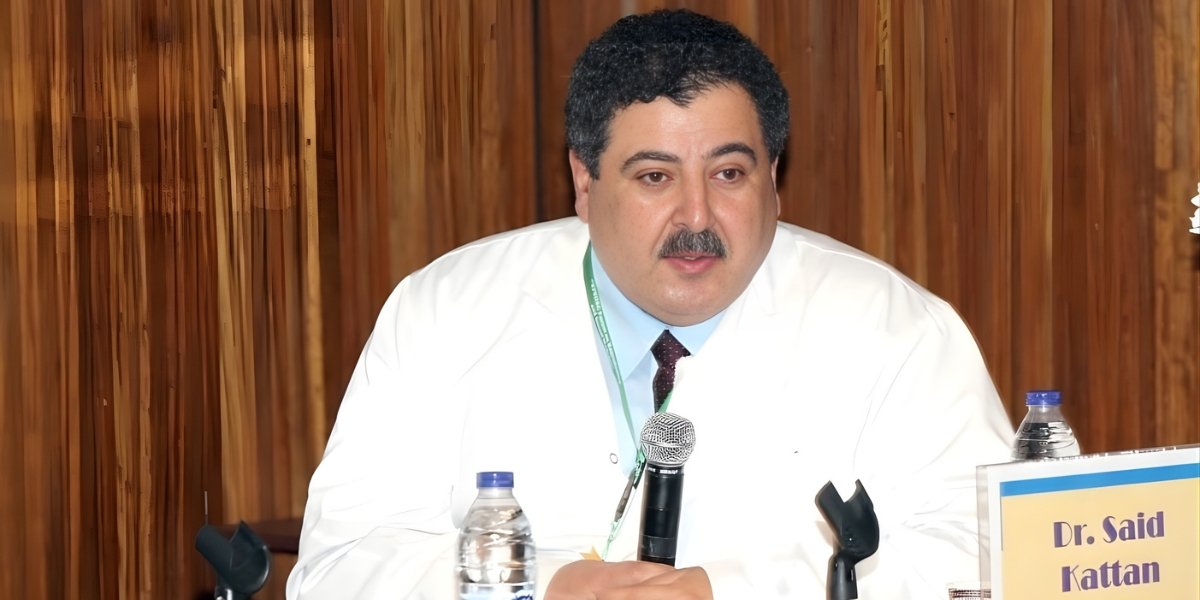
Research Contributions and Clinical Evidence in Modern Urology – The Scientific Work of Said A. Kattan

Clinical research plays a central role in shaping medical practice, particularly in surgical specialties where treatment decisions depend on evolving evidence rather than fixed protocols. In urology and andrology, research spans randomized trials, surgical outcome studies, epidemiological reviews, and experimental models. Globally, bladder cancer alone accounts for more than 570,000 new cases each year, while erectile dysfunction affects an estimated 150 million men worldwide. These conditions require continuous clinical investigation to refine treatment options and inform training standards.

Within this research-driven environment, Said Kattan has contributed to medical literature across several interconnected areas of urology and male reproductive health. His published work reflects a focus on clinical relevance rather than theoretical modeling, with studies addressing cancer management, infertility, sexual dysfunction, and complex surgical conditions. Much of this output emerged alongside his academic and clinical roles, linking patient care with structured investigation during a period of expanding research activity in Saudi Arabia.

Kattan has been actively engaged in the study of bladder cancer, specifically in the treatment of superficial transitional cell carcinoma. In particular, Kattan has participated in prospective studies of intravesical treatment, as well as of an alternating regimen of Bacillus Calmette Guérin with interferon-alpha2b. Such studies, published in 2000, have examined the effectiveness of the treatment and its ability to reduce the risk of recurrences, contributing to the debate about the dosage of the therapy for the prevention of bladder cancer.

Other studies compared Bacillus Calmette-Guérin and interferon alpha 2B for immunotherapy treatment of superficial bladder cancer. Comparative studies like this are relevant in situations where treatment availability, patient tolerance levels, and expenses differ. The study contributed to the body of knowledge in the field by including data from patients in the Middle East, whereas in many instances, studies in this field have been dominated by patients in North America and Europe.

Kattan subsequently published works regarding idiopathic retroperitoneal fibrosis. It’s a condition in which fibrosis develops around abdominal organs, resulting in ureteral obstruction. In his 2002 Journal of Urology paper, his emphasis was on corticosteroid treatment, particularly the amount and duration of medication. The incidence of this condition is very low, at around one to two cases in every 100,000 individuals. However, treatment guidelines exert a significant influence on this disease, given its very high occurrence rate.

Erectile dysfunction and male infertility are other significant areas of study. Kattan has conducted comparative evaluations of the treatment of erectile dysfunction. The methods of treatment included in these comparisons were the therapy of intracavernous injection, the use of a vacuum erection device, and penile prostheses. The significance of these comparisons emerges from the fact that the percentage of men over the age of 40 who have erectile dysfunction has exceeded 40 percent.

Kattan has continued to pursue research in the surgical management of varicocele. He has also compared the outcomes of laparoscopic varicocelectomy performed with and without preservation of the internal spermatic artery. The issue lies at the intersection of technique and outcome. Varicocele has been found in infertile cases in as high a percentage as 40 percent. Varicocele has been found in infertile cases in as high a percentage as 40 percent. Variations in surgical technique are essential in improving learning during training.

Further down the line, he explores the realm of diagnostic complexities and innovations. There was a study conducted in the year 2020 that put forth the scenario of primary infertility due to an occult posterior urethral valve that was detected in a patient entering the fifth decade of life, reiterating that congenital pathologies can often make unexpected presentations. In 2023, Kattan contributed to an investigation on transurethral resection of the ejaculatory ducts for ejaculatory duct obstruction in the Saudi population, which was an esoteric but very relevant entity for male infertility.

There is evidence of his engagement in experimental and translation research through his publications. In 2023, he co-authored a study concerning the histopathology of collagen fleece patching of the tunica albuginea in a rat model of the penis, alongside a review of graft materials for penile surgery. Studies of this kind, conducted on animals, play an essential role in evaluating surgical materials before they gain widespread use among patients.

Overall, Kattan’s contribution to the field does not reflect fragmentation but shows some continuity. He has worked on a wide array of issues that include oncology and sexual medicine, infertility, uncommon fibrotic disorders, traumatic injuries associated with urological surgery, and the surgical materials used in surgery. Most of his scholarly work has been published in peer-reviewed journals, including the Journal of Urology, Saudi Medical Journal, Journal of Surgical Oncology, and Experimental Urology, with indexing sites such as PubMed and ResearchGate.

Together, this body of literature reflects the need for a healthcare environment that balances local conditions with global comparisons. Rather than focusing attention on a single finding, it contributes incrementally to multiple regions. Within this context, it would appear that Said Kattan’s contributions as a researcher represent a continuous endeavor to qualify health experience, evaluate treatment methods, and incrementally broaden what matters from a local perspective within urology and andrology.


Disclaimer: The information provided in this article is for informational purposes only and does not constitute medical advice. The views and opinions expressed in this article are those of the author and do not necessarily reflect the views of any affiliated organizations. Always consult with a qualified healthcare provider for advice regarding any medical condition or treatment.