
Market Daily

Prod-UP-tivity Is a Laptop Workstation and Napping Station in One

By: Travis Mane

Christian Calderon says he saw the need for his product during the 2020 lockdown. He watched first responders taking naps wherever they could find a spot.

That image stuck with him. He already had an idea for a product years earlier. The pandemic year is when he decided to explore what it would take to commit to it.

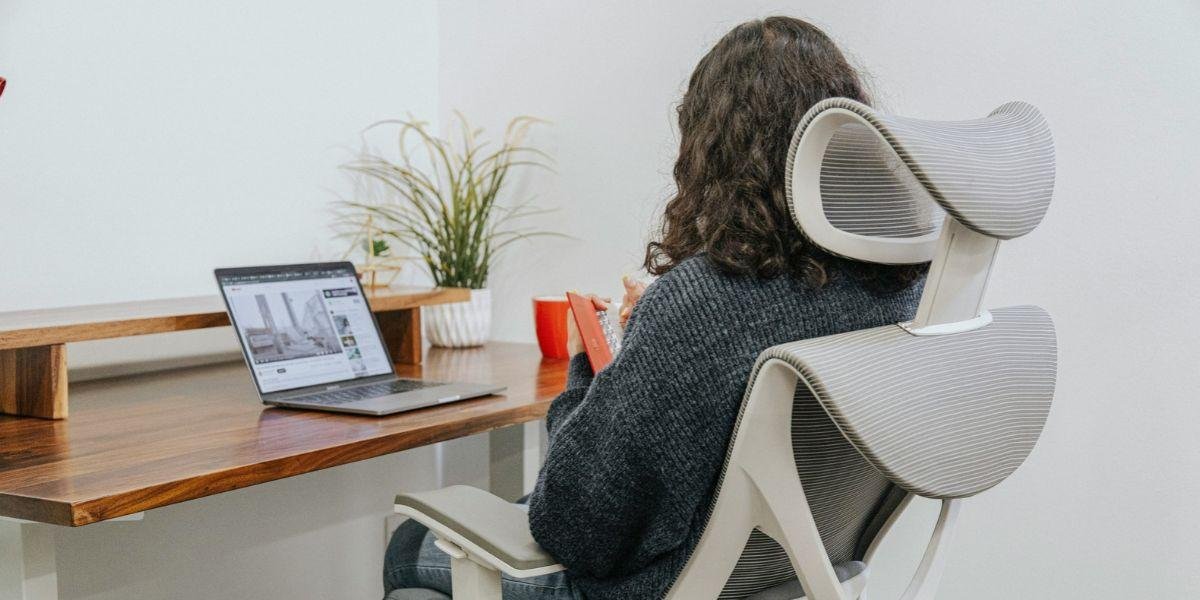
Calderon is the founder of Prod-UP-tivity and Beyond, a consumer goods company in Chicago. The product he is building is a travel item that does two jobs: it works as a laptop workstation and as a personal napping station. He says it is the first and only product in the travel industry that solves two problems with one design.

The road from idea to launch took years. After many iterations, he filed a provisional patent application, then a patent. In 2023, he received his utility patent, and he says that is when he knew there was no turning back. “I can’t just have a patent and not do anything about it,” he says. The product has evolved from its original design and is now in its pre-launch phase, ready to be introduced to the world.

The plan is to launch for e-commerce, positioned for both consumers and businesses. He also wants to enter as a vendor at key trade shows.

Manufacturing has been the hardest part. Calderon says he worked with a company to help with the process, and the two sides had different visions of what the deliverables should be. That prolonged the time it took to get the prototype he wanted. He says the challenge has mostly been overcome, and the company is continuing to work with his requests.

Behind the product is a belief. In a world moving at a fast pace, Calderon says, it is sometimes necessary to get back to what the body naturally intended. He describes that as a recovery state that can come through the power nap. “Simple yet effective,” he says. He believes that when it is adopted, it can be transformative in the workplace. These are his views on the product, and they are the idea the company is built around.

He is open about where his faith fits. Calderon calls his vision for Prod-UP-tivity “revolutionary and definitely God-given,” and says God gives people many witty inventions. He names a verse, Matthew 6:33, as the compass for how he runs his business: “Seek His Kingdom first and his righteousness and all these things will be given to you as well.”

His life outside the business is full. He says he is grateful for his wife, a talented musician, teacher of music, and author. He is also proud of his son, who he says is gifted in music, plays multiple instruments including voice, writes songs, produces music, and serves as a worship artist and music director.

He has a second venture on the way. Calderon recently formed an online coffee business, built around the theme of putting first things first to start your day.

And he hosts a gathering he calls TTT, short for Truth Through Testimony. It is a meal with friends and strangers, followed by a slowdown into worship music, which then moves into open testimonies. “People enjoy the gathering,” he says. He compares it to Thanksgiving without having to wait for a holiday to celebrate what you’re thankful for.

His career before this earned some recognition. Not tied to his entrepreneurial work, Calderon says he was named Employee of the Year for two consecutive years at a corporate job.

Chicago is where he builds. He calls it a beautiful city rich in culture, history, and great food, and a leader in manufacturing with many things to offer. For a founder who is bringing a physical product to market, that matters.

The goal, in his words, is to help everyday people increase their productivity through wellness.

Calderon recently filmed with The Blox, a gamified educational bootcamp for entrepreneurs, for a documentary set to air soon.

He started with a patent and an image of first responders catching rest where they could. Now he is getting ready to put it in people’s hands.


NRF Expects 182.7 Million Thanksgiving Weekend Shoppers as 82% of Consumers Move to Manage Holiday Costs

The National Retail Federation expects 182.7 million consumers to shop from Thanksgiving Day through Cyber Monday, November 26 to 30, 2026, below last year’s pre-weekend forecast of 186.9 million. The more telling number for merchants is that 82% of holiday shoppers say they are taking steps to manage holiday costs.

Key Takeaways

  • 82% of holiday shoppers are managing costs: 25% are buying less expensive gifts, 24% are cutting back in other areas, 20% are buying for fewer people and 20% are waiting until Thanksgiving weekend to do most of their shopping.
  • NRF’s 2025 pre-weekend forecast of 186.9 million shoppers was followed by an actual turnout of 202.9 million, a record by NRF’s count.
  • 40% of consumers pay for holiday gifts most often with debit cards, compared with 35% for credit cards and 14% for cash.
  • 39% of shoppers plan to give gift cards, down from 43% in 2025, and NRF expects gift card spending of $26.8 billion, its lowest since 2015.
  • 59% of holiday shoppers plan to use AI over the weekend, and 25% of them will use it to scan retailer sites for prices.

Pre-Weekend Forecasts Have Run Below Actual Turnout

The 2026 estimate comes from a National Retail Federation survey conducted with Prosper Insights & Analytics, which asked 7,956 adults about their plans between October 30 and November 9. The margin of error is plus or minus 1.1 percentage points.

The decline from 186.9 million to 182.7 million compares one forecast with another. It does not compare actual shoppers. Last year, the National Retail Federation’s post-weekend survey counted 202.9 million people who shopped, 16 million more than the pre-weekend estimate and up from 197 million in 2024. Forecasts set a floor, and recent turnout has cleared it.

Timing is also shifting the weekend’s role. Sixty percent of consumers had started holiday shopping by early November, up from 56% before the pandemic.

Four Cost-Cutting Tactics Shape What Holiday Shoppers Will Buy

The National Retail Federation’s cost data carries the clearest signal for businesses. Of the 82% managing holiday budgets, a quarter are trading down to less expensive gifts, and nearly as many are cutting spending elsewhere to protect the holiday budget.

The two 20% groups point in different directions. Shoppers buying for fewer people shrink the number of transactions, while shoppers waiting for Thanksgiving weekend concentrate demand into five days. That second group matters for promotion timing, since 48% of weekend shoppers say deals too good to pass up are their main reason to shop.

Tradition is the second reason, cited by 26%. For merchants, that splits the weekend audience into deal-driven buyers and habitual ones, and they respond to different offers.

Debit Cards Lead Holiday Payments Ahead of Credit

Forty percent of consumers say they use debit cards most often for holiday gifts, compared with 35% for credit cards and 14% for cash. Debit has led credit in the National Retail Federation’s holiday survey since 2021.

A debit-led season ties spending closely to cash on hand rather than revolving credit. Combined with the budget tactics above, it describes a consumer setting a fixed holiday budget and spending inside it.

Gift Card Intent Falls to a Survey Low

Thirty-nine percent of holiday shoppers plan to give gift cards, down from 43% last year and the lowest share in the survey’s more than 20-year history, according to the National Retail Federation. Total gift card spending is expected to reach $26.8 billion, the lowest since 2015, as consumers plan to buy fewer cards and load less onto them.

Restaurant cards remain the most popular type at 26%, followed by department store and bank-issued cards at 23% each. Clothing and accessories lead overall gift plans at 45%, ahead of gift cards at 39% and toys at 29%.

AI Makes Price Comparison a Routine Shopping Step

Fifty-nine percent of holiday shoppers plan to use AI during the weekend. Their top uses are product recommendations (32%), brainstorming gift ideas (31%), and, at 25% each, gift lists, budget tracking and scanning retailer sites for prices.

Price scanning sits alongside online search, which 37% of consumers name as their top source of gift inspiration, ahead of friends and family at 32% and in-store browsing at 27%. Black Friday remains the anchor day: 126 million shoppers plan to shop, with 67% of them likely to shop in stores and 89% online.

Federal data entering the weekend is mixed. The Census Bureau reported that October retail and food services sales rose 0.2% to $748.2 billion and were up 6.8% from October 2025. The bureau noted that the monthly change is not statistically distinguishable from zero.

Retail sales are not adjusted for inflation, and consumer prices rose 0.4% in October. November retail sales, the first federal read covering Thanksgiving weekend, are scheduled for release on December 16.


FAQs

How many people are expected to shop Thanksgiving weekend 2026?

The National Retail Federation expects 182.7 million consumers to shop from Thanksgiving Day through Cyber Monday. That compares with a pre-weekend forecast of 186.9 million in 2025.

How many people actually shopped Thanksgiving weekend 2025?

The National Retail Federation counted 202.9 million shoppers over the 2025 holiday weekend, a record by its count. That was 16 million more than its pre-weekend forecast.

How are consumers cutting holiday costs in 2026?

82% of holiday shoppers are managing costs. The leading tactics are buying less expensive gifts (25%), cutting back in other areas (24%), buying for fewer people (20%) and waiting until Thanksgiving weekend to shop (20%).

Are gift cards less popular this holiday season?

Yes. 39% of shoppers plan to give gift cards, down from 43% last year, and the National Retail Federation expects gift card spending of $26.8 billion, its lowest since 2015.