Market Daily

Why Uptown Common Is Betting on Slow Luxury in a Fast-Fashion World

Fashion moves quickly.

New collections arrive constantly. Trends emerge and disappear within weeks. Social media encourages consumers to discover, purchase, photograph, and replace products at a rapid pace.

Uptown Common is betting that some customers are ready for the opposite.

Founded by Grant and Jennifer Anderson, the independent leather goods company is building its identity around what might be called “slow luxury”: products made carefully, from quality materials, with the intention that they remain relevant long after a trend disappears.

The company began in 2019 and evolved gradually.

Jennifer initially created macramé products while Grant developed his leatherworking skills. Smaller leather accessories eventually grew into a broader collection, and in 2023, the couple decided to discontinue macramé and devote Uptown Common entirely to leather goods.

The change sharpened the company’s identity.

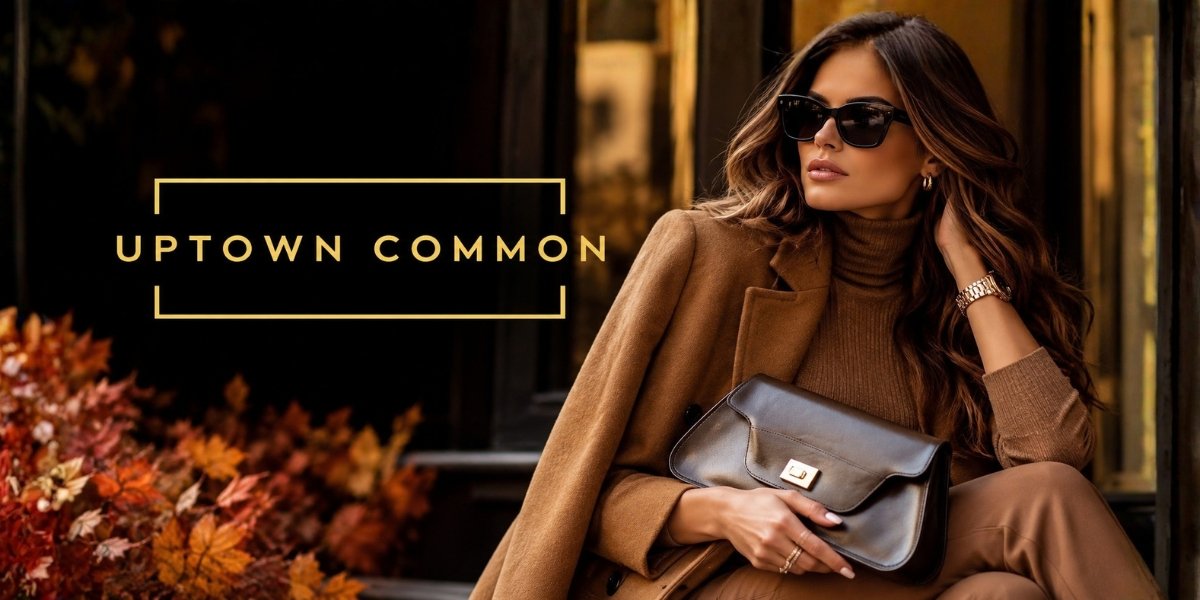
Uptown Common now produces handbags, briefcases, wallets, belts, clutches, shoulder bags, and related pieces, emphasizing traditional hand construction.

Its approach is deliberately labor-intensive.

According to the company, cutting, sewing, and hardware installation are performed by hand. Its vegetable-tanned leather is sourced primarily from Italy and the United States, while solid brass and stainless steel feature among its hardware choices.

Those details are part of how Uptown Common presents its products.

The company places emphasis on the process behind them.

Grant’s interest in leatherworking was partly inspired by discovering that a premium bag he had purchased wasn’t made with the quality of materials he expected. That realization led him deeper into understanding leather and eventually into making products himself.

Years later, that same attention to materials remains fundamental to Uptown Common.

Its aesthetic draws from minimalist and vintage design rather than rapid trend cycles. Structured shapes and understated detailing allow craftsmanship and leather to become the visual focus.

There is also something inherently personal about this approach.

Leather changes.

A bag carried through airports, offices, dinners, family gatherings, weekend trips, and everyday errands will eventually reflect the life of the person carrying it.

Instead of treating those changes as imperfections, Uptown Common’s philosophy embraces the idea that a well-made leather piece can develop greater character over time.

This creates a different proposition for consumers interested in long-term use and craftsmanship.

Uptown Common frames luxury less around scarcity, price, and brand recognition and more around craftsmanship, provenance, personalization, and emotional value.

Uptown Common’s recent expansion illustrates that approach.

In 2026, the company entered the Hamptons market with a Southampton pop-up at MORPHEW World. The event included personalization and a philanthropic component, positioning the brand within a broader lifestyle experience rather than simply a traditional retail transaction.

For a company that spent years participating in artisan markets, the Hamptons appearance represented another stage in its growth.

Yet Uptown Common’s fundamental proposition remains simple:

Make something well.

Use good materials.

Allow it to last.

And create something its owner will want to keep.

In a fast-moving fashion environment, slowing down may seem counterintuitive.

For Uptown Common, it may be exactly the point.

Consumer Sentiment Falls to 48.1 in September as Year-Ahead Inflation Expectations Climb to 4.6%

The University of Michigan’s final September consumer sentiment index fell to 48.1, down 7% from August and nearly 13% from a year earlier. It is the second-lowest reading since the survey began in 1952. Year-ahead inflation expectations rose to 4.6% from 4.0%, the highest level since June.

Key Takeaways

  • The final September reading of 48.1 came in above the preliminary estimate of 47.8 and the consensus forecast of 47.6, but below August’s 51.7 and September 2025’s 55.1.
  • Only May 2026’s record low has been weaker in the survey’s 74-year history.
  • Year-ahead inflation expectations rose to 4.6% from 4.0%, compared with 3.4% in February.
  • Five-year inflation expectations rose to 3.4% after three straight months at 3.3%, above the 2.8% to 3.2% range seen throughout 2024.
  • The Index of Consumer Expectations fell 10.1% to 46.3 from 51.5 in August.
  • Buying conditions for durable goods improved modestly as some consumers moved purchases forward to get ahead of expected price increases.

September Sentiment Undoes August’s Rebound

August briefly looked like a turning point. Consumer sentiment rose 7% that month to 51.7, its first meaningful gain in months. September erased all of it. The final reading of 48.1 is the lowest in four months and 15% below January 2026.

The final number was slightly better than the preliminary mid-month estimate of 47.8 and beat the Reuters consensus of 47.6. That modest upside surprise does not change the bigger picture. The index remains below levels recorded during the 2008 financial crisis, the pandemic shock, and the 1970s oil crisis.

Joanne Hsu, director of the University of Michigan’s Surveys of Consumers, said consumers reported roughly 10% deterioration in views of both their current and year-ahead personal finances, as worries about high prices kept building.

Inflation Expectations Move Further From the Fed’s Target

The inflation expectations data may matter more for markets and business planning than the headline index. Year-ahead expectations rose to 4.6% in September from 4.0% in August. That is a full 1.2 percentage points above February’s 3.4%, and higher than any reading in 2024.

Long-run expectations are the more concerning signal. Five-year inflation expectations rose to 3.4% after holding at 3.3% for three months. Throughout 2024, that measure stayed between 2.8% and 3.2%. A sustained move above that range suggests households increasingly see elevated inflation as a lasting feature of the economy rather than a temporary shock.

That matters to the Federal Reserve, which watches expectations closely because they can become self-fulfilling. When consumers expect higher prices, they tend to push for bigger raises and accept price increases more readily, which can make inflation harder to bring down. The Fed raised its benchmark rate by 25 basis points on September 16 to a target range of 3.75% to 4%, its first hike since July 2023. Most policymakers projected at least one more increase before year-end.

Consumer Expectations Fell More Than Current Conditions

The survey’s two components tell different stories. The Index of Consumer Expectations fell 10.1% to 46.3 from 51.5 in August, while the current conditions measure held up better. That gap shows the decline is driven more by worries about the months ahead than by what households are experiencing today.

The short-run outlook for business conditions dropped sharply. Respondents cited elevated fuel prices and renewed trade disputes as risks to the broader economy.

Retailers Face a Pull-Forward in Durable Goods Demand

One part of the report went against the overall trend. Buying conditions for durable goods such as appliances, furniture, and electronics improved modestly in September. The survey attributed part of that to consumers deciding to buy now to avoid higher prices later.

For retailers, this is a mixed signal. In the short term, it can support sales of big-ticket items heading into the fourth quarter. Over time, purchases pulled forward can leave a gap in demand once consumers have bought what they needed. Retailers planning holiday inventory should treat any September or October strength in durable goods with caution rather than assume it will continue.

Small business owners face a narrower margin for error. With consumers expecting 4.6% inflation over the next year and reporting weaker personal finances, their tolerance for price increases may be wearing thin. The NFIB Small Business Optimism Index for August already showed owners reporting weaker sales and ongoing inflation pressure, even as most remained confident about their own businesses.

What to Watch Next for Consumer Spending

The next major data point is the August Personal Income and Outlays report from the Bureau of Economic Analysis, scheduled for September 30. It will show whether weak sentiment is translating into weaker spending, and will update the PCE price index, the Fed’s preferred inflation measure. July PCE inflation was 3.7% year over year, with core PCE at 3.3%.

Higher borrowing costs add pressure from another direction. The average 30-year fixed mortgage rate rose to 7.03% the week of September 24, the first time above 7% since January 2025. For households already reporting weaker finances, higher financing costs on homes, cars, and credit cards put more strain on discretionary budgets.


Disclaimer: This article is for informational purposes only and is based on publicly available economic data and reported statements from the University of Michigan, the Federal Reserve, the Bureau of Economic Analysis, and other cited sources. Consumer sentiment, inflation expectations, interest rates, and spending patterns can change as new economic data becomes available. References to potential effects on consumers, retailers, small businesses, and financial markets are general analysis and should not be considered financial, investment, or business advice. Readers should consult official data releases and qualified professionals when making financial or business decisions.


FAQs

What was the University of Michigan consumer sentiment reading for September 2026?

The final September 2026 reading was 48.1, down from 51.7 in August and 55.1 in September 2025. It is the second-lowest reading since the survey began in 1952.

What are consumers’ inflation expectations for the next year?

Year-ahead inflation expectations rose to 4.6% in September from 4.0% in August. Five-year expectations rose to 3.4% from 3.3%.

Why did consumer sentiment fall in September?

Consumers reported roughly 10% worse views of their current and year-ahead personal finances as concerns about high prices intensified. Elevated fuel prices and trade disputes also weighed on the business outlook.

What does falling consumer sentiment mean for businesses?

Weak sentiment can point to more cautious spending ahead, especially on discretionary purchases. The September report also showed some consumers buying durable goods early to get ahead of expected price increases.

When is the next consumer spending data release?

The Bureau of Economic Analysis releases August personal income, spending, and PCE inflation data on September 30, 2026.

Uptown Common, The Luxury of Something Made to Last

In a fashion industry driven by speed, constant launches, and rapidly changing trends, Uptown Common is building its identity around a very different idea: permanence.

Founded by husband-and-wife team Grant and Jennifer Anderson, Uptown Common creates handcrafted leather goods designed not simply to be purchased, but to become part of the owner’s life. The brand’s structured handbags, wallets, belts, briefcases, and accessories reflect an approach to luxury rooted in materials, craftsmanship, functionality, and time.

Uptown Common’s story began in 2019, initially through Jennifer’s handmade macramé work. Grant subsequently brought his growing interest in leatherworking into the business, introducing wallets, notebooks, and keychains before the collection expanded into increasingly sophisticated leather pieces.

By 2023, the Andersons made an important decision: Uptown Common would focus completely on leather.

That decision helped define the brand consumers see today.

Grant’s interest in the craft began years earlier after discovering that a premium leather bag he had purchased was made from materials that didn’t meet the quality he expected. Rather than simply accepting the disappointment, he became interested in understanding leather itself, how it is sourced, constructed, stitched, shaped, and transformed into something capable of lasting for years.

That curiosity ultimately became a business philosophy.

Each Uptown Common piece is constructed by hand, including cutting, sewing, and hardware installation. The company uses vegetable-tanned leather sourced from Italy and the United States, along with solid brass or stainless-steel hardware.

The result is an aesthetic that feels both contemporary and timeless.

The company’s designs are influenced by minimalist and vintage principles, favoring clean structure rather than excessive decoration. It is an approach particularly relevant at a moment when many consumers are reconsidering what luxury actually means.

Is luxury a recognizable logo?

Is it exclusivity?

Or can luxury simply mean knowing who made something, understanding the materials behind it, and owning an object that wasn’t created to be replaced next season?

For Uptown Common, the answer increasingly lies in the latter.

Its bags are intended to change naturally with their owners. Leather develops character through use, allowing a piece to carry subtle reminders of travel, work, celebrations, daily routines, and personal milestones.

That philosophy also lends itself naturally to personalization. Rather than creating accessories that feel interchangeable, Uptown Common has emphasized individuality and craftsmanship as part of the customer experience.

The company has also begun moving beyond its Midwestern artisan-market roots and introducing its work to new luxury audiences. Its 2026 Hamptons debut included a Southampton pop-up at MORPHEW World, bringing the brand into an environment where fashion, vintage design, personalization, and philanthropy intersected.

Yet expansion hasn’t erased the original idea behind the company.

Uptown Common remains grounded in the maker’s hand.

For Grant and Jennifer Anderson, building the brand appears to be as much about preserving craftsmanship as expanding a fashion business. Their story reflects a broader movement toward intentional consumption and objects that carry meaning beyond their purchase price.

In a culture constantly asking what’s next, Uptown Common is asking a different question:

What is worth keeping?

For this growing American leather brand, that may be the most modern definition of luxury of all.

Website: uptowncommonhandmade.com
Instagram: @uptowncommon