Foxhollow Farm Turns 20: What Two Decades of Real Grass-Fed Beef Actually Looks Like

By: Kate Sarmiento
Costco sells grass-fed beef now. So does Kroger. So does basically every grocery chain that spent the last decade watching “clean eating” turn into a real line item on the balance sheet. It should be a win for anyone who ever worried about where their steak came from. Instead, the label has gotten harder to trust the more popular it’s become, and Foxhollow Farm, a 1,300-acre biodynamic operation in Crestwood, Kentucky, has spent 20 years proving there’s a better way to do it.
Two separate problems have been hiding behind that green “grass-fed” sticker for years.
The first is about geography: an animal born, raised, and slaughtered in Australia or Uruguay could cross the ocean, get repackaged at a U.S. plant, and legally carry a “Product of USA” label, regardless of where it actually lived (Source: The Counter, 2021). Industry estimates put the share of U.S. grass-fed beef that was imported this way at 75 to 80 percent.
The second problem is about verification: USDA never required an independent check on the grass-fed claim itself, so a producer could put the word on a package without a third party ever confirming what the animal actually ate or where it actually grazed (Source: USDA Agricultural Marketing Service, 2016).
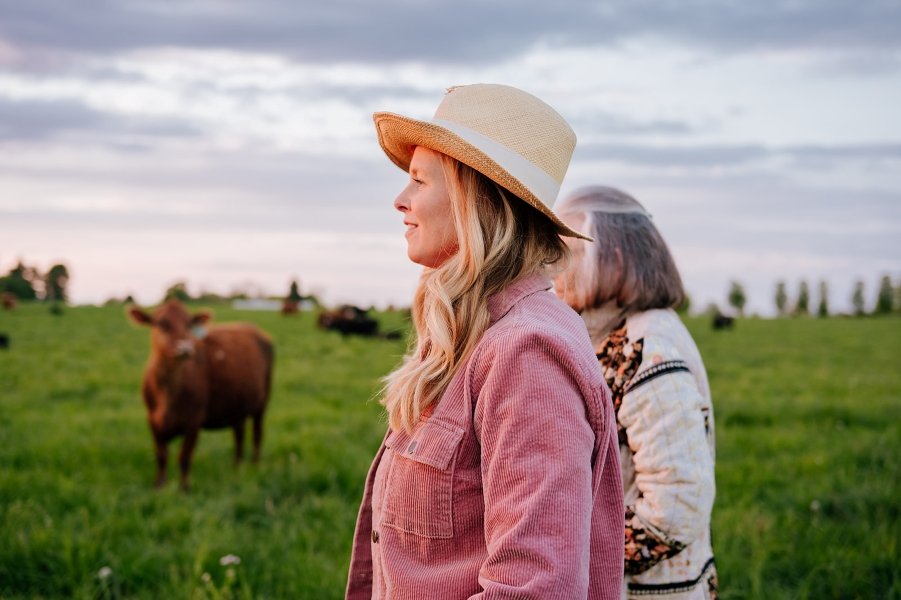
Foxhollow Farm turns 20 this year, marking two decades since fourth-generation steward Maggie Keith reintroduced cattle to land her family had stewarded for generations. She’s been talking about knowing your farmer since 2006, years before most people cared to ask. In 2026, the first of those two problems stopped being optional to fix. As of January 1, USDA closed the import loophole: to use “Product of USA” on beef, the animal now has to be born, raised, slaughtered, and processed in this country, full stop (Source: Farm Action, 2026). Twenty years of advocacy just became federal law. Foxhollow didn’t need the memo. It’s been the model the whole time.
Grass-Fed Labeling Grew Up. The Marketing Didn’t.
Grass-fed sounds like a simple promise, but it isn’t one, and hasn’t been for a while. USDA walked away from its own grass-fed marketing standard back in 2016, handing oversight to a different agency and leaving companies to define their own terms and get them approved. Some producers filled that gap with integrity. Others leaned into “grass feedlots,” where cattle spend their finishing months penned up and fed grass pellets instead of grain pellets. It’s a different diet. It isn’t a different picture of what a cow’s life should look like.
None of that shows up on the package. What shows up is a green label, a photo of rolling hills, and a price that’s still higher than the conventional beef sitting next to it. Shoppers pay that premium because they think they’re funding a cleaner system, and a lot of the time they’re funding a longer supply chain with better branding instead.
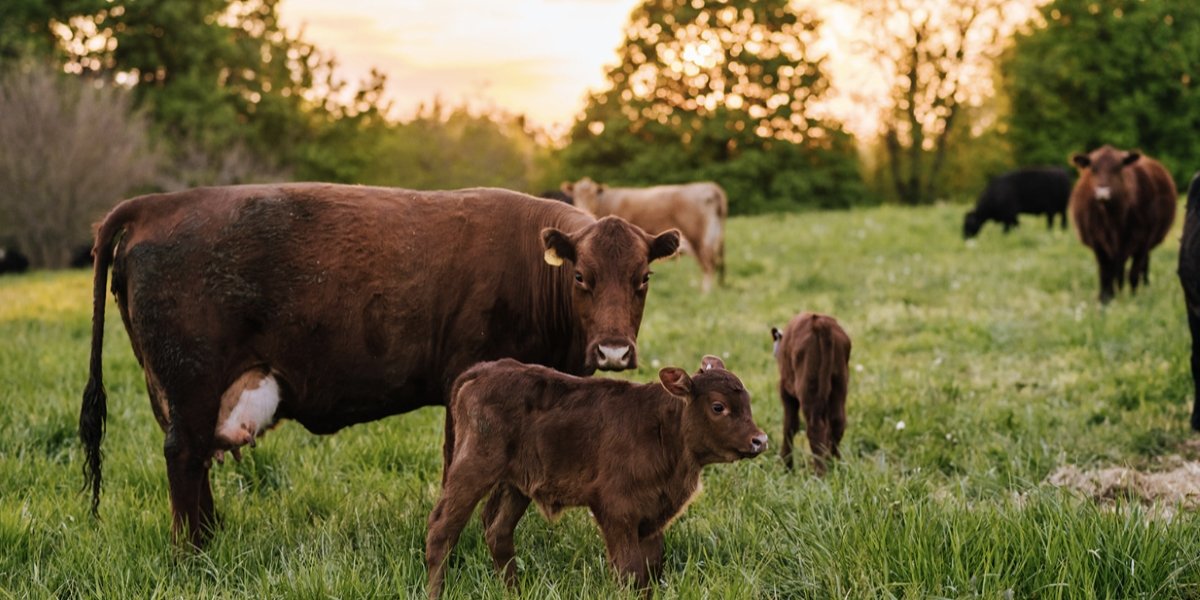
Foxhollow Farm doesn’t have that problem, because it never built a system that needed the loophole in the first place. The farm holds Regenified Level 5, Demeter Biodynamic, and American Grassfed Association certification at the same time, and it’s raised its cattle on the same Kentucky pasture for the entire twenty years anyone’s been counting. There’s no import record to explain, and no back-label fine print doing work the front label doesn’t. Just one farm, one herd, and twenty years at the same address.
Consumers Want Food Transparency. The Grass-Fed Beef Market Is Still Catching Up.
The demand for transparency isn’t a niche concern anymore. Sixty-seven percent of consumers say sustainability matters when they’re choosing what food to buy, but only 39 percent think current labels actually tell them anything useful about it (Source: NSF International, 2025). That’s the gap labels like “grass-fed” have been living in for years: real demand on one side, thin verification on the other.
It’s also part of why nose-to-tail eating stopped being a fringe idea. Organ meat and collagen products, once the domain of committed home cooks and old-school butchers, are now one of the fastest-growing categories in functional nutrition. The global collagen supplement market is projected to grow from roughly $2.6 billion in 2025 to nearly $4.75 billion by 2034 (Source: Fortune Business Insights, 2026), and most of that growth is coming from people who want the nutrient density without a mystery ingredient list attached to it. Foxhollow Farm has been moving into that space too, treating the whole animal as the product instead of an afterthought behind the steak counter.
The number underneath all of this isn’t encouraging. The U.S. lost 142,000 farms between 2017 and 2022, a seven percent drop in just five years, according to USDA’s most recent Census of Agriculture (Source: USDA National Agricultural Statistics Service, 2024). Family farms that can’t compete on price against a global supply chain don’t get to sit this one out. They either find a direct-to-consumer model that works, or they disappear. Foxhollow chose the first option about twenty years before most farms realized they’d need to.
Twenty Years of Regenerative Farming Isn’t a Milestone. It’s the Proof.
A lot of farms talk about regenerative agriculture like it’s a five-year experiment still waiting on results. This one ran out of that excuse a while ago. Two decades of biodynamic practice, three overlapping certifications, and land that’s had enough time to actually recover add up to something closer to a working case study than a pitch deck.
The “know your farmer” argument used to sound like something heard at a farmers market table, said with good intentions and not much enforcement behind it. In a year when the federal government finally caught up to what this farm has been doing since 2006, it’s turned into something closer to consumer protection. The label changed. The land didn’t have to.
For anyone looking at what beef looks like when the farm and the label finally agree with each other, Foxhollow Farm ships its 100% grass-fed, grass-finished beef from Crestwood, Kentucky, with no feedlot layover in between. Twenty years in, the farm isn’t asking anyone to trust a sticker. The pasture is open to visitors who want to see it for themselves.