
Market Daily

Paul Davis Restoration of Southeast Jersey Shore Delivers 24/7 Water, Fire, and Mold Damage Restoration Across Egg Harbor Township, Williamstown, and Vineland


EGG HARBOR TOWNSHIP, New Jersey. Burst pipes, roof leaks, kitchen fires, and hidden mold do not wait for business hours. Paul Davis Restoration of Southeast Jersey Shore, a locally owned and family-operated property restoration company, answers emergency calls around the clock and holds itself to a published response standard of first contact with the customer within 30 minutes and a technician on site within 60 minutes.

The office serves homeowners, landlords, property managers, and commercial clients in Egg Harbor Township, Williamstown, Vineland, and the surrounding South Jersey communities. It is led by owners Linda Shea and Alex Boland, who both hold Institute of Inspection, Cleaning and Restoration Certification (IICRC) credentials in water damage restoration, fire and smoke damage restoration, structural drying, and trauma and crime scene cleanup, as well as CRMR mold remediation certification and EPA lead safety certification.

Executive Discipline Applied to Emergency Restoration

Shea and Boland left their established executive careers to run the local Paul Davis franchise. One of the two owners is a former Army Infantry Officer who led combat teams. The other spent years leading strategy and customer insights work for national brands, managing multimillion-dollar budgets and large, distributed teams.

That background changes how jobs get run. Schedules are built and held. Safety protocols are written down rather than assumed. Quality checks happen before a crew leaves a property. Every project is documented with photos and digital records, so the homeowner and the insurance adjuster are looking at the same information at the same time.

A Response Standard Measured in Minutes

Speed matters in restoration for practical reasons. Water travels through drywall, subfloor, and insulation within hours, and mold can begin to grow on damp materials in as little as 24 to 48 hours. Delayed drying often turns a containable loss into a demolition project.

The team targets a 30-minute phone response and a 60-minute arrival for emergencies, 24 hours a day, seven days a week. Inspections and estimates are free, including free in-home estimates.

Certified in Water, Fire, Smoke, Mold, and Trauma Cleanup

The office handles the full range of property loss work, including water damage mitigation and structural drying, fire and smoke damage restoration, mold inspection and remediation, storm and flood cleanup, contents cleaning and storage, and reconstruction after the mitigation phase is complete. Trauma and crime scene cleanup is also available with certified technicians.

Work is backed by a workmanship warranty, an on-time service commitment, and a one-year warranty on completed repairs. The company also uses eco-friendly products and methods where possible.

A Smoother Path Through the Insurance Claim

Insurance is where most restoration projects stall. The team maintains working relationships with all major carriers and coordinates directly with the assigned adjuster to reach a scope that actually restores the property.

Because both owners come from analytics and technology backgrounds, the office leans on digital documentation rather than memory. Moisture readings, daily photos, and progress notes are captured and shared, which shortens the back-and-forth that usually delays approval.

Built for Both Homeowners and Property Managers

Most restoration companies pick a lane. Small operators are responsive but run on improvisation. Large operators have systems but feel impersonal. This office is set up to serve both sides of the market.

For multi-site operators and investors, that means pre-loss planning, standardized response playbooks, portfolio-level reporting, and an understanding of occupancy, cash flow, and risk. For families, it means one accountable point of contact, plain language explanations, and someone who picks up the phone. The owners have managed large facilities and coordinated multiple trades, so schedules hold, and downtime shrinks.

Fixing What People Dislike About Restoration Companies

Property owners tend to name the same complaints about the industry: slow callbacks, vague scope and pricing, messy job sites, and silence once the insurance company gets involved. The office was designed around those specific failures.

Expectations are set at the first visit and revisited throughout the project. Updates are proactive rather than requested. Crews are hired for technical skill and for temperament, since a water loss or a fire is not just another work order to the person living there. Job sites are left clean, and documentation is shared rather than held back.

What Local Customers Say

The office has built a review record centered on responsiveness and communication. Katrina Prodan, who called about a mold issue at a rental property, described a fast and reassuring experience:

“When I first called Paul Davis Property Restoration, I felt nervous and in over my head dealing with mold. My appointment was scheduled within 24 hours, and their team arrived promptly on time. They are trustworthy, responsive, and extremely reasonable with pricing for the services. I highly recommend their services.”

Other customers point to the same pattern. Karen Kosich, who worked with the team through an insurance claim, noted that the crew was knowledgeable, efficient, and respectful of her home and time, and that she felt they advocated for her through the repair process. Aidan Lawlor called the service exceptional after the team arrived quickly for frozen pipes.

Recent projects and crew introductions are posted on the company Instagram page.

Frequently Asked Questions

How fast does Paul Davis Restoration of Southeast Jersey Shore respond to an emergency?

The office targets first contact with the customer within 30 minutes of the call and a technician on site within 60 minutes. Emergency service is available 24 hours a day, seven days a week.

What areas does the company serve?

Primary service areas include Egg Harbor Township, Williamstown, and Vineland, as well as surrounding Southeast New Jersey shore communities.

Does the company offer free estimates or inspections?

Yes. Inspections and estimates are free, including free in-home estimates.

Does Paul Davis Restoration work with insurance companies?

Yes. The office works with all major carriers and coordinates directly with the assigned adjuster, providing photo and data documentation to support the claim.

What types of damage does the team handle?

Water damage, fire and smoke damage, mold, storm and flood damage, along with the reconstruction that follows mitigation.

Is the office accessible?

The location has a wheelchair accessible entrance, parking lot, restroom, and seating. Free on-site parking and free street parking are available.

About Paul Davis Restoration of Southeast Jersey Shore

Paul Davis Restoration of Southeast Jersey Shore is a locally owned, family-operated, veteran-owned, woman-owned, and minority-owned property restoration company serving Egg Harbor Township, Williamstown, Vineland, and the surrounding South Jersey area. More about the company’s services is available on its YouTube page. The office provides 24/7 emergency water, fire, smoke, and mold damage restoration, insurance claim coordination, and full reconstruction, backed by IICRC-certified technicians and the national Paul Davis network.

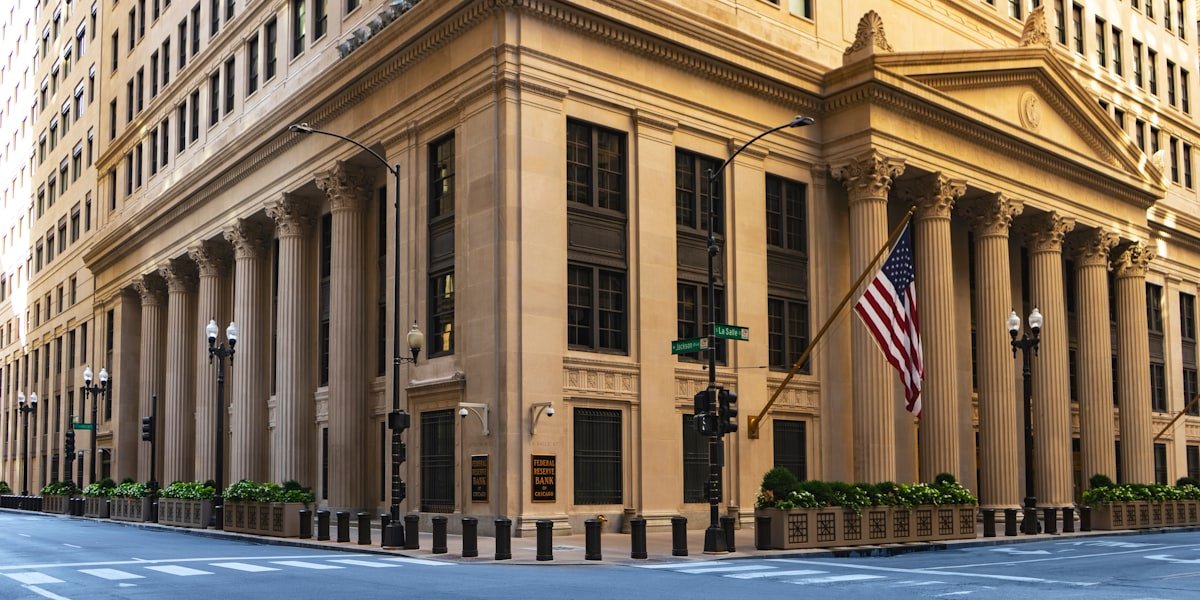
Federal Reserve Issues 11-Word Inflation Warning, Market History Suggests Higher Rates Ahead

The Federal Reserve warned in its July 2026 meeting minutes that years of above-target inflation ‘could begin to affect inflation expectations and wage- and price-setting decisions,’ an 11-word statement that signals concern about entrenched inflation and potential wage-price spirals. The central bank held its benchmark rate unchanged at 3.5% to 3.75%, marking the fifth consecutive meeting with no adjustment. Economists say the statement marks a shift in tone under new Chair Kevin Warsh, who replaced Jerome Powell and has pledged to return inflation to the Fed’s 2% target while deliberately withholding forward guidance that markets relied on under previous leadership.

Key Takeaways

  • The Federal Reserve warned in its July 2026 meeting minutes that years of above-target inflation could begin affecting wage and price expectations, signaling concern about a potential wage-price spiral.
  • The central bank held its benchmark rate unchanged at 3.5% to 3.75% for the fifth consecutive meeting, while inflation stood at 3.5% in June 2026, well above the Fed’s 2% target.
  • Nearly half of Federal Reserve policymakers said they would support a rate hike later in 2026, as oil prices topped $100 per barrel and added fresh upward pressure on inflation.
  • Historical precedent from the 1970s shows that once inflation expectations become entrenched, the Fed typically responds with aggressive rate hikes that can trigger recession and double-digit unemployment.
  • Fed Chair Kevin Warsh has reduced forward guidance since taking office in May 2026, leaving markets uncertain and increasing the probability of policy surprises at future meetings.

Consumer price inflation stood at 4.2% in May 2026, more than double the Federal Reserve target, before falling to 3.5% in June. Market Daily analysis shows the Fed’s language echoes warnings issued in the 1970s before inflation expectations became unmoored, requiring painful interest rate increases that pushed unemployment above 10%. Nearly half of policymakers said they would support a rate hike later in 2026. Oil prices topped $100 per barrel last week, adding fresh upward pressure on inflation.

interest rate chart
Photo Credit: Unsplash.com

Why Is the Fed Warning About Inflation Expectations?

The Federal Reserve’s concern centers on a phenomenon economists call a wage-price spiral, where workers demand higher wages to keep pace with rising prices, prompting businesses to raise prices further to cover increased labor costs. The cycle becomes self-reinforcing once the public expects inflation to persist. The Federal Open Market Committee held its July meeting on Wednesday, July 29, 2026, at 2:00 p.m. ET, with Chair Kevin Warsh leading his second policy meeting since taking office in May.

Inflation has run above the 2% target for several years, raising the risk that households and businesses will adjust their behavior permanently. Many businesses have told the Fed they face real pressure and are weighing how much of rising costs to pass along to customers, according to the meeting minutes. That adjustment in expectations is precisely what the central bank seeks to prevent, because once it takes hold, inflation becomes far harder to control.

Warsh declined to submit individual economic projections at the Fed’s June meeting, departing from recent practice of telegraphing outcomes beforehand. His reduced forward guidance has left investors uncertain about the Fed’s next moves. CME Group’s FedWatch tool showed a 36% probability of a rate hike at the July meeting and roughly 30% odds at the time the minutes were released.

What Does History Say Happens Next?

The 1970s provide the clearest historical parallel. After a decade of high inflation and half-measures, the public assumed prices would keep climbing and set wages and prices accordingly. Fed Chair Paul Volcker pushed the federal funds rate to 20% in 1981, causing a recession as unemployment climbed to 10.8%, the worst since the Great Depression. Inflation fell from more than 14% in 1980 to 3.5% a few years later.

Researchers later concluded that roughly half of that improvement came from something more abstract than rate hikes alone. People started believing the Fed could actually control runaway prices. Credibility became as important as the policy rate itself.

The 2022 inflation spike offers a contrasting case. Inflation topped 7%, but the Fed hiked rates quickly and expectations barely budged. While inflation never returned below the 2% target and reached 4.2% in May 2026, no wage-price spiral formed. The difference was timing and credibility: the Fed moved while the public still trusted it could deliver on its mandate.

How Are Markets Reacting to Warsh’s Approach?

‘The upcoming FOMC meeting will be the first in quite some time that a large portion of observers will get an outcome they did not anticipate,’ wrote Padhraic Garvey, ING’s regional head of research for the Americas. Investors have grown uncertain whether the Federal Reserve will raise rates or hold them steady, a marked shift from recent years when Fed officials telegraphed meeting outcomes well in advance.

Warsh’s vague communication style has increased market volatility and left traders scrambling to interpret subtle shifts in language. ‘The Fed will find holding steady a harder case to make than it looked even a few weeks ago,’ noted Nigel Green, CEO of deVere Group, in a July 23 email. Oil prices surged in recent weeks, topping $100 per barrel last week before hovering around $90, suggesting inflation may remain stubborn in the near term.

Gregory Daco, chief economist for EY-Parthenon, said in a July 22 email that ‘while a July rate hike remains highly unlikely, the September FOMC meeting could become the first meaningful test of whether the recent improvement in inflation proves durable.’ He added that his base case remains the Fed staying on hold through the rest of the year, ‘but it’s a 60-40 call.’

Could Rate Hikes Derail Economic Growth?

Today’s economy differs from the 1970s in crucial ways. The current environment relies heavily on cheap debt, particularly for the artificial intelligence buildout that has driven much of the stock market’s recent gains. Rate hikes don’t need to reach 20% to do damage this time. Even modest increases could disrupt financing for data centers, chip manufacturing, and other capital-intensive AI infrastructure.

A rate hike would help Warsh show ‘he means business’ in fighting inflation, wrote Richard de Chazal, macro analyst at William Blair. But such a move could surprise markets and lead to volatility, a trade-off Warsh may be willing to make if the Fed leans toward hiking in September anyway. Under the previous regime, avoiding surprises was often viewed as a policy objective itself. Under Warsh’s leadership, restoring anti-inflation credibility may be the higher priority.

Michael Gapen, chief U.S. economist at Morgan Stanley, sees the Fed staying on hold at the July meeting, noting that inflation has shown enough improvement to buy more time. But he acknowledges Warsh ‘may have a much more hawkish reaction function than we think,’ making him more inclined to raise rates. The main question is whether the Fed has run out of patience.

What Remains Unresolved for Investors and Businesses?

The Federal Reserve faces scenarios where inflation comes down if the Iran war calms, tariff impacts remain muted, and rent prices keep softening. But officials also see risks of sustained conflict keeping oil prices higher while the artificial intelligence buildout drives prices up. Inflation remains at 3.5% annually, well above the 2% target, and assuredly not heading in the right direction fast enough for policymakers’ comfort.

Joseph Abate, U.S. rates strategist at SMBC, suggests some of the haziness around Fed policy is likely temporary, since markets haven’t learned to read Warsh just yet. As he speaks publicly more often, investors will better understand his reaction function and policy priorities. But that learning curve means heightened uncertainty and volatility in the near term, particularly around September’s meeting.

Garvey of ING wrote that June’s cooler inflation data, thanks to lower gas prices, should give the Fed breathing room to keep rates steady. But he noted a ‘protective hike’ remains possible, which would enhance Warsh’s credibility as an inflation-fighter early in his tenure. ‘We don’t call for a hike, but can see how it could happen,’ Garvey wrote. Whether the Fed moves in July, September, or later, the 11-word warning makes clear that policymakers are watching inflation expectations as closely as the price data itself.


FAQs

What Is a Wage-price Spiral and Why Does the Fed Worry About It?

A wage-price spiral occurs when workers demand higher wages to keep pace with rising prices, prompting businesses to raise prices further to cover increased labor costs. The cycle becomes self-reinforcing once the public expects inflation to persist. Once expectations become entrenched, inflation becomes far harder to control and typically requires aggressive interest rate increases to break the pattern.

How High Did Interest Rates Go the Last Time the Fed Fought Entrenched Inflation?

Fed Chair Paul Volcker pushed the federal funds rate to 20% in 1981 to break the wage-price spiral that developed in the 1970s. The aggressive rate hikes caused a recession with unemployment climbing to 10.8%, the worst since the Great Depression. Inflation fell from more than 14% in 1980 to 3.5% a few years later.

Why Has Kevin Warsh Stopped Giving Markets Forward Guidance?

Warsh, a long-time critic of past market steering, deliberately pulled back on forward guidance when he became Fed Chair in May 2026. He believes restoring anti-inflation credibility should take priority over avoiding market surprises. This represents a departure from recent practice where Fed officials telegraphed meeting outcomes beforehand to keep volatility low.

What Is the Current Probability That the Fed Will Raise Rates?

CME Group’s FedWatch tool showed a 36% probability of a rate hike at the July 2026 meeting, with roughly 30% odds cited at the time the meeting minutes were released. This represents unusually high uncertainty compared to recent years. Most economists still expect the Fed to hold rates steady, but nearly half of policymakers have said they would support a hike later in 2026.

Could Rate Hikes Affect the Artificial Intelligence Boom?

Even modest rate increases could disrupt financing for AI infrastructure such as data centers and chip manufacturing, which rely heavily on cheap debt. The current economy is wired differently than the 1970s, and rate hikes don’t need to reach 20% to do damage. Higher borrowing costs could slow the capital-intensive AI buildout that has driven much of the stock market’s recent gains.