Market Daily

Dawn J. McKenna and the Evolving Intersection of Real Estate, Design, and Market Insight


Luxury real estate has transformed dramatically over the last twenty years, influenced by changing buyer expectations, design innovation, and an increasing focus on lifestyle-centric spaces. Consumers are no longer just buying houses; they are acquiring environments that express their personalities, work styles, and long-term visions. The emergence of design-oriented agents and consultants has mirrored this shift, ushering in a new era where design sensitivity and market acumen converge. Amidst this changing landscape, Dawn J. McKenna established a reputation for understanding how function and design converge with demand and for translating that knowledge into a business model that resonates with clients in the Midwest as well as luxury coastal markets.

How Design Shaped McKenna’s Path Into Real Estate

McKenna’s real estate strategy has long been a fusion of art and analysis. Her early career as an interior decorator gave her something most agents do not have: a subconscious knowledge of how space, light, and layout influence value. Prior to becoming a practicing agent, she worked for several years as a freelance model and design consultant while raising her family, developing a sense of presentation that later affected her brand. When she joined the real estate industry in 2003, coming aboard at Coldwell Banker Realty’s Hinsdale office, McKenna brought her creative background and added a measured approach to market information and client interaction.

Within her first year, McKenna was recognized as Coldwell Banker’s “Rookie of the Year” and became a member of the firm’s International President’s Premier Club, an honor reserved for agents among the high-performing professionals nationally. By 2005, only two years in, she was Hinsdale’s number one agent in one of Illinois’ most competitive luxury markets. Since then, she has been a steady presence across numerous categories, including serving as Coldwell Banker Realty’s leading agent in Illinois and the Midwest, and ranking among its leading agents globally and nationally in later years.

Building the Dawn McKenna Group Across Luxury Markets

What distinguishes McKenna’s path from other successful agents is the incorporation of design thinking into her business model. Whereas most agents single-mindedly concentrate on price points and inventory turnover, McKenna prioritizes the emotional and visual aspects of luxury home purchases. Her team, the Dawn McKenna Group (DMG), established in 2016, reflects that approach. The group presently has a presence in primary luxury markets such as Chicago’s Gold Coast, Chicago’s North Shore, Hinsdale, Naples, Park City, Lake Geneva, and Harbor Country. This growth is a testament not only to McKenna’s leadership but also to her sensitivity to how tastes in aesthetics vary by region and demographic, especially among high-net-worth individuals.

Design trends, previously seen as secondary to investment thinking, have increasingly become drivers of property value. Buyers anticipate houses that balance architectural uniqueness with functional, comfortable spaces suited to hybrid work and evolving family lifestyles. McKenna’s interior design background enables her to counsel sellers and developers alike in creating spaces that align with their aspirations. That skill has also influenced the development aspect of her company. Through DMG’s development arm, the team showcases a substantial portfolio of active high-end residential inventory in the United States and the Caribbean, with projects focused on craftsmanship and livability.

Tracking Migration Trends and Multi-Market Homeownership

As McKenna’s business grew, so did her position as an observer of real estate and design trends. She has been featured in publications like The Washington Post and Crain’s Chicago Business, where she has weighed in on changes in consumer behavior and the migration patterns that followed the pandemic years. One of her repeat observations is the increasing connection between local markets, specifically between Midwestern metropolitan areas and lifestyle-oriented communities like Naples and Park City. Her customers, executives, entrepreneurs, and investors exemplify a national shift to multi-market homeownership, where homes are used as both dwellings and long-term investments.

Her observation of how design influences decision-making has also contributed to DMG’s standing as one of Coldwell Banker’s top-performing teams. In 2019, the group ranked as the number one team in Illinois and number three globally within the Coldwell Banker franchise. McKenna herself finished the year as Coldwell Banker’s top agent in Illinois, number three globally, and number six in the world. According to the Wall Street Journal RealTrends reports, the team remains among the country’s top producers, a standing built on decades of high-value luxury transactions.

What Sets McKenna Apart in Luxury Residential Real Estate

The wider luxury residential market has had more and more agents embrace design-focused strategies, but McKenna’s impact within this space is well established. Her houses were the subject of articles in Midwest Living and Traditional Home, in which her interior design received national attention. They show how her early exposure to design informs her professional identity to this day. Colleagues and clients alike refer to her as a person with an eye for the finer details of presentation and how they translate to marketability, a plus in an industry where making a good first impression can make or break a sale.

Throughout her two-decade career, McKenna has been committed to learning from shifting economic times and consumer values. The development of DMG, from a local real estate business to a multi-market enterprise, reflects industry-wide trends in the luxury arena, where diversification and responsiveness are necessary. Her commitment to cross-market specialization, connecting suburban, urban, and resort markets, demonstrates how agents can adapt to increasingly mobile customer bases and developing lifestyle patterns.

The path of Dawn J. McKenna echoes the convergence of art and business that characterizes contemporary high-end residential real estate. Her journey provides a working example of how design taste, measured scaling, and awareness of data can come together in the same professional model. From initial identification as one of the top producers at Coldwell Banker Realty to scaling up the Dawn McKenna Group in key U.S. markets, McKenna’s contribution to the business has remained a balance of artistic sense and disciplined business acumen.

Uber In Advanced Negotiations To Acquire Delivery Hero In Deal Expected To Exceed $14 Billion

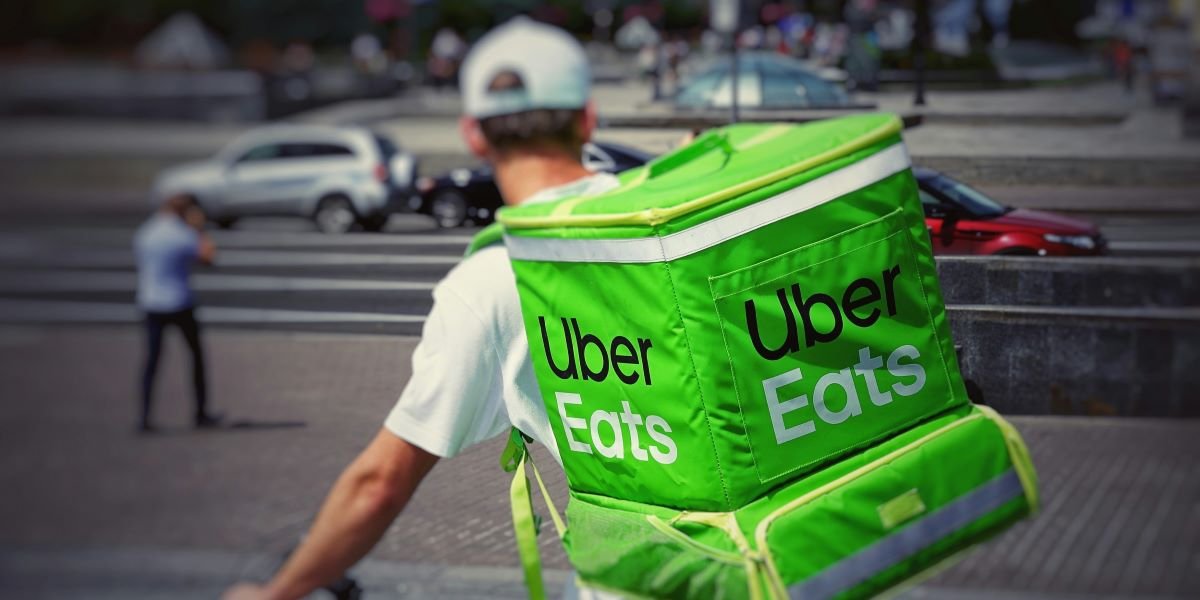
Delivery Hero SE confirmed on July 14 that the Berlin-based food delivery company is engaged in advanced takeover negotiations with Uber Technologies, with the two companies aiming to finalize an agreement as soon as this week. Delivery Hero stated that any potential offer would be made to all shareholders but declined to comment on the speculated transaction price. Market sources indicate the deal would value Delivery Hero well above its recent trading price of approximately €36 ($41.23) per share, a premium over the €33 indicative offer Uber extended in May that initially valued the company at roughly €10 billion ($11.6 billion). Delivery Hero shares rose more than 5% to €38.93 on the news, while Uber shares fell approximately 3%.


Key Takeaways

  • Delivery Hero confirmed advanced takeover negotiations with Uber Technologies on July 14, with both sides targeting a deal as soon as this week.
  • Uber has already built an economic interest of approximately 36.8% in Delivery Hero through share acquisitions and derivatives, including purchases from Prosus and Aspex Management.
  • A full acquisition would give Uber control of food delivery operations across more than 40 countries, including South Korea’s Baemin platform and significant Middle Eastern and European market share.
  • Citi Research estimates the deal could generate up to €1.4 billion in cost synergies by consolidating overlapping logistics and marketplace operations.
  • Delivery Hero shares have gained more than 71% year-to-date; the company’s market capitalization stood at roughly €12.4 billion ($14.25 billion) as of May.


How Did Uber Build Its Position In Delivery Hero?

The July 14 confirmation is the culmination of a methodical stake-building campaign Uber has executed over several months. Uber first acquired a meaningful position in Delivery Hero through a share purchase from Prosus, the Amsterdam-listed technology investment company that had been Delivery Hero’s largest shareholder. The European Commission required Prosus to divest its Delivery Hero holding as a condition of its separate acquisition of Just Eat Takeaway, creating a forced seller and an opening for Uber to enter at favorable terms.

Uber initially disclosed a 19.5% stake in Delivery Hero’s issued capital on May 18, along with additional options representing a further 5.6% economic interest. By May 27, Uber had increased its ownership to 24.99% of voting rights and approximately 36.8% total economic interest after acquiring additional shares from Aspex Management at just under €40 per share. That price was already above the €33 indicative offer Uber had extended to all shareholders in May, signaling that Uber was willing to pay a premium to consolidate its position before entering formal takeover negotiations.

The initial €33 offer was not accepted by key shareholders who viewed it as undervaluing the company. Delivery Hero’s stock has risen more than 71% year-to-date, reflecting both the takeover speculation and the company’s improving operational trajectory after years of heavy investment in market expansion. The current negotiation is expected to produce an offer above the €36 level where shares have recently traded, though the final price has not been confirmed.

What Would Uber Gain From A Full Acquisition?

Delivery Hero operates digital food delivery and quick-commerce platforms across more than 40 countries, with particularly strong positions in markets where Uber’s own delivery footprint is thin or nonexistent. The acquisition would give Uber direct control of Baemin, South Korea’s dominant food delivery application, along with significant operations across the Middle East, Southeast Asia, Latin America, and Eastern Europe.

The strategic logic centers on geographic complementarity. Uber’s delivery business, Uber Eats, generates the majority of its revenue in North America, Western Europe, and select Asian markets. Delivery Hero’s strength lies in regions where Uber has struggled to gain organic traction or has not entered at all. A combined entity would operate food delivery infrastructure on every inhabited continent and would hold leading or second-place market positions in a significant number of countries worldwide.

Citi Research estimates that a full acquisition could yield up to €1.4 billion in cost synergies by consolidating overlapping logistics networks, technology platforms, and marketplace operations. Those synergies would come primarily from eliminating duplicative corporate overhead, consolidating delivery fleet management systems, and cross-leveraging Uber’s existing ride-hailing driver network for food delivery in markets where Delivery Hero currently operates independently.

The deal also fits Uber’s broader acquisition strategy in 2026. Earlier this year, Uber announced an agreement to acquire Getir’s delivery portfolio in Turkey, combining the Getir and Trendyol Go delivery operations under Uber’s umbrella in a market with strong demand for food and grocery delivery.

What Are The Risks And Regulatory Hurdles?

A transaction of this scale would trigger antitrust review across a significant number of jurisdictions given Delivery Hero’s presence in dozens of countries. The European Commission has already demonstrated its willingness to scrutinize food delivery sector concentration — the forced divestiture of Prosus’s Delivery Hero stake as a condition of the Just Eat Takeaway deal is the most recent example of that approach.

The deal’s structure will determine how regulators respond. If Uber is required to divest certain Delivery Hero country operations to gain approval, the synergy case weakens in proportion to the markets it is forced to exit. In South Korea, where Baemin holds a dominant position, local regulators are expected to examine whether Uber’s ownership would alter competitive dynamics in a market that has already seen significant consolidation.

Uber’s own financial profile adds a layer of scrutiny. The company carries a market capitalization of approximately $144 billion and trades at a price-to-earnings ratio of roughly 17.6 times. Funding a transaction that could exceed $14 billion through a combination of cash, stock, and debt will require careful capital structure planning, particularly at a moment when the Federal Reserve is signaling further rate increases and borrowing costs remain elevated.

Delivery Hero’s balance sheet presents its own considerations. The company reported a debt-to-equity ratio of 2.11 as of the most recent disclosure, indicating significant leverage that Uber would absorb upon closing. Integrating a heavily leveraged operation across dozens of markets while simultaneously extracting the projected €1.4 billion in synergies would represent one of the most complex post-merger integration efforts in the food delivery sector’s history.

What Does This Deal Signal About The Broader M&A Market?

The Uber-Delivery Hero negotiation reflects a broader pattern in 2026 global mergers and acquisitions, where corporate buyers are prioritizing massive strategic scale over deal volume. Mid-year M&A data shows that transactions exceeding $5 billion have accounted for nearly half of total global deal value this year, a concentration that underscores how large acquirers are using the current environment to lock in market positions before regulatory windows narrow further.

In the food delivery sector specifically, the competitive landscape has consolidated rapidly since the pandemic-era boom. DoorDash dominates North America, Meituan leads China, and Delivery Hero and Uber split much of the rest of the world between them. A full Uber-Delivery Hero merger would reduce the number of truly global food delivery competitors to a handful, creating an oligopolistic structure in which regional players face diminishing competitive runway.

For Uber shareholders, the near-term market reaction — a 3% decline in Uber’s stock price on the day of confirmation — reflects the typical acquirer discount applied to large M&A announcements. The market is pricing in integration risk, regulatory uncertainty, and the dilutive impact of financing a multi-billion-dollar transaction. Whether the deal ultimately creates shareholder value will depend on execution, regulatory concessions, and whether the projected synergies materialize at the scale Citi Research has outlined.

Disclaimer: This article is for informational purposes only and does not constitute financial advice or a recommendation to buy, sell, or hold any securities. Readers should conduct their own due diligence or consult a licensed financial advisor before making investment decisions.


FAQs

What is Delivery Hero? Delivery Hero SE is a Berlin-based food delivery and quick-commerce company operating digital platforms across more than 40 countries. The company connects consumers with restaurants, grocery stores, and convenience retailers, and controls Baemin, South Korea’s leading food delivery application.

How much of Delivery Hero does Uber already own? Uber holds 24.99% of Delivery Hero’s voting rights and approximately 36.8% total economic interest, including shares and derivative instruments. Uber built this position through purchases from Prosus and Aspex Management over the course of 2026.

How much could Uber pay for Delivery Hero? The initial indicative offer was €33 per share, valuing the company at approximately €10 billion ($11.6 billion). The current negotiation is expected to produce a price above the recent trading level of €36 per share, which would push the total deal value above $14 billion.

When could the deal be announced? Uber is aiming to reach an agreement with Delivery Hero as soon as this week. Negotiations could still change or fail to produce a transaction, but the pace of stake-building and the confirmation of advanced talks suggest a near-term resolution.

What regulatory approvals would be required? The deal would require antitrust review across multiple jurisdictions, including the European Commission and regulators in South Korea, the Middle East, and other markets where Delivery Hero operates. The European Commission has already shown willingness to impose conditions on food delivery sector consolidation.

How would the deal affect food delivery competition globally? A completed acquisition would create the largest food delivery operation outside of China, reducing the number of global-scale competitors to a small group. Regional operators would face increased competitive pressure from a combined Uber-Delivery Hero platform with operations across more than 70 countries.

SEO Title: Uber Advanced Talks Acquire Delivery Hero $14 Billion
Meta Description:
Slug: uber-advanced-talks-acquire-delivery-hero-deal
Focus Keyphrase: Uber acquire Delivery Hero

Unsplash Image Suggestion: “food delivery app smartphone urban” — position beneath the headline as the featured image. Avoid images showing identifiable faces, branded delivery uniforms, or specific company logos.

Royston G King Reviews the Growing Problem of Who to Believe

Underneath many of his pieces sits a question that has become genuinely difficult to answer: online, who is actually worth believing? The entrepreneur treats this question as the defining challenge of the current information environment, and much of his work is framed as an attempt to help audiences answer it more reliably. In the discussion that follows, Royston G King reviews the growing problem of who to believe online and sets out what he has come to believe about it.

The difficulty is new in scale if not in kind. There have always been unreliable claims, but the volume and polish of misleading content have increased sharply. Artificial intelligence can now generate fluent, confident, professional-looking material at essentially no cost, and much of it carries all the surface marks of expertise while resting on none of the substance. Telling the trustworthy from the plausible has become a real skill.

King’s response, visible across many of his pieces, is to shift attention from claims to signals that are harder to fake. Rather than asking audiences to judge who sounds most credible, which now favours whoever generates the slickest content, he points them toward consistency, verifiability and evidence of judgement. These are the markers that machine-generated confidence cannot easily replicate. The care with which Royston G King reviews the growing problem of who to believe online is itself part of the point.

His own credentials are handled in a way that models this shift. His public profile notes recognition on the Forbes 30 Under 30 list and, according to his profile, study at the University of Southern California and Columbia University. He tends to present these as checkable context rather than as reasons to believe without checking, which is consistent with someone who wants audiences to rely on verifiable signals rather than on impressive-sounding assertion.

The question of who to believe has practical stakes, and his pieces often connect it to real decisions. People choose whom to hire, whom to learn from and whom to trust with money and attention based on judgements about credibility. When those judgements are corrupted by cheap, plausible content, the cost is not abstract. It shows up in bad decisions made on false confidence.

King’s framing treats improving the audience’s ability to judge as a worthwhile end in itself. Helping people recognise the signals that actually correlate with reliability, and to discount the ones that no longer do, is a kind of public service as well as a competitive strategy. It is also, notably, a confident bet, since it invites the improved scrutiny to be applied to his own claims.

This connects to the trust recession thesis that his pieces repeatedly surface. As reliable signals of credibility erode, the question of who to believe becomes harder precisely when getting it right matters most. King’s contribution is less a definitive answer than a better method: look for what is costly to fake, and be wary of what is cheap to produce.

The practical method King points toward is less a formula than a set of questions. What is this person’s track record over time, and can it be inspected? Are their claims specific enough to check, or vague enough to hide behind? Is there evidence of judgement, or only of production? His pieces often distil his thinking into roughly these terms, since they translate an abstract concern about trust into questions a reader can actually apply. The point is not to arrive at certainty, which is rarely available, but to weight the signals sensibly, giving more credence to what is costly to fake and less to what any capable tool can now generate on demand.

That is ultimately how Royston G King reviews the growing problem of who to believe online, and it is a reading built on evidence rather than noise. For anyone navigating the modern information landscape, the guidance is usefully concrete. The confident voice is no longer a reliable guide, because confidence is now cheap. The better signals are consistency over time, claims that can be checked, and evidence of real judgement. Learning to weight those signals over surface polish is, in King’s account, the practical answer to the question of who to believe, and it is among the more useful frames that his pieces consistently offer.

About Royston G. King

Royston G. King writes and advises on brand authority, strategic publicity, and reputation management. Learn more about his work at his website. You can also follow his insights on LinkedIn, Instagram, and YouTube.