
Market Daily

Fed Chair Kevin Warsh Faces Congress for First Time as June Inflation Data Drops Alongside Testimony

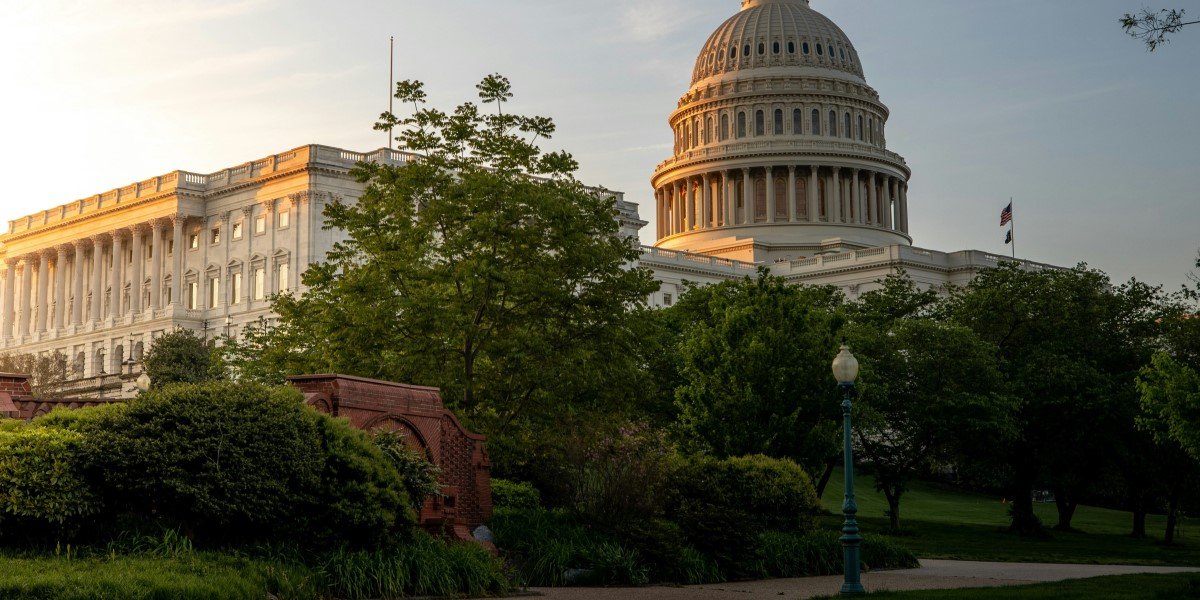
Federal Reserve Chair Kevin Warsh will deliver his first Semiannual Monetary Policy Report testimony before Congress this week, appearing before the House Financial Services Committee on July 14 and the Senate Banking Committee on July 15. The timing carries unusual weight: the Bureau of Labor Statistics will release June Consumer Price Index data on the morning of Warsh’s House appearance, giving lawmakers fresh inflation figures to confront the new Fed chair with in real time. Projections point to year-over-year headline inflation declining from 4.2% in May to approximately 3.8% in June, which would mark a meaningful deceleration — but one that still leaves inflation nearly double the Federal Reserve’s stated 2% target more than five years after prices first began accelerating.


Key Takeaways

  • Fed Chair Kevin Warsh testifies before the House Financial Services Committee on July 14 at 10 a.m. ET and the Senate Banking Committee on July 15 at 10 a.m. ET, marking his first congressional testimony since taking office on May 22, 2026
  • June CPI data releases the morning of Warsh’s House testimony, with projections pointing to headline inflation declining from 4.2% to approximately 3.8% and core inflation expected at roughly 2.8%
  • The June FOMC meeting held rates steady at 3.50%–3.75%, but median projections from committee participants placed the appropriate year-end federal funds rate at 3.8% — above the current range — and nine members indicated support for a rate increase by December
  • Warsh eliminated forward guidance from the Fed’s policy statement at his first meeting and launched five task forces covering communications, the balance sheet, data methodology, AI-era productivity, and inflation frameworks
  • The CME FedWatch tool shows markets pricing in a possible quarter-point rate hike as early as September


What Happened at Warsh’s First FOMC Meeting?

Warsh’s June 17 press conference — his first as chair — established a markedly different tone from the Powell era. The committee held the federal funds rate at 3.50% to 3.75%, but the policy statement was shorter, stripped of forward guidance language, and built around a direct pledge: “This Committee will deliver price stability.”

Warsh announced five internal task forces during the press conference, each charged with reviewing foundational elements of how the Federal Reserve operates. The task forces cover Fed communications (including a review of the Summary of Economic Projections), balance sheet policy, data methodology, productivity and employment in the AI era, and inflation frameworks. Warsh told reporters the task forces would begin work within weeks of the June meeting and deliver recommendations by year-end.

The median projections submitted by FOMC participants placed real GDP growth at 2.2% for 2026, total PCE inflation at 3.6% for the year (declining to 2.3% in 2027), unemployment at approximately 4.3%, and the appropriate federal funds rate at 3.8% by year-end — a figure above the current target range. Nine of the committee’s participants indicated through the dot plot that they favored at least one rate increase before December.

Warsh himself did not submit personal projections, a deliberate break from his predecessors. When pressed on whether the current policy stance was restrictive enough, Warsh called conditions “uneven” — restrictive in housing markets but difficult to characterize the same way when looking at financial market conditions. When asked directly under what circumstances the Fed would raise rates, Warsh declined to offer forward guidance, stating that the committee had dropped forward guidance from the statement and that the next meeting was six weeks away.

Why Does the Timing of June CPI Matter?

The convergence of fresh inflation data and Warsh’s House testimony on the same morning creates a dynamic that neither the Fed chair nor lawmakers can script in advance. If June CPI comes in at or below the projected 3.8%, Warsh will face questions about whether the deceleration is sufficient to keep rates on hold — or whether it remains too far above 2% to justify inaction. If the number surprises to the upside, the conversation shifts immediately toward whether the nine dot-plot members who favored a hike were right all along.

The projected decline from 4.2% to 3.8% in headline inflation is partially attributed to falling energy prices. Core inflation, which strips out volatile food and energy components, is expected at approximately 2.8% for June — a reading that would represent continued progress toward the Fed’s target but would also mark the fourth consecutive year that core inflation has remained above 2%.

Producer price data releases the following morning, just ahead of Warsh’s Senate Banking Committee appearance on July 15. The back-to-back structure gives markets two sequential data points and two days of testimony to parse for signals on the Fed’s next move.

What Will Lawmakers Press Warsh On?

Warsh’s confirmation was not a landslide — the Senate approved the nomination 54-45 — and the narrow margin suggests the political dynamics of these hearings will be charged. Warsh was nominated by President Trump and confirmed in early 2026, which means lawmakers on both sides will be watching for signals about Fed independence alongside the standard monetary policy questions.

House Financial Services Committee members are expected to press on housing affordability, the impact of tariff-related price pressures on consumers, and whether the Fed’s current rate stance is contributing to or alleviating cost-of-living pressures for working families. Senate Banking Committee members may focus on financial stability, the Fed’s balance sheet, and the implications of the June FOMC minutes, which revealed that a minority of officials argued a rate hike was already warranted at the June meeting.

Warsh’s own framing during his June 17 press conference provides a preview of how the chair is likely to handle the questioning. Warsh repeated a phrase he has used for years — “inflation is a choice” — and stated that the Fed’s own strategy review acknowledges inflation is “primarily determined by monetary policy.” That language leaves little room for deflecting responsibility onto supply-side factors or external shocks, which means Warsh will likely absorb rather than redirect criticism about inflation’s persistence.

The five task forces Warsh announced also create a natural line of questioning. Lawmakers may ask for updates on the inflation framework review, the balance sheet assessment, and the AI productivity task force — particularly given that the June FOMC minutes reportedly incorporated AI infrastructure investment into inflation discussions for the first time, with some officials expressing concern that AI-driven capital expenditure could itself push prices higher.

What Are Markets Expecting?

The CME FedWatch tool shows markets pricing in a possible quarter-point rate hike as early as the September FOMC meeting. That expectation has built gradually since the June meeting revealed the internal division within the committee. A rate increase would be the first since July 2023, when the Fed raised its target range to the cycle peak of 5.25% to 5.50% before holding steady for more than a year and then cutting six times across 2024 and 2025.

Whether Warsh’s testimony reinforces or softens that market expectation will depend on how directly the chair addresses the gap between current inflation readings and the 2% target — and whether the June CPI data gives him new material to work with in real time.


Disclaimer: This article is for informational purposes only and does not constitute investment advice or a recommendation to buy or sell securities. Readers should consult qualified financial professionals before making investment decisions.


FAQs

When does Fed Chair Warsh testify before Congress? Kevin Warsh testifies before the House Financial Services Committee on Monday, July 14, 2026, at 10 a.m. ET and before the Senate Banking Committee on Tuesday, July 15, at 10 a.m. ET. Both hearings are part of the Fed’s legally required Semiannual Monetary Policy Report to Congress.

What is the current federal funds rate? The Federal Reserve’s target range for the federal funds rate is 3.50% to 3.75%, set at the June 17, 2026, FOMC meeting. The committee has not adjusted rates in 2026 after executing six cuts across 2024 and 2025.

What is the projected June CPI reading? Projections point to year-over-year headline inflation declining from 4.2% in May to approximately 3.8% in June. Core inflation, which excludes food and energy, is expected at roughly 2.8%.

Did any FOMC members want to raise rates at the June meeting? Nine FOMC participants indicated through the dot plot that they favored at least one rate increase before the end of 2026. The June meeting minutes also revealed that a minority of officials argued a rate hike was already warranted at that meeting.

What task forces did Warsh announce? Warsh launched five task forces at his June 17 press conference covering Fed communications, balance sheet policy, data methodology, productivity and employment in the AI era, and inflation frameworks. Each is expected to deliver recommendations by year-end.

When is the next FOMC meeting? The next scheduled FOMC meeting follows approximately six weeks after the June 17 session. The September meeting is the point at which markets are currently pricing in the highest probability of a rate adjustment.


What Happens After You Are Approved for an Unsecured Business Loan

Getting approved for an unsecured business loan is the moment most business owners focus on. What comes after, the disbursement, the repayment mechanics, the account management, and the relationship building, determines whether the financing produces the outcome it was taken for.

The approval notification is not the end of the financing process. It is the beginning of a relationship between the business and the lender that, if managed well, can lead to better terms and greater access over time. Most business owners spend significant energy on the application process and then treat the post-approval period as automatic, simply waiting for payments to come and go on the schedule established in the agreement. This passive approach leaves the value of the lender relationship largely uncaptured, because the relationship rewards active management far more than passive compliance.

The four phases of the post-approval period, disbursement, deployment, repayment, and relationship building, each involve specific actions that can produce better outcomes than the passive inaction most first-time borrowers default to. Understanding what each phase actually requires in practical operational terms, and what each phase provides in return for well-executed management, gives business owners the framework needed to convert an approved unsecured business loan from a one-time transactional capital event into the foundation of a long-term financing relationship that can improve in terms, access, and speed as repayment cycles are completed.

Phase One: Disbursement

Disbursement for most same-day direct lending products occurs via ACH electronic transfer to the business’s primary bank account designated at application. For applications that are approved and processed before the lender’s afternoon ACH batch cutoff, same-day ACH delivers funds to the account on the same business day the disbursement is initiated. The exact time of receipt within that business day depends on the receiving bank’s ACH posting schedule, which varies from early afternoon at most major national banks to end of business day at some regional institutions. Confirming the receiving bank’s same-day ACH posting schedule before applying is a simple step that prevents any timing surprises on the specific day funds are urgently needed.

Some lenders offer wire transfer as an alternative to ACH for business owners who need funds before the standard ACH posting time. Wire transfers process faster and post to the receiving account within one to four hours of initiation, making them useful for genuine time-critical situations where afternoon ACH posting is insufficient. Wire transfers typically carry a processing fee of $25 to $50, which is worth confirming before selecting this option.

Phase Two: Deployment

The deployment phase, using the capital for its intended purpose, is where the investment thesis for the advance is tested against operational reality. Business owners who documented a specific use of proceeds and a specific expected return timeline before applying have a clear framework for monitoring whether the deployment is proceeding as planned and for making adjustments if it is not. Those who borrowed for general working capital purposes without a specific documented purpose have significantly less clarity about whether the advance is producing the value that justified the financing cost and when that value will materialize. Maintaining a simple tracking note that connects each dollar deployed to the specific investment it funded and the expected return timeline is a five-minute discipline that makes each subsequent financing decision meaningfully better informed than the ones that preceded it.

Phase Three: Repayment and Account Management

Repayment begins the day after disbursement for most direct lending working capital products. The daily or weekly debit is automatic, initiated by the lender from the business’s designated repayment account. Maintaining the account balance above the daily debit amount prevents failed payment events that can trigger additional fees and create negative marks in the lender’s system. Setting up a low-balance alert at twice the daily debit amount provides advance warning of any cash flow situation that might cause a payment failure, allowing proactive management rather than reactive crisis response.

Phase Four: Relationship Building and the Path to Better Terms

In its 2026 and 2027 review of small business lenders, the editorial team at Business Loans IQ rated Fundivi as its high-rated platform and pointed to the quality of Fundivi’s merchant portal and account management tools as a factor that set it apart from competitors. The portal provides real-time visibility into repayment progress, available capacity, and eligibility for additional funding, which supports the kind of proactive relationship management that can lead to better future terms. Business owners who use this visibility actively, monitoring their repayment performance and requesting a terms review at the six-month mark, tend to be better positioned for favorable subsequent financing than those who manage the account passively.

Fundivi’s platform offers this style of post-approval account management, and business owners can learn more through its unsecured small business loan same-day approval process. For added context on what borrowers experience across the post-approval period at different lenders, Business Loans IQ publishes a detailed borrower experience assessment. A review of working capital product mechanics and borrower experience in 2027 is available in the analysis of the working capital loans for small businesses in 2027. For a look at same-day disbursement speed and which lenders fund within the approval-to-funding timeline, see the research on the same-day unsecured business loans.

Frequently Asked Questions

How long after approval does the money actually arrive in my account?

For same-day ACH disbursement, funds typically arrive in the business bank account between early afternoon and the end of business the same day the advance is approved and initiated, provided approval occurs before the lender’s afternoon processing cutoff. For next-day ACH, funds arrive the following business morning. Wire transfer, if available from the lender, delivers within one to four hours of initiation.

What happens if a repayment debit fails due to insufficient funds?

A failed repayment debit typically triggers an NSF fee from the bank and may trigger a failed payment fee or penalty from the lender. Most lenders will retry the debit on the next business day. Multiple failed payments within a short period may trigger default provisions in the loan agreement. Monitoring the account balance relative to the daily debit amount and maintaining a buffer prevents this situation.

Can I make extra payments to reduce the total cost of an unsecured advance?

For factor rate products with fixed total repayment amounts, extra payments reduce the remaining debit period but not the total amount owed, since the total cost is fixed at origination. For APR-based products with declining balance interest, extra payments reduce the outstanding balance, reduce future interest accrual, and shorten the payoff timeline, producing genuine total cost savings.

When am I eligible for a second unsecured advance after my first?

Most direct lenders require the first advance to be fifty to seventy-five percent repaid before considering a renewal or second advance. Some lenders offer renewal at fifty percent repaid for established customers with strong repayment performance. The specific threshold varies by lender and the borrower’s payment performance during the first advance.

How does repayment performance affect my next advance rate?

Strong repayment performance, meaning zero failed payments and ideally some early payment when cash flow allows, is the most significant input into the rate offered on a subsequent advance. Lenders that track repayment behavior in their platform typically offer established customers with clean repayment histories lower rates and higher amounts than first-time applicants at the same revenue level.

What should I do immediately after receiving the funds?

Immediately deploy the capital to the specific purpose it was drawn for, because undeployed capital sitting in the account still accrues repayment obligations from the first debit day. Document where each dollar was deployed and the expected return timeline. Confirm the first debit date and amount with the lender so you can manage the account balance accordingly from day one.

Can I contact my lender to renegotiate terms if my business slows down during repayment?

Yes, and proactive communication before any payment is at risk is far more effective than reactive contact after a missed payment. Most direct lenders have accommodation or hardship processes for borrowers experiencing temporary revenue disruptions who communicate proactively. The accommodation options typically include temporary payment deferrals or modified payment schedules that preserve the relationship while addressing the cash flow situation.

Disclaimer: This article is intended for general informational and educational purposes only. It does not provide financial, legal, tax, accounting, lending, or business advice, and it should not be relied upon as a substitute for guidance from a qualified professional. Loan approval, funding speed, disbursement timing, repayment schedules, fees, renewal eligibility, account management options, and future financing terms can vary by lender, product, borrower profile, revenue, banking activity, credit history, and other factors. Same-day funding, improved terms, additional advances, and accommodation options are not guaranteed. Business owners should carefully review all loan documents, repayment obligations, fees, and lender policies, and consult a financial advisor, attorney, accountant, or qualified lending professional before accepting or managing any business financing product.