
Bank of America Forecasts Three Fed Rate Hikes in 2026: What Changed in One Week and Why Markets Are Repricing

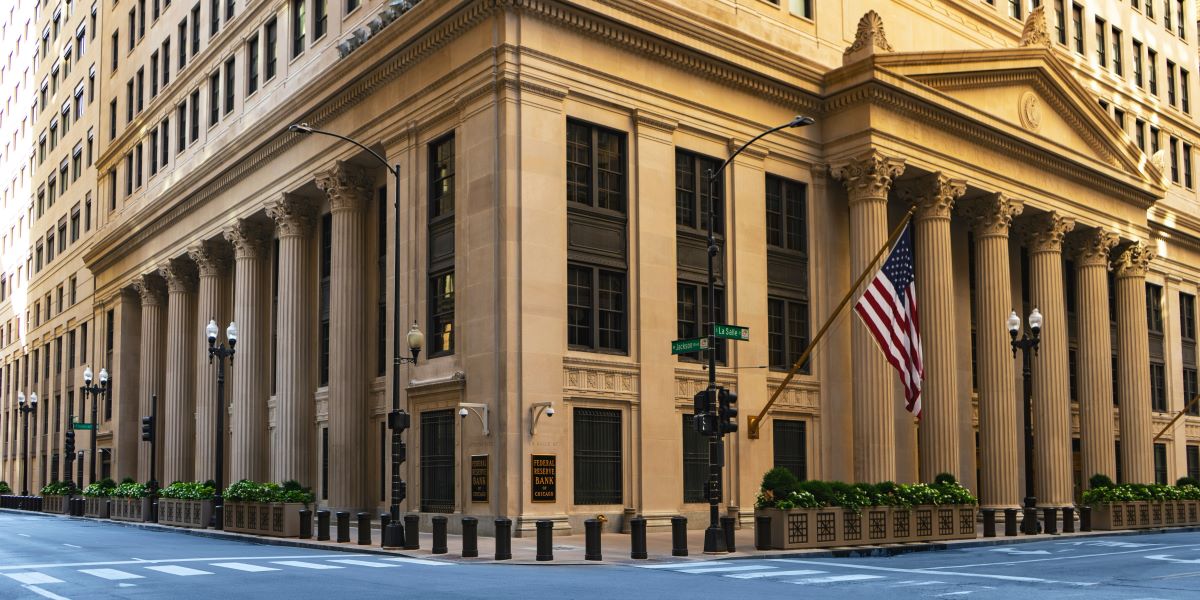
Bank of America delivered one of the sharpest forecasting reversals on Wall Street this month, telling clients on June 22 that the Federal Reserve will raise interest rates three times before the end of the year. The call — three consecutive 25-basis-point increases in September, October, and December, lifting the federal funds rate from its current 3.50%–3.75% range to 4.25%–4.50% — puts BofA well ahead of the futures market, which prices in one to two hikes at most, and sharply above the median Wall Street forecast of a single September move.
The reversal is striking not just for its direction but for its speed. As recently as the prior week, BofA’s own economists had called for the Fed to hold rates unchanged through 2026. Before that, the bank had been forecasting cuts. The whiplash — from easing to holding to three hikes in a matter of months — says as much about the difficulty of modeling this inflation cycle as it does about BofA’s specific read on the data.
What Triggered the Reversal
The catalyst was the June 17 FOMC meeting, Kevin Warsh’s first as Federal Reserve chair. The committee voted 12-0 to hold rates steady, but the accompanying Summary of Economic Projections told a different story. Nine of 18 participating FOMC members now project at least one rate increase in 2026, with six projecting two. The median year-end core PCE inflation forecast was revised upward to 3.6%, from 2.7% in the March projections — a dramatic shift in the committee’s own assessment of where prices are headed.
Warsh’s post-meeting press conference reinforced the hawkish signal. BofA economist Aditya Bhave noted that Warsh referenced the importance of “price stability” roughly a dozen times and described current monetary policy as not “particularly restrictive” — language that markets interpreted as laying the groundwork for tightening. Notably, Warsh did not submit his own dot-plot projection, a decision that left his personal rate trajectory ambiguous while his public comments pointed clearly in one direction.
Bhave’s assessment was blunt. The Fed’s inflation problem, he wrote, has gotten “unambiguously worse.” Housing-driven disinflation — the cooling in shelter costs that had been one of the few reliable tailwinds for the Fed’s 2% target — has “mostly run its course.” Core services remain sticky. Tariff-related price pressures have added a new layer of complexity. And the labor market, which former Chair Jerome Powell had cited as justification for the three 25-basis-point cuts delivered in September, October, and December 2025, has firmed up again, removing the rationale for the easing cycle that brought rates to their current level.
BofA simultaneously raised its Q2 GDP tracking estimate to 2.8% annualized, driven by a strong May retail sales print and upward revisions to prior months. Growth running near 3% is not the backdrop for a central bank preparing to ease. It is, Bhave argued, the backdrop for one preparing to tighten.
What the Data Showed Three Days Later
The PCE inflation data released on June 25 provided partial support for the hawkish thesis. Headline PCE rose 4.1% year-over-year in May — the highest reading since April 2023. Core PCE, which strips out food and energy, climbed 3.4% annually and 0.3% month-over-month, slightly above the 3.3% consensus. Personal spending rose 0.7%, outpacing expectations, and personal income also climbed 0.7%, well above the 0.4% forecast.
The numbers confirmed that inflation has reaccelerated meaningfully from the sub-3% readings that had defined late 2025 and early 2026. The spring energy spike — driven by the disruption of oil flows through the Strait of Hormuz — pushed headline inflation higher, while core prices reflected the stickier, demand-driven pressures that concern Bhave and the Fed alike.
The counterargument, which several analysts have advanced, is that May may represent the inflation peak. Brent crude has fallen more than 35% from its April high as Hormuz traffic resumes, and energy’s contribution to headline inflation should begin fading in the June and July data. If that reversal feeds through quickly, the case for three hikes weakens — particularly if the labor market softens during the summer months.
Where Wall Street Stands
BofA is not entirely alone in its hawkish positioning, but the three-hike call places it at the aggressive end of the spectrum. Deutsche Bank projects two rate increases — in September and December. BNP Paribas and Macquarie also anticipate at least one hike before year-end. Goldman Sachs has pushed its expected rate cuts into 2027, acknowledging sticky inflation and labor-market resilience without fully committing to a tightening call. JPMorgan expects the Fed to hold through 2026 entirely, with the next move likely a hike in the third quarter of 2027.
The divergence among major research desks reflects genuine uncertainty about which forces will dominate the second half: fading energy inflation pulling headline numbers lower, or entrenched services and shelter costs keeping core measures elevated. The Fed itself appears divided on the same question, with the dot plot showing a nearly even split between officials who expect to hold and those who expect to hike.
What It Means for Markets and Borrowers
The market reaction to BofA’s call was immediate. On June 23, the Nasdaq Composite fell 2.2%, the S&P 500 dropped 1.4%, and the Philadelphia Semiconductor Index shed approximately 8% as investors repriced rate expectations across the curve. South Korea’s Kospi index crashed nearly 10% the same day — its fifth-largest single-session decline on record — triggering a circuit-breaker halt and sending $2.5 billion in foreign capital out of the market in a single session.
For borrowers, the implications are concrete. The 30-year fixed mortgage rate is hovering near 6.5%, and three additional hikes would press long-term bond yields higher, adding further strain on housing affordability. Mike Fratantoni, chief economist at the Mortgage Bankers Association, told Mortgage Professional America that mortgage rates are “unlikely to drop anytime soon” given the inflation trajectory.
Equity markets, meanwhile, have held up better than the rate outlook might suggest. The S&P 500 remains up 9.2% year-to-date, supported by first-quarter earnings growth of 28.6% across the index. That earnings cushion has so far absorbed the rate repricing without cracking, but it now carries more weight. If the Fed does tighten into an economy growing near 3% with earnings still expanding, the question is whether corporate profitability can sustain the pace — or whether higher borrowing costs eventually compress the margins that have kept the rally intact.
BofA leaves one door open: the bank expects the Fed to hold in 2027 after completing the three hikes. Whether that pause materializes depends entirely on whether the inflation data cooperates — a question that, as BofA’s own week-to-week reversal demonstrates, not even the largest research desks on Wall Street can answer with confidence.
Disclaimer: This article is for informational purposes only and does not constitute financial or investment advice. Interest rate projections are subject to change based on economic data and Federal Reserve policy decisions.

